
.avif)
8 Nursing Interventions for UTI Care
.png)
A patient reports burning with urination and needing the bathroom every few minutes. Another patient may have fewer classic symptoms, yet develop confusion, weakness, or a sudden decline because age, diabetes, catheter use, or immune compromise can change the presentation. In both cases, nursing interventions for UTI care require more than offering fluids or administering medication.
Effective care follows a workflow. The nurse assesses severity, obtains reliable diagnostic data, supports elimination and comfort, administers and evaluates prescribed therapy, reduces catheter-related risk, teaches prevention, and recognizes red flags such as systemic infection. The plan must be individualized to comorbidities, age, hydration restrictions, renal status, catheter use, and local clinical protocols.
The strongest interventions connect an observation to an action, a measurable response, and a clear escalation plan. Hydration may be helpful for one patient but unsafe for someone with fluid restrictions. A catheter may support accurate output monitoring in a critical situation, yet create avoidable infection risk when it remains in place without ongoing clinical justification.
1. Increased Fluid Intake and Hydration Management
Adequate hydration supports urine production and regular bladder emptying, but it should never be treated as a universal prescription. A nurse first reviews kidney function, heart failure status, swallowing ability, diet orders, fluid restrictions, continence concerns, and the patient's baseline intake. For older adults, one clinical source uses approximately 30 mL/kg/day, or a clinically indicated amount, as a hydration reference, and CMS urinary-catheter quality material uses a similar framework for meeting hydration needs and reducing UTI risk clinical hydration guidance.
A practical plan distributes permitted fluids across the day rather than relying on a large evening intake. Water is usually the simplest choice, while herbal tea or diluted juice may improve acceptance. Evening fluids may need adjustment when nocturia, falls, sleep disruption, or incontinence is a concern. Cranberry products can be discussed carefully, since evidence for preventive benefit is mixed and they don't replace assessment or prescribed treatment.
Turn hydration into a monitored intervention
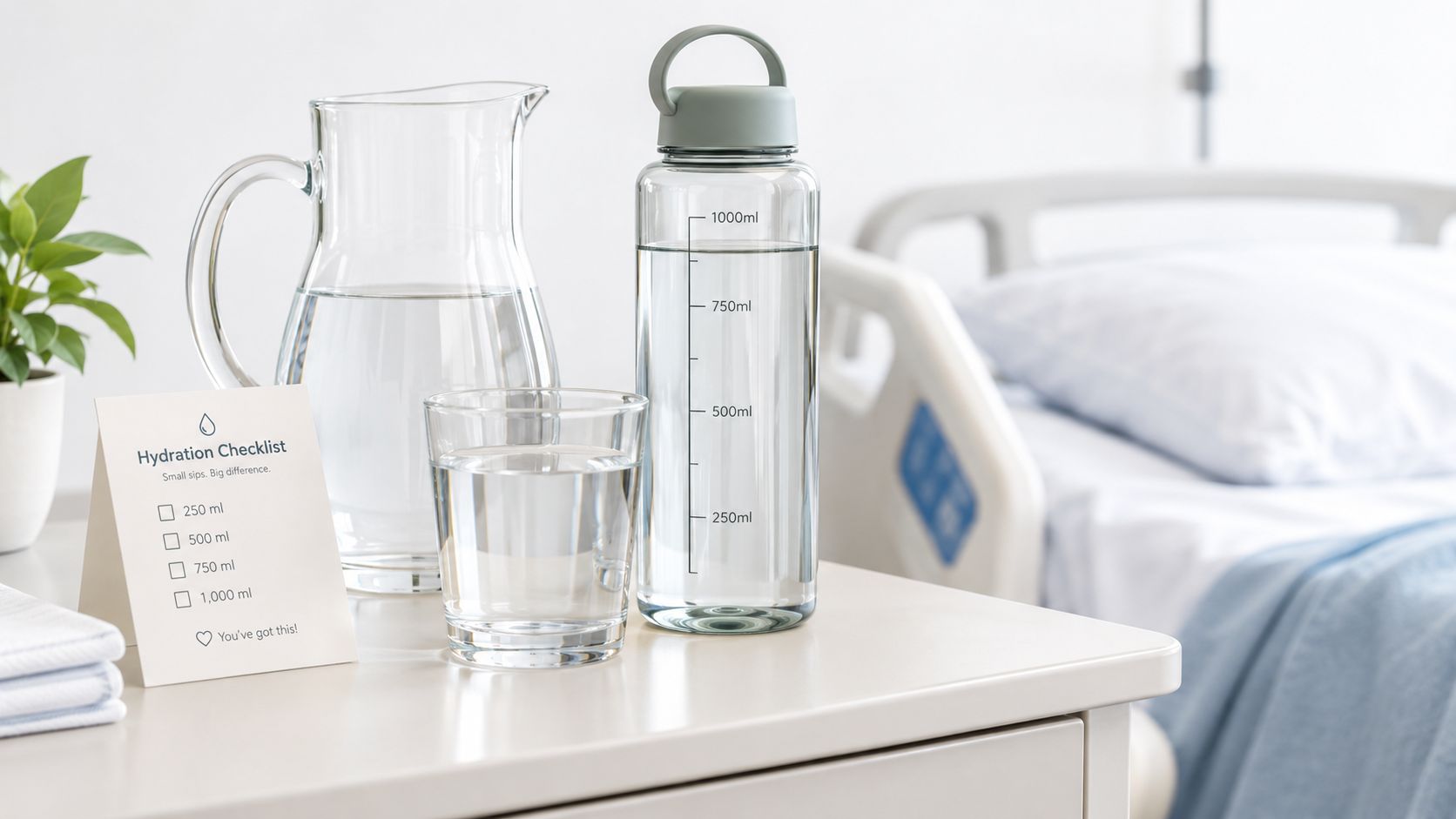
A patient on bed rest may forget to drink because the pitcher is out of reach or toileting feels difficult. Nursing staff can place fluids within reach, offer reminders during rounds, assist with opening containers, and coordinate drinking with scheduled toileting. A patient with recurrent symptoms may benefit from a written intake target set by the care team, provided the target accounts for clinical restrictions.
Useful observations include:
- Intake and output: Record oral and intravenous intake, urine volume, concentration, frequency, and notable changes on the appropriate flowsheet.
- Tolerance: Monitor edema, dyspnea, lung sounds, weight trends when ordered, nausea, and other signs that fluid administration may be excessive.
- Urinary response: Note whether the patient is voiding more regularly, still retaining urine, or producing unexpectedly little urine.
- Patient ability: Address pain, mobility, cognition, and access to the bathroom, because a patient may restrict fluids to avoid calling for assistance.
Practical rule: Hydration is only safe when it matches the patient's renal, cardiac, and swallowing status.
For a patient seeking information about beverages, nursing education can also distinguish supportive hydration from unproven remedies, including questions about lemon water for UTI relief.
2. Proper Perineal Hygiene Education and Assistance
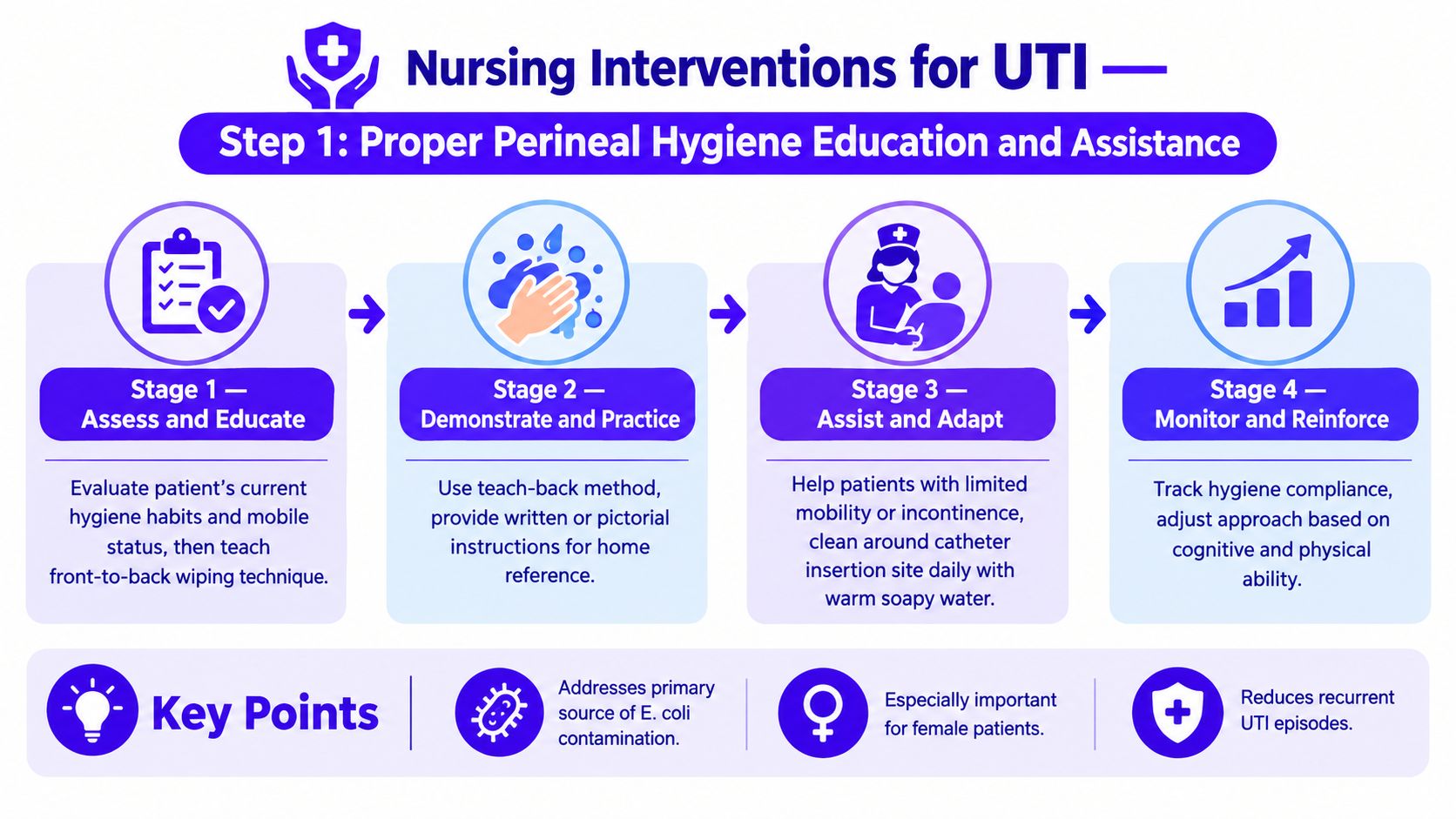
A patient with a stroke may understand that hygiene matters but still be unable to reach, see, or safely clean the perineal area. Assess the patient's usual technique, mobility, cognition, continence pattern, pain, and privacy needs before teaching. Demonstrate one step at a time, then use teach-back or return demonstration to identify barriers such as wiping back to front, using scented products, or delaying care because movement hurts.
After urination or a bowel movement, teach cleaning from front to back. Patients with incontinence need prompt cleansing, gentle drying, and regular skin checks. Warm water and mild, unscented soap are generally less irritating than douches, feminine sprays, or harsh antiseptics. Repeated scrubbing can damage tissue without improving prevention.
Make the care workable at the bedside. Position the patient safely, explain each action before touching, offer privacy, and place clean supplies within reach. Use adaptive equipment or hands-on assistance when needed. In long-term care, document missed or delayed care and address staffing, timing, or mobility barriers that leave skin exposed to moisture and stool.
Inspect during care for redness, excoriation, swelling, lesions, discharge, bleeding, urethral discomfort, or worsening pain. Record the finding, location, patient report, intervention, and response. New drainage, significant skin breakdown, fever, flank pain, or systemic decline warrants prompt communication and clinical review rather than repeated hygiene alone.
For a patient with a urinary catheter, provide gentle cleansing around the insertion site according to facility policy. Avoid aggressive scrubbing and unnecessary manipulation. Hygiene supports comfort and reduces contamination, but it does not replace accurate assessment, timely bladder emptying, or review of whether catheter use remains appropriate. Prevention guidance emphasizes limiting unnecessary catheter exposure and maintaining proper catheter care rather than relying on routine antiseptic cleansing alone CAUTI prevention guidance.
Use education that matches the patient's function and preferences:
- Show the technique: Demonstrate the sequence, use pictorial instructions, or offer a mirror when appropriate.
- Confirm understanding: Ask the patient to explain or demonstrate the steps.
- Review products: Recommend avoiding scented sprays, douches, and irritating cleansers.
- Protect the skin: Clean promptly after incontinence, pat dry, and report persistent irritation.
- Respect preferences: Adapt supplies, timing, privacy, culture, cognition, and assistance level.
Document what the patient can do independently and what staff must provide at each episode.
3. Urinary Catheter Care and Minimization Strategies
Start with the indication. At admission, handoff, and each change in condition, confirm why the catheter remains in place. Appropriate reasons may include selected critical monitoring, acute retention, obstruction, certain procedures, or another approved indication. If the only reason is convenience or a delayed removal order, raise the issue for review.
Nurse-driven removal protocols can shorten catheter dwell time and reduce CAUTI rates in hospitalized adults and older patients. A systematic review of nurse-driven catheter protocols reported these findings across three protocols, including an implementation in which the CAUTI rate fell from 5.1 to 2.0 infections per 1,000 catheter-days. The operational lesson is clear: record the indication, apply authorized removal criteria, and communicate promptly when those criteria are met.
Follow the system from insertion to removal
Use aseptic technique and facility policy for insertion. If placement is difficult, obtain appropriate assistance or use an approved visualization approach. Afterward, secure the catheter to limit traction and meatal injury. Check that tubing is unkinked, the drainage bag stays below bladder level, and the closed system remains intact. Avoid unnecessary disconnections.
During each shift, assess:
- System integrity: Look for leakage, breaks, disconnection, or contamination.
- Drainage: Check flow, urine appearance, output, and new discomfort. Escalate unexpected oliguria, obstruction, hematuria, fever, flank pain, or acute decline according to policy.
- Bag care: Empty the bag before overflow using the approved technique. Document output as required.
- Continued need: Record the current indication and discuss removal when it no longer applies.
- Alternatives: Consider a commode, urinal, bedpan, bladder scan, intermittent catheterization, or moisture-wicking pad when clinically appropriate.
In nursing homes, bundled practices such as hand hygiene, catheter care, incontinence management without catheters, and barrier precautions were associated with lower UTI or CAUTI rates across 19 studies, according to a nursing-home UTI prevention review. These measures require consistent documentation and staff competency, not routine catheter use.
For further infection-control learning, nurses may review this New York infection-control course.
A visual process can reinforce the sequence for staff and learners.
4. Prompt Urinary Elimination and Bladder Emptying Protocols
A patient who repeatedly reports urgency but produces only small amounts may have incomplete emptying, not frequent urination. Assess the person's usual voiding pattern, mobility, cognition, continence, fluid intake, medications, constipation, and retention history before setting a toileting plan. Match the schedule to the patient's abilities and routine.
For a patient with diabetes and recurrent symptoms, difficulty reaching the bathroom, therapy, work, or fatigue may delay voiding. Offer assistance before urgency becomes distress. Provide privacy, adequate time, safe transfers, and a position that supports emptying. Sitting upright may help when tolerated, but balance, strength, and fall risk determine the safest approach.
Assess whether the bladder is emptying
Frequent small voids do not confirm adequate emptying. Ask about persistent urgency, suprapubic pressure, discomfort, and difficulty starting the stream. A bladder scan can provide noninvasive information. Intermittent catheterization may be appropriate when ordered or permitted by protocol, with technique and frequency guided by policy.
Bedside commodes, bedpans, urinals, and moisture-wicking pads can reduce delays. Intermittent catheterization and bladder scanning may also help selected patients avoid an indwelling catheter, as described in this geriatric CAUTI prevention protocol. These options work only when rounding is reliable and staff respond promptly.
Build the plan around observable actions:
- Prompting: Offer toileting at individualized intervals and before sleep, meals, therapy, or transport.
- Positioning: Check footing, provide transfer assistance or a raised seat, and allow enough time.
- Privacy: Close the door or curtain and limit unnecessary interruptions.
- Trend review: Record voiding time, measured volume, urgency, incontinence, pain, and residual findings.
- Escalation: Notify the responsible clinician about inability to void, increasing residuals, hematuria, new fever, worsening pain, or deterioration.
Document the response rather than only the offer. “Voided 250 mL without suprapubic discomfort after assisted transfer” tells the next nurse whether the plan achieved its purpose and supports timely reassessment if the pattern changes.
5. Antibiotic Therapy Administration and Monitoring
Before the first dose, verify the indication, allergies, current medicines, renal considerations, route, timing, and whether cultures have been obtained. Match surveillance to the presentation. A patient with uncomplicated lower urinary symptoms needs different monitoring from someone with fever, flank pain, vomiting, hypotension, or suspected pyelonephritis.
Use medication-safety checks and local policy during administration. Record the dose, route, time, tolerance, and any relevant pre-administration findings. Over the next assessments, compare temperature, vital signs, dysuria, urgency, pain, appetite, activity, intake, mental status, and functional status with baseline findings.
Persistent or worsening symptoms, new systemic findings, declining blood pressure, confusion, vomiting, or inability to take medication may indicate resistance, an incorrect diagnosis, obstruction, renal involvement, or sepsis. Escalate these findings for clinical review rather than extending treatment independently.
Teach adherence and recognize harm
Patients may stop antibiotics when burning improves. Explain that symptom relief does not confirm eradication and that the prescribed course should continue unless the prescriber changes it. Give medication-specific instructions, including timing, missed doses, expected effects, and reactions that require prompt attention. Facial swelling, breathing difficulty, severe rash, persistent vomiting, severe diarrhea, or sudden neurologic or tendon symptoms, when relevant to the drug, warrant immediate evaluation.
Education should fit the patient's ability to manage treatment at home. Ask the patient to repeat the plan, identify warning symptoms, and explain where to seek help if symptoms return.
A 2025 nursing education program reported a 26% reduction in UTI incidence, average length of stay falling from 8 days to 4 days, and per-admission costs dropping from $10,000 to $6,000. It also reported total savings of $700,000 across 175 admissions in this nursing education program for UTI prevention. The findings support education as one part of a prevention bundle, not proof that medication teaching alone prevents recurrence.
Review other medicines, especially for older adults taking multiple prescriptions, and communicate culture and susceptibility results to the responsible clinician. Document prescribed changes and confirm follow-up instructions. Clinicians can use this antibiotic stewardship and empiric-therapy course for structured learning on responsible antimicrobial use.
6. Specimen Collection and Diagnostic Testing Education
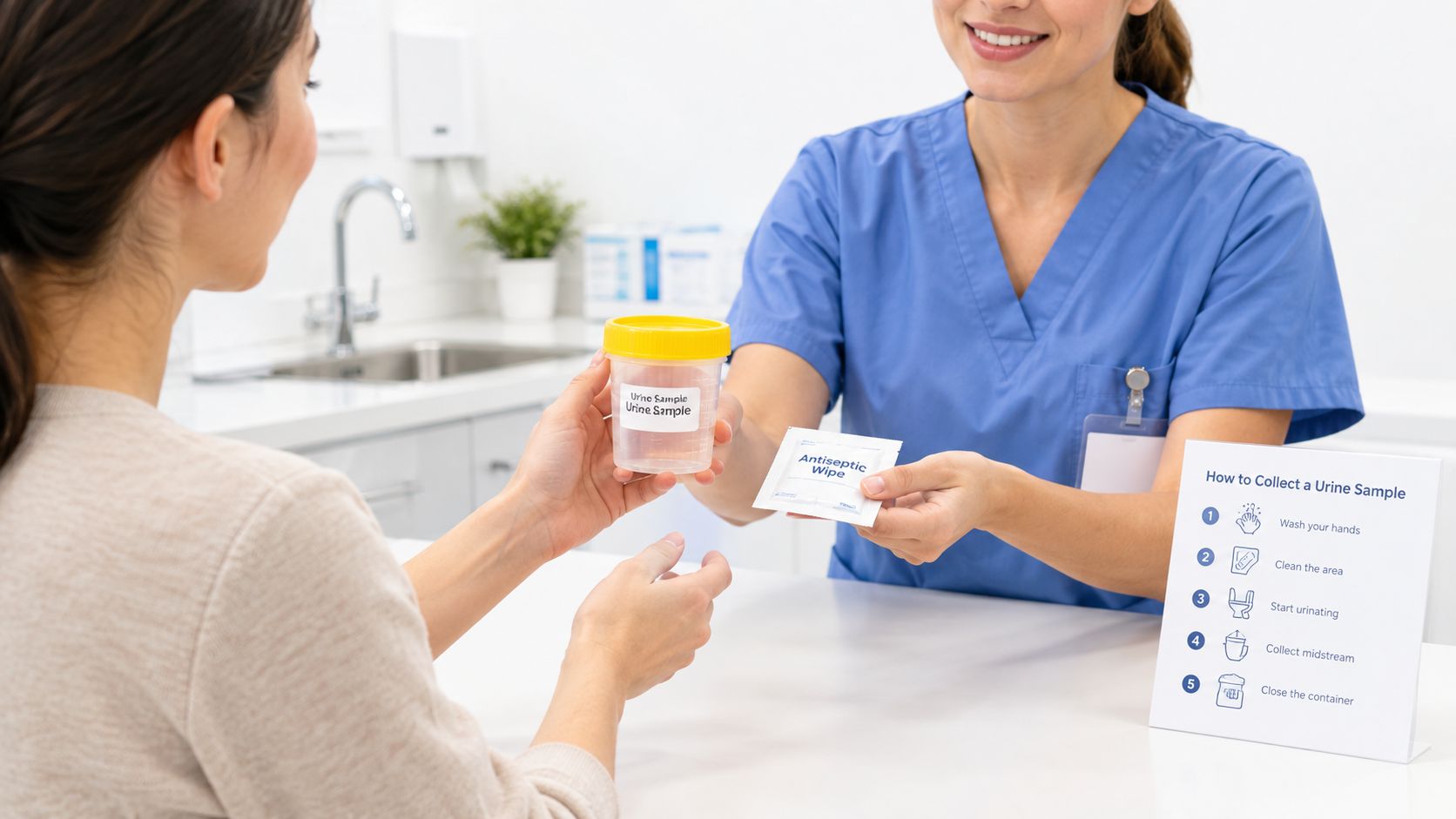
Reliable diagnostic data starts with the collection process. A contaminated specimen can prompt an incorrect diagnosis or unnecessary antibiotics, while a poorly obtained sample may obscure infection. Explain the clean-catch midstream procedure in plain language, provide the correct container and cleansing supplies, and invite questions. Ask for teach-back or a return demonstration instead of assuming written instructions were understood.
For collection, the patient cleanses as directed, begins voiding, captures midstream urine without touching the container or lid interior, and secures it for labeling. Verify identifiers, collection time, specimen source, symptoms, catheter status, and transport requirements. Catheter specimens require the approved sampling method. Do not collect from a drainage bag unless facility policy specifically permits it.
Interpret results in clinical context
Urinalysis can support screening, while culture and susceptibility testing help identify an organism and guide treatment. A positive culture does not establish symptomatic infection for every patient, particularly when colonization is possible. Interpret results alongside symptoms, examination findings, catheter status, comorbidities, and the patient's overall condition.
For symptomatic patients, 100,000 CFU/mL or more is commonly used as a diagnostic threshold in clinical practice, but the result still requires professional interpretation. Avoid telling patients that one abnormal urinalysis confirms infection or automatically requires antibiotics. A patient with urinary symptoms and a discordant result may need reassessment and communication with the responsible clinician.
Use this collection check at the bedside:
- Patient preparation: Demonstrate the steps and provide diagrams for home collection.
- Contamination prevention: Keep hands and container edges away from the specimen.
- Timely handling: Send the sample promptly, or refrigerate it according to laboratory policy when immediate transport is not possible.
- Result communication: Report critical findings, resistance patterns, worsening symptoms, and disagreement between results and presentation.
- Documentation: Record the method, time, patient tolerance, and any difficulty obtaining the specimen.
Explain the process without embarrassment. Clear instructions improve cooperation and give the patient a practical role in obtaining usable diagnostic data.
7. Symptomatic Assessment and Pain Management
Burning, urgency, frequency, suprapubic discomfort, hematuria, flank pain, nausea, and malaise should be assessed systematically. The nurse records onset, location, severity, pattern, triggers, associated symptoms, and functional impact. A patient who rates suprapubic pain as severe but remains hemodynamically stable may need comfort measures and routine evaluation, while a patient with flank pain and chills may require urgent escalation.
Assessment must include more than the urinary system. Temperature, heart rate, blood pressure, respiratory status, mental status, hydration, skin appearance, and oral intake can reveal systemic involvement. Older adults may present with functional decline or altered mental status, but these findings should prompt a broad assessment rather than an automatic assumption that UTI is the cause.
Match comfort care to the risk
Prescribed analgesics, appropriate heat therapy, positioning, reassurance, and uninterrupted toileting can reduce distress. A heating pad on the lower abdomen may help some patients, but staff should assess sensation, skin integrity, cognition, and burn risk before use. Medication response should be reassessed and charted with the same scale used initially.
Phenazopyridine may relieve dysuria when prescribed, but it doesn't treat infection. Patients should be told that it can turn urine orange or red, which prevents unnecessary alarm while preserving attention to genuine hematuria or deterioration. Non-opioid pain strategies may also be reviewed through this non-opioid pain management resource.
Fever, chills, flank pain, vomiting, hypotension, and altered mental status should change the pace of care.
A patient with a high fever, flank pain, nausea, and chills may have pyelonephritis rather than uncomplicated cystitis. The nurse should notify the provider promptly, obtain ordered testing, establish closer monitoring, and follow local escalation or sepsis protocols. Immediate response matters when the patient develops hypotension, worsening tachycardia, reduced urine output, respiratory distress, confusion, rigors, or other signs of systemic infection.
Documentation should capture both the initial presentation and the trajectory. “Pain improved after prescribed medication” is less useful than a time-stamped reassessment with the new pain score, urinary symptoms, vital signs, and any remaining concerns.
8. Patient Education and Prevention Counseling for Recurrent UTI
Prevention counseling works best when it addresses the patient's actual routine. The nurse asks about hydration, delayed voiding, bowel habits, sexual activity, contraceptive products, menopause, pregnancy, diabetes, anatomical concerns, prior cultures, catheter exposure, and medication use. A patient who routinely postpones bathroom breaks during work needs a different plan from a patient whose recurrence follows retention or incomplete emptying.
Teaching should focus on actions the patient can sustain. That may include drinking an appropriate amount, responding to the urge to void, wiping front to back, completing prescribed treatment, attending follow-up, and seeking care when symptoms return. Post-coital voiding can be discussed when relevant, without implying that sexual activity is the only cause of recurrence. Spermicides and some contraceptive choices may also warrant review with the provider.
Use teach-back and a clear action plan
A postmenopausal patient may need discussion of tissue changes and provider-directed treatment options. A patient with diabetes may need support for glucose management and hydration. A person with recurrent infections should understand when a culture is needed and why leftover antibiotics shouldn't be self-started.
A discharge conversation should cover:
- Early symptoms: Burning, urgency, frequency, suprapubic pain, hematuria, fever, flank pain, and functional changes.
- Urgent warning signs: Chills, vomiting, confusion, weakness, hypotension, or worsening illness.
- Medication safety: The prescribed schedule, expected effects, adverse reactions, and follow-up requirements.
- Daily routines: Hydration within restrictions, regular toileting, hygiene, and catheter alternatives when applicable.
- Risk review: Pregnancy, diabetes, retention, sexual practices, spermicides, and recurrent culture results.
Nurses should ask the patient to explain the plan in their own words and correct misunderstandings before discharge. Written material should match reading level, language, vision, cognition, and caregiver support.
Turn Each Intervention Into a Safety Check
The eight interventions work as a continuous clinical loop. Assessment identifies the risk, the intervention addresses it, and evaluation shows whether the patient is improving. A patient may need hydration support, scheduled toileting, specimen collection, prescribed medication, catheter removal, comfort care, and discharge teaching during the same episode. The priority changes if vital signs or mental status worsen.
At the bedside, the nurse should confirm several points before considering the plan complete:
- Reassess the patient: Repeat symptom assessment, pain score, vital signs, mental status, hydration findings, and focused urinary examination as indicated.
- Verify the specimen: Confirm the collection method, labeling, timing, transport, and whether results fit the clinical presentation.
- Review intake and output: Look for inadequate intake, retention, unexpectedly low output, fluid overload, or an elimination pattern that needs intervention.
- Evaluate medication response: Document symptom trajectory, fever response, adverse effects, allergies, interactions, and culture-directed changes.
- Reconsider catheter necessity: Record the indication, inspect the closed drainage system, and advocate for removal or an alternative when appropriate.
- Confirm patient understanding: Use teach-back for medication instructions, hydration limits, toileting, hygiene, follow-up, and warning signs.
- Communicate unresolved findings: Handoff should include pending cultures, persistent symptoms, residual concerns, catheter status, and the next reassessment point.
A patient with fever, chills, flank pain, vomiting, altered mental status, hypotension, or other signs of pyelonephritis or sepsis requires prompt escalation according to local protocols. The nurse shouldn't wait for routine culture results when the patient is clinically deteriorating. Early provider notification, urgent reassessment, appropriate monitoring, and timely treatment can be more important than completing a standard education script.
Nursing-home evidence supports bundling these actions rather than relying on a single hygiene message. Acute-care evidence likewise shows the value of reducing catheter dwell time, maintaining compliance with removal protocols, and connecting workflow prompts to catheter duration. A catheter dwell-time notification intervention reduced CAUTI rates from 11.17 before intervention to 10.53 after education alone, then to 0.392 after the notification intervention. The finding reinforces a practical point: reminders embedded in workflow can make the safer action easier to complete consistently.
Continuing education can help nurses maintain infection-control, pharmacology, assessment, and patient-teaching skills. Premiere Education is one relevant source of nursing CE and infection-control learning, but no course replaces clinical judgment, scope-of-practice requirements, provider collaboration, or facility policy. The safest plan remains individualized, documented, evaluated, and communicated across the care team.
Premiere Education offers accredited continuing education courses and certifications for healthcare professionals, including nursing CE and infection-control learning that can support UTI-related practice development. Nurses and healthcare organizations can explore self-paced courses, completion documentation, and learning tools by visiting Premiere Education.
Latest Posts





25% off Sitewide→
Use Code: PCECYBERSALE2025→