
.avif)
Hypoglycemia Nursing Care Plan: Assessment & Treatment

The call light is on, the meal tray is untouched, and a patient who was speaking normally at handoff is now pale, sweaty, and struggling to answer a simple question. The bedside meter reads 68 mg/dL. The nurse has only a short window to assess consciousness, protect the airway, treat safely, recheck the glucose, and identify why the episode happened.
A strong hypoglycemia nursing care plan handles more than the immediate reading. It gives each shift a shared approach to risk assessment, treatment, reassessment, documentation, handoff, education, and prevention. That matters because hypoglycemia is common in insulin-treated diabetes, not an unusual complication reserved for emergency departments. In the global HAT study of 27,585 people across 24 countries, 97.4% of patients with type 1 diabetes and 95.3% with type 2 diabetes reported hypoglycemic events during the prospective period, with estimated rates of 6.86 events per patient per month in type 1 diabetes and 2.37 events per patient per month in type 2 diabetes (global HAT study data).
Recognizing Hypoglycemia in Real-Time Clinical Scenarios
At the bedside, the first clue may not be the glucose result. A patient may report shakiness, hunger, anxiety, weakness, or sudden irritability. Another may become quiet, confused, slow to respond, or unable to cooperate. Sweating, tremors, pallor, and a rapid pulse can develop before the patient identifies the problem.
Consider a postoperative patient receiving basal and mealtime insulin. The breakfast tray arrives, but nausea prevents eating. At the next assessment, the patient is drowsy and diaphoretic. Treating this as an isolated low reading can delay care. Check responsiveness, swallowing safety, recent insulin administration, and access to rescue treatment, then follow the appropriate pathway.
Why routine planning matters
Hypoglycemia creates two linked nursing problems. Glucose must be restored safely, and the patient must be protected from recurrence after the initial correction wears off or the medication effect continues.
Global observational data report annualized rates of 51.5 episodes per person-year in type 1 diabetes and 16.5 episodes per person-year in type 2 diabetes. Retrospective reporting identified at least one event in 83.4% of people with type 1 diabetes and 50.8% with type 2 diabetes (related HAT analysis). The same global HAT study supports routine risk assessment, glucose monitoring, patient education, and rescue planning as standard nursing work.
A useful plan identifies baseline risk before a crisis. It records how the team will recognize a low glucose value, determine whether oral treatment is safe, repeat the measurement, document the response, and review likely causes. Include factors that can change between shifts, such as missed meals, insulin timing, renal or hepatic concerns, altered intake, activity, and changes in monitoring technology.
Practical rule: A corrected glucose value is an outcome, not an explanation. The plan is incomplete until the team knows what contributed to the episode and what will change on the next shift.
The acute-care burden reinforces the need for consistent processes. A U.S. analysis identified approximately 5.0 million emergency department visits for hypoglycemia from 1993 to 2005, averaging about 380,000 visits per year, with 25% resulting in hospital admission (U.S. emergency department analysis). The same analysis reported 258,831 hypoglycemia-related ED admissions in 2013, and 41% of patients arrived by ambulance.
Those figures do not determine an individual treatment decision. They show why the plan must work during a busy medication pass, overnight coverage, postoperative recovery, and discharge teaching. For patients using CGM or an automated insulin delivery system, document device alerts, confirm discordant readings according to policy, and communicate settings or interruptions during handoff. A shift-to-shift review should connect the episode to the next prevention action, rather than ending when the glucose returns to range.
Assessment Signs and Risk Stratification
Assessment begins with two questions: What is the glucose value, and can the patient safely protect the airway and swallow? The nurse should also assess symptoms, mental status, vital signs, recent food intake, medication timing, activity, renal or hepatic concerns documented in the record, and any previous impaired awareness.
A glucose value at or below 70 mg/dL warrants treatment in a conscious patient according to major diabetes guidance (glycemic goals and hypoglycemia standards). Level 1 hypoglycemia is below 70 mg/dL but at least 54 mg/dL. Level 2 is below 54 mg/dL and carries greater concern for cognitive dysfunction and mortality (Endocrine Society hypoglycemia classification).
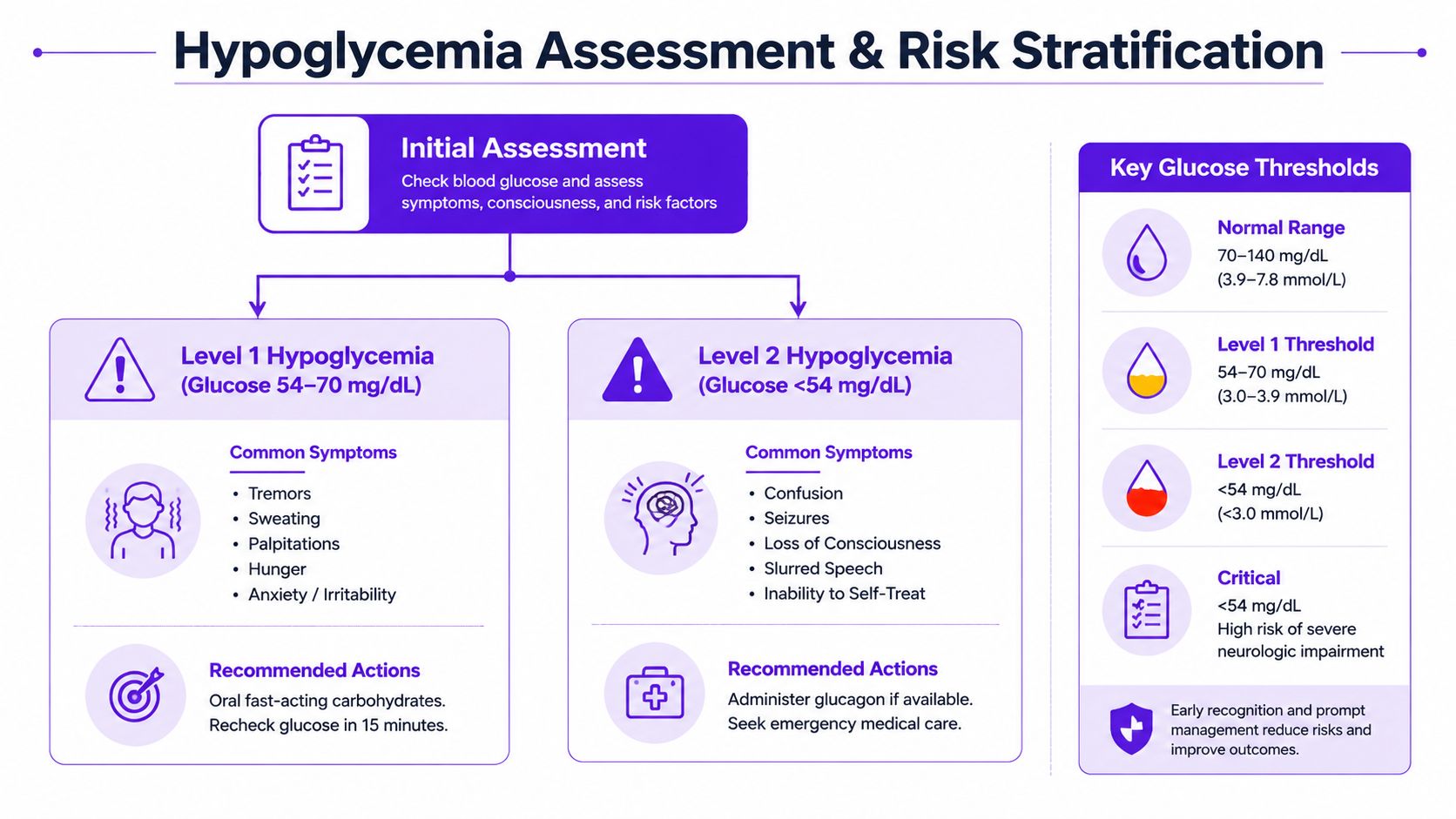
A practical bedside assessment sequence
- Confirm and identify. Check the glucose promptly using the available point-of-care method. If a CGM reading doesn't match the patient's presentation or changes rapidly, follow facility policy for confirmation with point-of-care glucose.
- Assess neurological status. Determine whether the patient is alert, confused, uncooperative, seizing, or unresponsive. A patient with a reading of 52 mg/dL needs more urgent escalation than a patient at 66 mg/dL, even if both report only mild symptoms, because the lower reading meets the clinically significant level 2 threshold.
- Check swallowing safety. A patient may be awake but unable to follow directions reliably. Oral carbohydrate is appropriate only when the patient can cooperate and swallow safely.
- Look for the trigger. Ask about a missed or delayed meal, insulin or medication timing, vomiting, unusual activity, alcohol exposure, changes in renal function, or a prior episode during sleep. The cause often appears in the timeline rather than in the glucose value itself.
- Stratify recurrence risk. A patient with repeated lows, nocturnal episodes, impaired symptom recognition, inconsistent nutrition, or a complex insulin regimen needs a prevention plan that follows the patient across shifts.
For a practical example, a patient with diabetes who received rapid-acting insulin but ate only part of a meal has an immediate nutrition and medication-timing concern. A patient who reports no warning symptoms before a low reading has a different risk profile, even if the glucose is corrected quickly.
A structured approach can be aligned with broader diabetes planning principles in this guide to the elements of a nursing care plan for diabetes. The care plan should record both subjective findings, such as hunger or confusion reported by the patient, and objective findings, such as diaphoresis, tremor, mental-status change, and the measured glucose.
Immediate Treatment Protocols and Escalation Pathways
A patient who received rapid-acting insulin but ate only part of the meal may be awake, symptomatic, and still at risk for another low. Treatment begins with consciousness, cooperation, and swallowing ability, then continues with a plan for reassessment and prevention. The glucose value alone does not determine the route of treatment.
The conscious patient who can swallow
Give 15 g of fast-acting carbohydrate, wait 15 minutes, and recheck the glucose. If it remains below 70 mg/dL, repeat treatment under the applicable protocol.
For a patient with a glucose of 68 mg/dL who is awake and swallowing safely, administer the prescribed fast carbohydrate. Record the time, remain alert to changes in symptoms and mental status, and obtain the repeat glucose at the required interval. A full meal is not a substitute for the initial fast carbohydrate because it may absorb too slowly for immediate correction.
Once the glucose improves, decide whether additional nutrition is needed by reviewing meal timing, medication duration, the patient's clinical condition, and facility policy. The immediate correction does not resolve the exposure that caused the episode. Confirm the next meal plan, review insulin or medication timing, and communicate the unresolved risk to the next nurse.
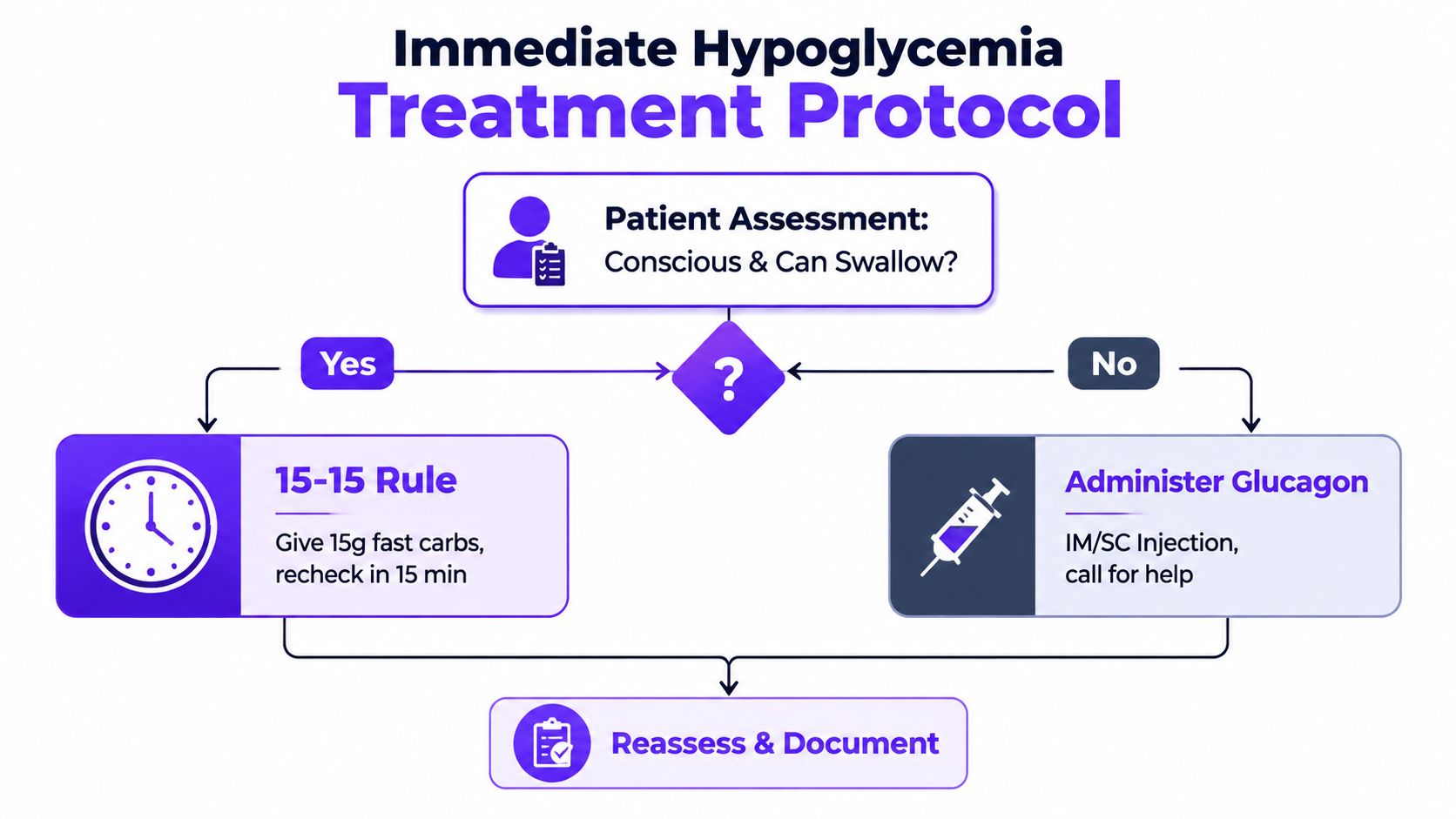
When oral treatment isn't safe
If the patient cannot swallow or has altered mental status, avoid oral carbohydrate. Call for help, protect the airway, reduce aspiration and injury risk, and follow the facility's rescue medication protocol.
One adult management protocol specifies 50 mL of D50 IV push over 2 to 5 minutes when IV access is available. Without IV access and with glucose below 60 mg/dL, it specifies 1 mg of glucagon subcutaneously and side positioning to reduce aspiration risk (adult hypoglycemia management protocol). Route, concentration, and dose must match local policy, patient-specific orders, and scope of practice.
A postoperative patient who is NPO and difficult to arouse should not be offered juice at the bedside. Escalate through the appropriate IV dextrose or glucagon pathway, reassess glucose and neurological status, and document the response. Review the patient's medication regimen with the pharmacological foundations of diabetes medications course in mind, especially timing and drug effects that may prolong risk.
One inpatient study found 40% of hypoglycemic episodes lasted more than one hour, and 72% of patients had more than one episode during admission (inpatient hypoglycemia study). Reassessment is therefore part of treatment. Before handoff, document the likely cause, pending medication or nutrition risk, device alerts or automated insulin delivery concerns when applicable, and the action required on the next shift.
Monitoring Standards and Documentation Best Practices
A useful performance measure is time-to-normoglycemia, paired with evidence that the patient's symptoms and cognition have improved. In a nurse-driven inpatient evaluation, median recovery was 21.5 minutes in ICU patients and 26 minutes in non-ICU patients, suggesting that a well-executed protocol can normalize glucose in under 30 minutes in many cases (nurse-driven inpatient evaluation).
The care plan should make each time point visible. A vague note such as “treated for low blood sugar, improved” doesn't show whether recognition was prompt, whether the intervention was appropriate, or whether reassessment occurred.
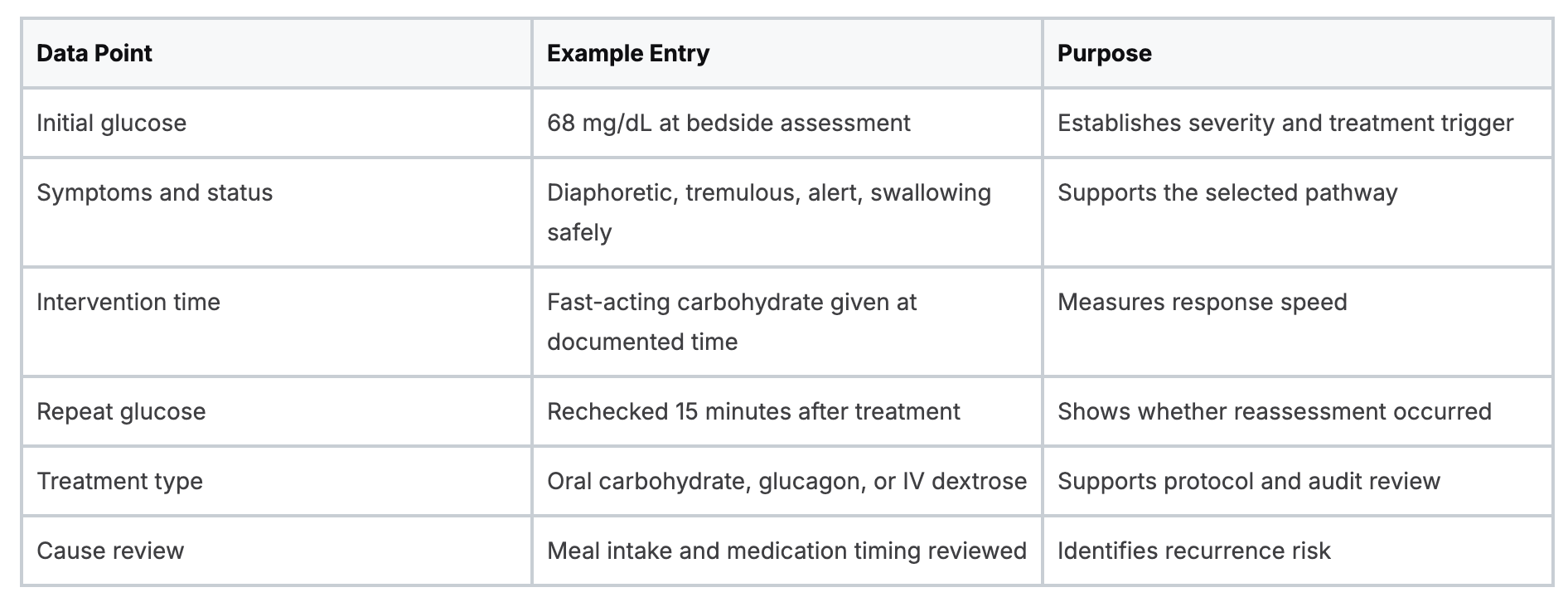
What the chart must show
- Initial glucose and symptoms: Record the measurement, time, mental status, and findings such as sweating, tremor, confusion, or seizure activity.
- Intervention time and treatment type: State whether the patient received carbohydrate, glucagon, or IV dextrose, including route and the relevant dose under the applicable protocol.
- Repeat glucose: Document the recheck at 15 minutes when the conscious-patient pathway applies, along with the patient's clinical response.
- Escalation and notifications: Record provider notification, rapid-response involvement, transfer, or other escalation when applicable.
- Cause and prevention action: Link the episode to missed nutrition, medication timing, device concern, or another identified factor, then state what changed.
A structured record also improves data quality. Nurses and managers reviewing episodes can use this guide to enterprise data quality dimensions as a useful framework for thinking about completeness, consistency, timeliness, and accuracy in clinical event documentation.
A nurse should document the patient's baseline function after treatment, not just the meter result. If the glucose improves but confusion persists, the episode requires continued assessment and escalation rather than closure.
Prevention Strategies Across Shifts and Settings
A patient's next meal, medication dose, and handoff should reflect the hypoglycemic event that just occurred. Reporting only the latest glucose value leaves the incoming nurse without the context needed to prevent another episode. The handoff should state what happened, which risk remains active, and what action is expected before the next dose or meal.
The 2025 ADA hospital standards call for an individualized plan to identify, treat, and prevent hypoglycemia. They also support tracking episodes for quality improvement and reviewing the treatment regimen after a documented event (ADA hospital standards summary).
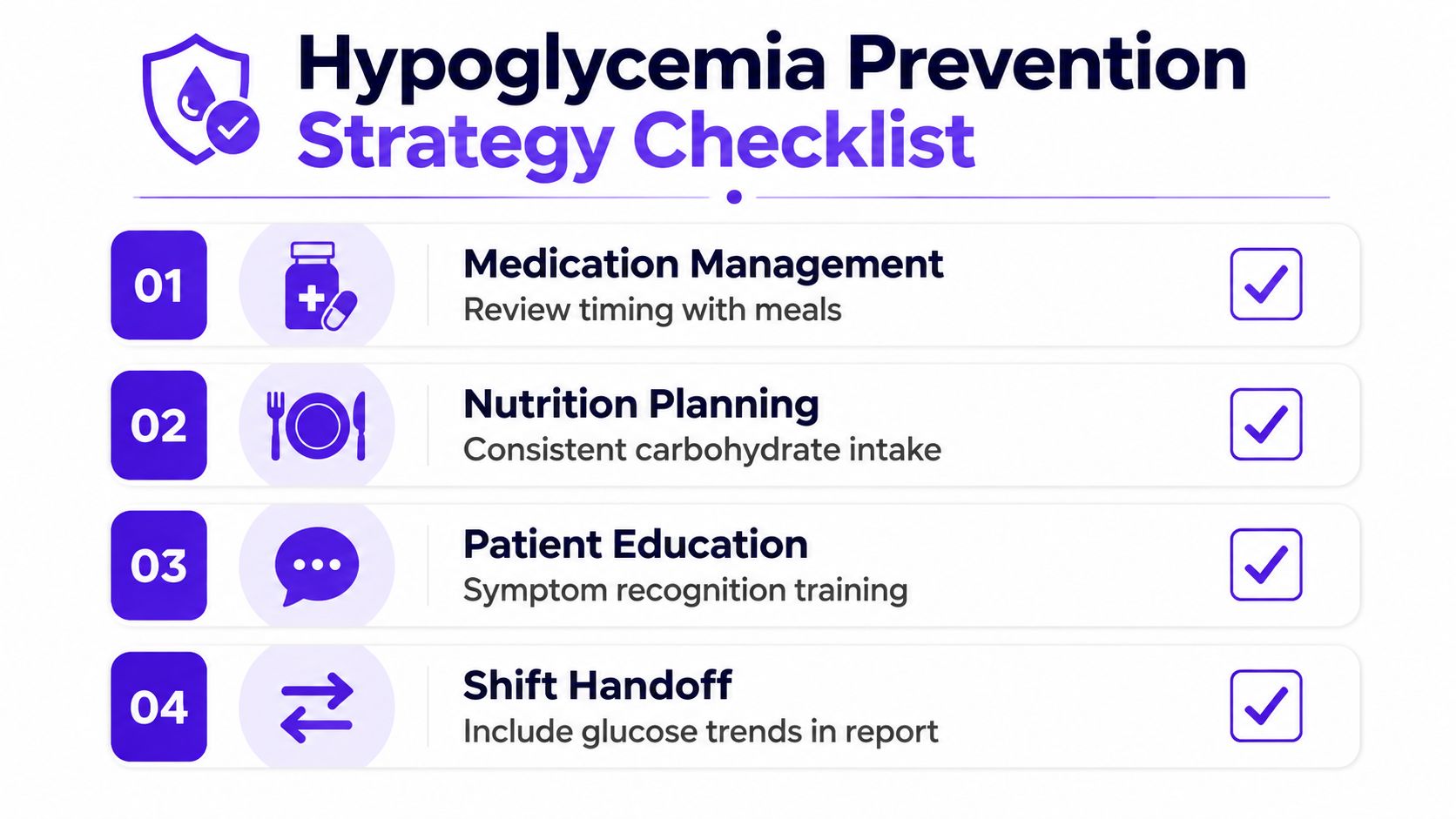
Build the plan around the cause
Match the prevention action to the trigger. A delayed meal calls for tighter nutrition and medication coordination. Vomiting after insulin requires explicit monitoring and escalation instructions for the next shift. Recurrent nocturnal lows should prompt review with the prescribing team, rather than adding overnight checks without examining the regimen.
CGM and automated insulin delivery require device-specific review. As noted in the CGM and automated insulin delivery review cited above, these systems may improve glucose outcomes and reduce hypoglycemia. Nurses still assess sensor placement, alarm response, device access, and whether point-of-care confirmation is needed when the reading conflicts with symptoms or examination findings.
A useful handoff includes the glucose trend, treatment already given, meal status, medication timing, device alerts, awareness level, and the next reassessment requirement. Document the suspected trigger and the prevention change, so the next nurse can evaluate whether it worked instead of repeating the same response.
At discharge, the plan should remain understandable to the patient and caregiver. Include rescue medication instructions, follow-up needs, and clear direction for reporting recurrent episodes. Review the plan again when the setting changes, such as transfer between units or return home.
Patient and Caregiver Education for Long-Term Success
Generic handouts rarely prove that a patient can act during a frightening episode. Education should use a specific scenario, such as, “If the meter shows 68 mg/dL and you're awake and able to swallow, what happens next?” The patient should explain the treatment sequence, while a caregiver demonstrates how and when to use glucagon under the prescribed plan.
CGM users need to know what alarms mean, when symptoms and sensor readings don't match, and when to confirm with a fingerstick according to clinical guidance and device instructions. Families, school staff, workplace contacts, and other nonclinical caregivers may also need clear instructions on recognizing altered consciousness, calling for help, and administering glucagon when trained and authorized.
A return demonstration is more useful than asking whether the patient understands. The nurse can role-play a nighttime alarm, a missed meal after insulin, or a patient who is confused and cannot swallow. Broader diabetes-focused nursing intervention concepts are available in nursing interventions for diabetes.
Professional boundaries are critical to safe, ethical care. The Professional Boundaries and Provider Sexual Misconduct course fulfills Georgia's Rule 360-15-.01 and equips physicians with strategies to prevent misconduct and protect patients.

Premiere Education offers accredited continuing education courses and certifications, with tools for assignment, completion tracking, and documentation across healthcare topics. Visit Premiere Education to explore diabetes-related learning and build a practical education plan that supports safer hypoglycemia assessment, treatment, and prevention.
Latest Posts





25% off Sitewide→
Use Code: PCECYBERSALE2025→