
.avif)
How Intersectionality in Healthcare is Changing Lives
Key Takeaways
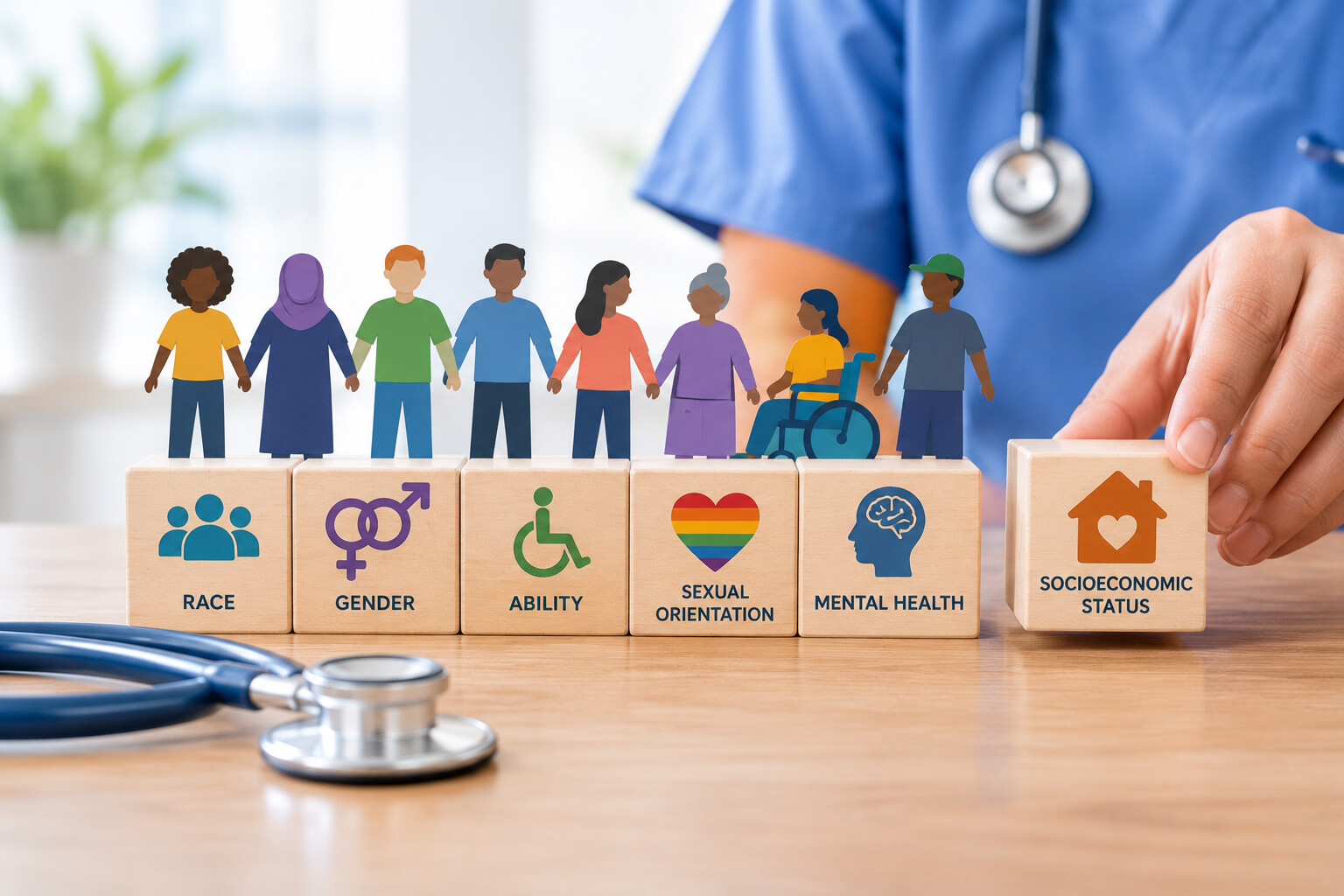
Healthcare professionals are increasingly recognizing that patient-centered care goes much deeper than individual criteria like age, race, ethnicity, and socioeconomic status. These factors often combine to create more nuanced expectations, anxieties, and barriers to care. Intersectionality in healthcare helps healthcare providers untangle the web and deliver more effective care experiences.
Recommended courses: Applying Intersectionality in Clinical Practice: A Framework for Inclusive Client Care, Implicit and Explicit Bias Reduction Training in Healthcare, Racial Disparities in Healthcare: From Awareness to Equitable Action, Implicit Bias Training For Healthcare Providers
Every healthcare professional is chasing the best outcome for their patients, but the industry is increasingly recognizing how complicated that path can be. Objective factors like age, race, gender, disability, socioeconomic status, and language all inform prognosis and care strategy.
But taken collectively, these elements weave a complex web of individualized experiences—and can lead to very different outcomes for people who appear similar on paper.
Intersectionality in healthcare empowers healthcare professionals to identify important nuances in a patient’s experience that may have a big impact on care. These factors aren’t always obvious or intuitive, and courses like Applying Intersectionality in Clinical Practice: A Framework for Inclusive Client Care provide powerful tools healthcare workers can put into practice today.
How can intersectionality training change the lives of the patients in your care? Here are the basics every health professional should know.
What Is Intersectionality?
The concept of intersectionality was developed to describe how overlapping systems of disadvantage can affect people in ways that cannot be fully understood by examining social identities separately.
For example, the healthcare experiences of a woman aren’t fully encapsulated by her gender. Ethnic and cultural identities also interact with that identity—and the total picture may have significant implications for how care takes place.
In practice, intersectionality in healthcare may incorporate:
- Ethnicity
- Gender
- Sexual orientation
- Disability
- Socioeconomic status
- Immigration status
- Age
- Geographic location
- Language
These factors also interact with social and structural conditions such as poverty, discrimination, housing instability, limited transportation, and unequal access to healthcare.
Intersectionality also recognizes that even patients who share similar profiles may not respond the same way to health systems. Instead, it provides a framework for identifying significant elements of their experience and using them to shape a positive interaction for better outcomes.
Why Intersectionality in Healthcare Matters
Consider two patients who are older adults with a disability, limited financial resources, and limited English proficiency. Each factor can potentially affect access to healthcare.
Together, however, they may create a more complicated set of challenges.
For one person, mobility issues and a fear of missing work may make a trip to the doctor seem overwhelming. For the other, investing in care they may not fully understand might seem pointless and frustrating.
Even though they share similar profiles, their criteria for a positive healthcare experience are very different. And if those needs aren’t met, they may quickly abandon care strategies and avoid seeking care in the future.
Unfortunately, negative health experiences quickly translate to poorer overall health. According to a 2025 study, patients who are members of racial minorities reported feeling marginalized, dismissed, and ignored at rates significantly higher than average.
These same demographics also experience higher mortality rates for treatable conditions like hypertension, diabetes, diarrheal disease, obesity, and mental health challenges.
Intersectionality in healthcare seeks to bridge the gap between these two realities. That’s why the most successful providers actively pursue intersectionality in healthcare training to quickly identify these factors and translate them into practice.
Addressing Bias and Communication
Bias can influence clinical interactions, diagnostic decisions, pain assessment, treatment recommendations, and perceptions of patients. Intersectionality provides another lens through which healthcare professionals can examine how assumptions may affect patients whose identities or circumstances differ from dominant expectations.
Effective communication is particularly important. Providers should seek to avoid assumptions about a patient's:
- Family structure
- Cultural practices
- Health beliefs
- Financial resources
- Ability to understand medical information
Using qualified medical interpreters when appropriate, providing accessible educational materials, asking open-ended questions, and confirming patient understanding can support more equitable communication.
Intersectionality and Health Equity
Health equity involves addressing avoidable and unfair differences in health and healthcare. Intersectionality can contribute to this work by helping organizations identify populations that may be overlooked when disparities are examined through only one demographic category.
Healthcare organizations can examine their data across multiple variables when appropriate and ethically permissible.
For example, analyzing access to preventive services by combinations of demographic and socioeconomic characteristics may reveal patterns that are less visible when categories are considered independently.
However, data alone cannot explain every patient's experience.
Quantitative information should be complemented by patient perspectives, community engagement, and qualitative research. Healthcare professionals should also recognize that collecting identity information requires attention to privacy, respect, and patient autonomy. Patients should understand why information is being requested and how it will be used.
Applying Intersectionality in Clinical Practice
Providers do not need to completely redesign their practices to begin incorporating intersectionality in healthcare. Small changes in clinical thinking can make a meaningful difference.
First, providers can practice curiosity rather than assumption. Asking, "What might make this treatment plan difficult for you?" can generate more useful information than assuming a patient is unwilling to follow recommendations.
Second, clinicians can consider accessibility throughout the patient experience. This may include physical accessibility, language access, sensory accommodations, health literacy, transportation, scheduling, and financial barriers.
Third, providers can involve patients in decision-making. Shared decision-making recognizes that treatment recommendations must fit the patient's values, circumstances, and preferences.
Finally, healthcare professionals can examine their own assumptions. Continuing education can provide opportunities to explore how implicit bias, institutional practices, and social determinants of health influence clinical care.
The Look Ahead for Intersectionality in Healthcare
Intersectionality in healthcare is changing the conversation about health equity by encouraging professionals to look beyond isolated characteristics and consider the complex realities of patients' lives. It reminds healthcare providers that two patients with the same diagnosis may face very different obstacles to achieving good health.
Premiere is committed to helping health professionals unlock intersectional influences on health outcomes for every patient who walks in their door. Courses like Applying Intersectionality in Clinical Practice: A Framework for Inclusive Client Care provide strategies and frameworks for connecting more deeply with patient priorities to deliver truly patient-centered care.
All of Premiere’s award-winning courses are created by industry experts and make it easy to meet your professional obligations and develop your career.
FAQs
What is intersectional healthcare?
Intersectionality seeks to look beyond individual patient characteristics like age, sex, race, disability, and socioeconomic status to uncover more nuanced and individualized barriers to care.
Why does race matter in healthcare?
In America, members of racial and ethnic demographics experience significantly higher rates of mortality from treatable conditions like diabetes, mental health disorders, diarrheal disease, and hypertension. While the reasons for these outcomes are linked to biases and social factors, individual patients within these groups have a unique experience of these factors that healthcare institutions must account for.
What are the impacts of language barriers on healthcare?
Patients with language barriers may avoid care, misunderstand guidance, and struggle to adhere to care plans. Healthcare professionals should seek to understand how language impacts a patient’s health journey and provide support.
What are some examples of social issues that affect healthcare?
Language, ethnicity, sexual identity, and age are just a few of the factors that can lead to discrimination and bias across the healthcare system. Intersectionality in healthcare recognizes that the impacts of these factors rarely exist in isolation—health providers must consider how the combined effect of these issues may uniquely inform a patient’s experience.
How can physicians help underserved communities?
Intersectional healthcare training provides a framework for minimizing bias and providing patient-centered care to members of underserved communities. These strategies promote curiosity over assumption and invite patients into care plan creation.
Latest Posts





25% off Sitewide→
Use Code: PCECYBERSALE2025→