

GLP-1 Medications Explained: How They Work and What to Know

GLP-1 is a hormone the gut releases after eating that lowers blood sugar and signals fullness, and GLP-1 medicines copy that signal to work longer in the body.
But if a medicine helps while someone takes it, what happens when treatment stops? That question deserves as much attention as weight loss, brand names, or injection schedules. A useful treatment discussion includes both the reasons to start and a plan for managing changes, interruptions, or discontinuation.
What GLP-1 Means and Why It Matters
Why might one injection pen say Ozempic and another say Wegovy when both contain semaglutide? The answer sits in three words patients hear constantly but rarely get defined: hormone, ingredient, and brand.
GLP-1 stands for glucagon-like peptide-1. It is a hormone that helps coordinate how the pancreas, stomach, and brain respond to food. The name sounds technical, but the basic idea is a message passing between organs after a meal.
A receptor is the cellular structure that receives that message. A key-and-lock analogy helps: GLP-1 is the key, and its receptor is the lock. A receptor agonist activates that lock, so a medicine can reproduce the hormone's effects for longer than the natural signal lasts.
Why the terminology matters
The active ingredient alone does not identify the approved purpose, formulation, or prescribing instructions. Semaglutide sold as Ozempic carries different approved uses and dosing directions than semaglutide sold as Wegovy, even though the molecule is the same. Recognizing the difference between a hormone, an ingredient, and a brand prevents confusion when a prescription label, an insurance form, or a news article uses only one of those words.
For another plain-language explanation, Trim's resource on how GLP-1 works in the body offers background vocabulary that can help patients prepare for a clinical conversation.
Practical rule: A medication list should identify the actual product, not just the drug family.
Use has expanded substantially. According to Truveta figures cited by MIT Technology Review, GLP-1 drugs accounted for 5.4% of prescriptions written for U.S. adults in September 2024, up from 3.5% in 2023. Separately, FAIR Health reported that the share of U.S. adults with an overweight or obesity diagnosis prescribed a GLP-1 drug rose from 0.30% in 2019 to 2.05% in 2024.
These figures measure different things: one counts prescriptions, the other counts diagnosed adults receiving a prescription. The clinical roles also differ:
- Type 2 diabetes: Managing blood glucose.
- Chronic weight management: Supporting treatment of obesity or qualifying overweight.
- Cardiovascular risk reduction: Reducing certain events in selected adults.
Each role carries its own goals and its own consequences when treatment changes, so eligibility and dosing decisions belong to a qualified prescriber. Patients should not independently start, stop, split, or otherwise alter a product.
GLP-1 Medicines Approved Today and What They Treat
Approved GLP-1 medicines by brand, use and schedule
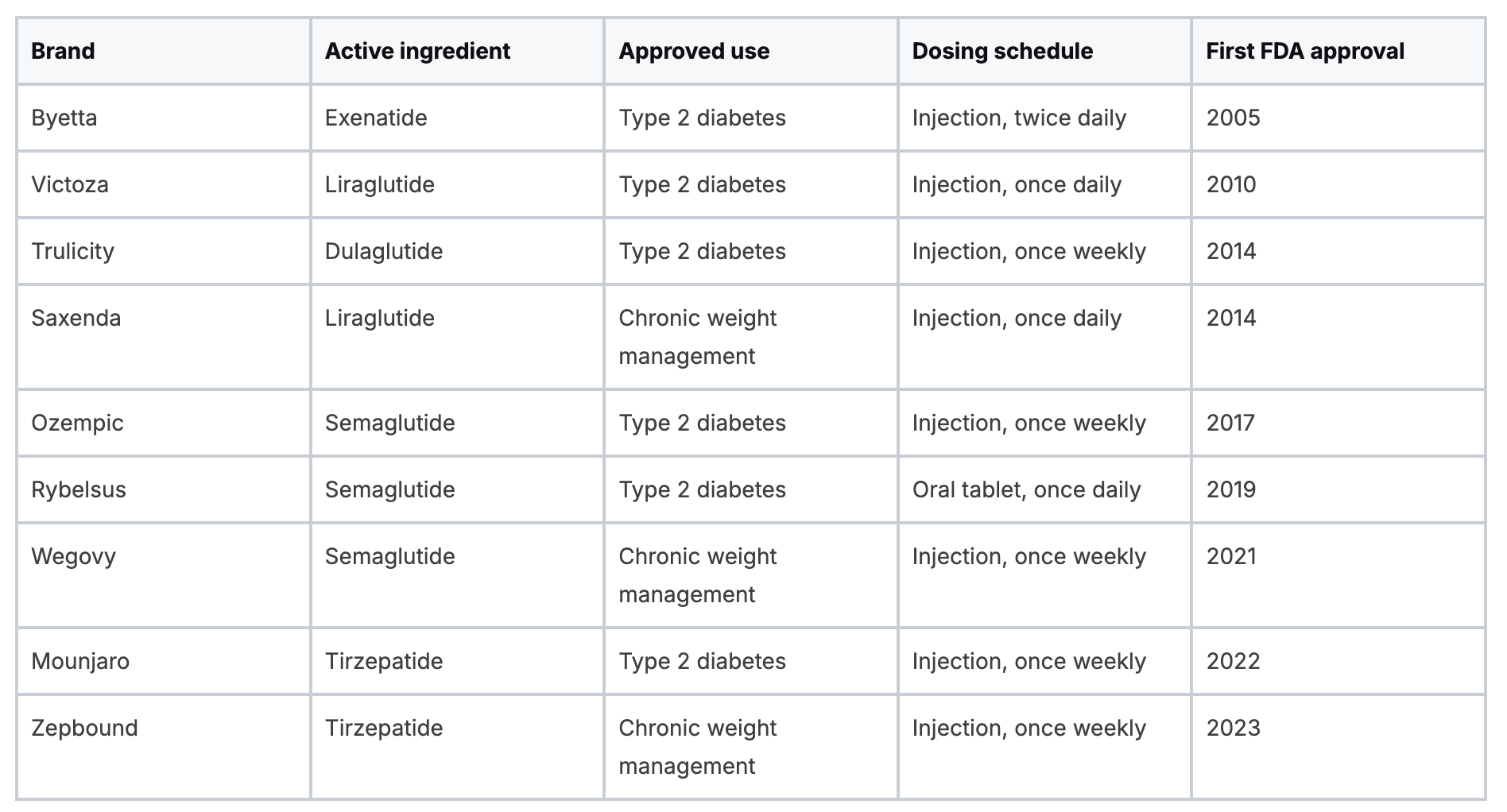
The approval years and original indication distinctions above follow the FDA's GLP-1 receptor agonist timeline. The table summarizes those approvals, not every subsequent indication or formulation change.
Each row separates what the medicine contains from what that branded product was approved to treat. Diabetes products support blood sugar control, while the weight-management products address obesity or qualifying overweight. Tirzepatide belongs in this practical comparison, although it activates another hormone pathway as well as GLP-1.
Reading a refill correctly
Suppose a pharmacy receives a refill request that says only semaglutide. The pharmacist needs to confirm whether the prescription concerns Ozempic for diabetes or Wegovy for weight management. Substituting a familiar brand name without checking the prescription could create a dosing or indication error.
For healthcare learners, understanding diabetes pharmacology places these products within the broader medication review.
The administration route also matters. An oral tablet isn't used like an injection, and a weekly pen doesn't follow a daily injection routine. Patients need product-specific instructions for administration, storage, and missed doses rather than advice borrowed from another brand.
A safer documentation habit
A complete medication entry includes:
- Brand and ingredient: Both names help reconcile prescriptions across clinics.
- Dose and route: Record the prescribed amount and whether administration is oral or injected.
- Schedule: Copy the actual prescription rather than assuming a class-wide routine.
- Indication: State the condition being treated.
For example, documenting a prescription as semaglutide without its brand, dose, or purpose leaves the next clinician guessing. Current prescribing information remains the final reference, because labels and available formulations can change.
How GLP-1 Medicines Work in the Body
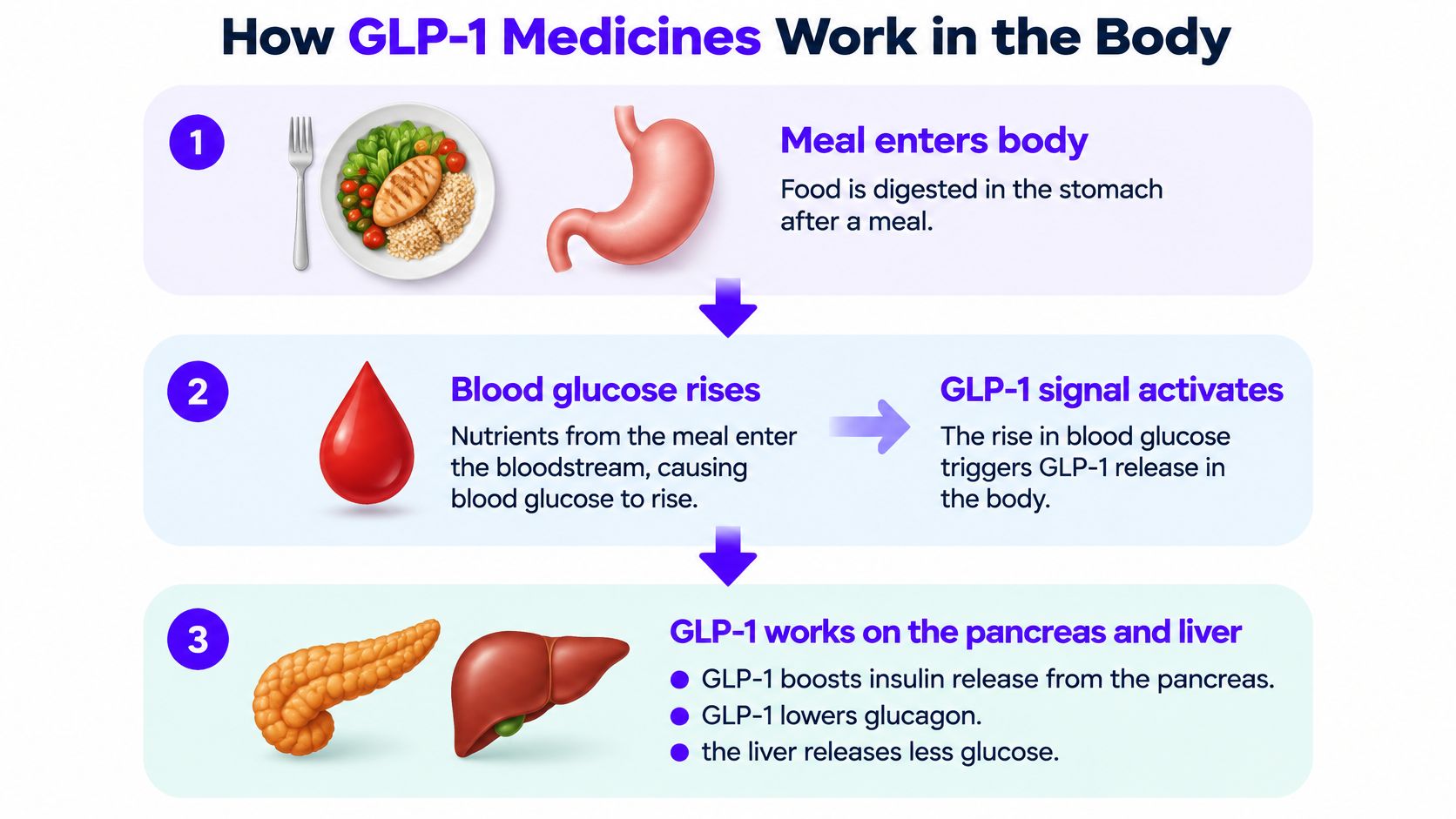
After a meal, the body must manage incoming nutrients without letting blood glucose rise excessively. A clinical review of GLP-1 physiology describes connected effects on insulin, glucagon, gastric emptying, and appetite that explain why these medicines affect both glucose and weight.
The diagram shows how the meal-related signal connects the digestive system with glucose regulation.
The pancreas and liver response
When glucose is high, GLP-1 helps pancreatic beta cells release insulin. It also suppresses glucagon, the hormone that tells the liver to release stored glucose.
Insulin works like a delivery truck moving glucose from the bloodstream into tissues, while glucagon works like a tap adding glucose back to the street. GLP-1 helps send more trucks while reducing the extra flow from the tap.
These effects are glucose-dependent, meaning they respond to the glucose level rather than driving insulin release equally under all conditions. Low blood sugar is therefore less likely with GLP-1 therapy alone, but combining treatment with insulin or sulfonylureas can raise that risk. Anyone taking those medicines together needs their prescriber to review the combination.
The stomach and appetite response
GLP-1 also slows gastric emptying, the movement of food out of the stomach. Like a sink with a slower drain, the stomach releases its contents more gradually, moderating how quickly nutrients reach the intestine.
In the brain, appetite pathways receive a stronger fullness message, so the sense of having eaten enough arrives sooner. A patient may feel satisfied with a smaller portion, while a large meal may worsen nausea or uncomfortable fullness.
- For meal planning: Smaller portions and slower eating can make fullness easier to recognize.
- For medication review: Slower stomach emptying can affect oral medicine absorption, so the prescriber or pharmacist should review other tablets and capsules.
Because these medicines amplify a natural hormone signal rather than permanently rewiring the system, the effects depend on continued dosing. Starting, pausing, or switching treatment is a decision to plan with a clinician.
Tirzepatide adds a separate signal. The National Institute of Diabetes and Digestive and Kidney Diseases explains that it activates both GLP-1 and GIP pathways, whereas semaglutide mimics GLP-1 alone. Both work through a shared communication network, but they send different messages.
Benefits Shown in Clinical Trials
The FDA's Wegovy review reports that, in the 68-week STEP 1 trial, semaglutide 2.4 mg produced average body-weight reduction of approximately 14.85% versus 2.41% with placebo, and that across the reviewed weight-management trials 68.8% to 86.6% of participants receiving that dose reached at least 5% weight loss, with more than half reaching 15% and more than one-third reaching 20%. Read those as on-treatment group results for the studied dose and population, like a class average: useful for scale, silent about any one student.
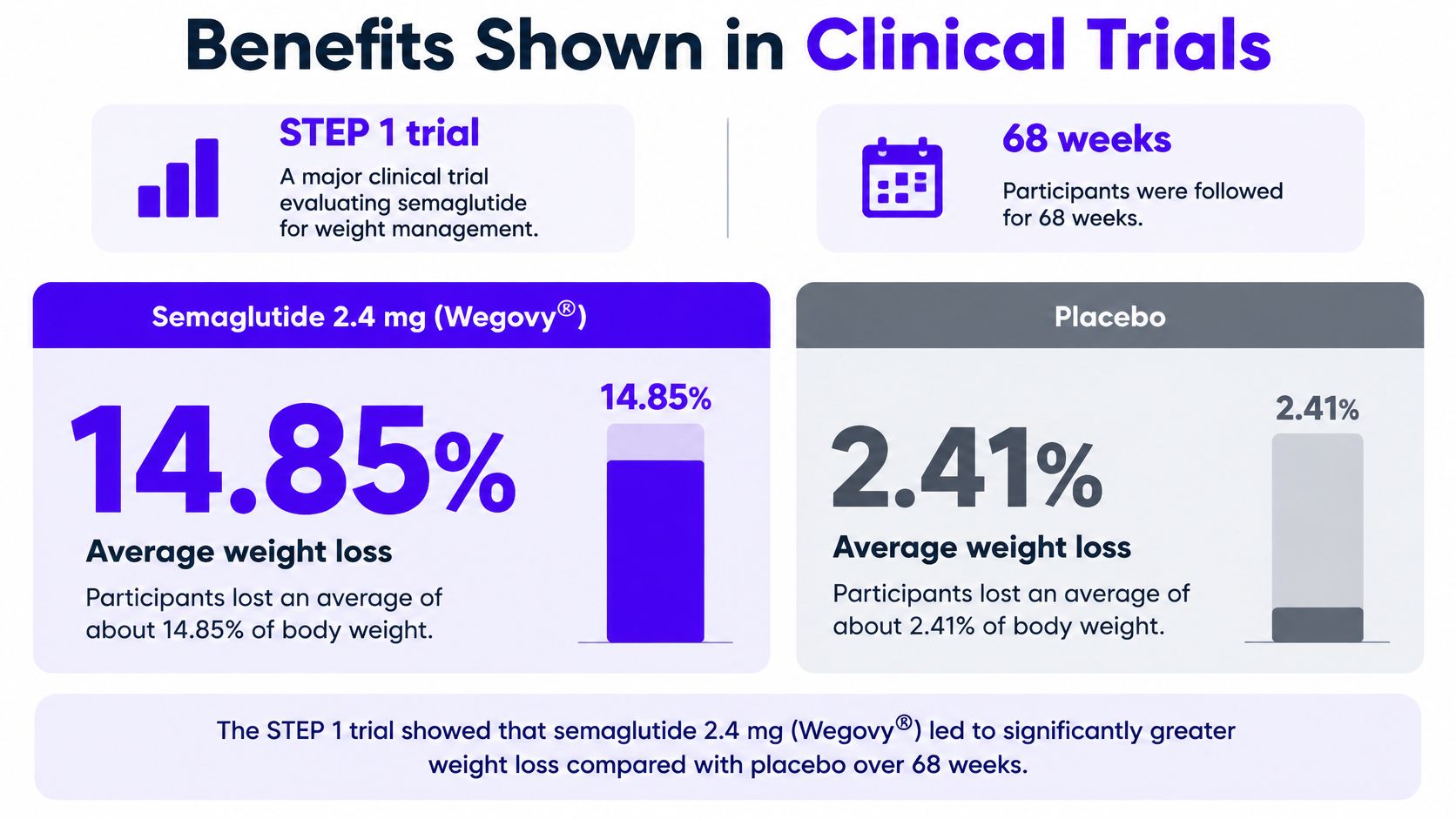
As a hypothetical calculation using those averages, a person starting at 100 kg, approximately 220 lb, would lose roughly 14.9 kg with the treatment average or 2.4 kg with the placebo average. That arithmetic illustrates scale, and an individual result can land above or below it. Because the trials measured people while treatment continued, the size of benefit is also part of the later conversation about duration and transition planning with a clinician.
Cardiovascular benefits have a defined scope
In SELECT, adults with overweight or obesity, established cardiovascular disease, and no diabetes had cardiovascular death, nonfatal heart attack, or nonfatal stroke in 6.5% of the semaglutide group versus 8.0% with placebo over approximately 39.8 months, with a hazard ratio of 0.80, about a 20% relative risk reduction, as reported in the New England Journal of Medicine. The cardiovascular-death-only result wasn't statistically confirmed. The strongest finding concerned the combined outcome; it did not prove that every GLP-1 product reduces cardiovascular mortality.
A trial average describes a group. It doesn't establish an individual's expected weight loss or heart benefit.
For people treated for type 2 diabetes, clinicians also assess after-meal glucose and HbA1c, a measure of longer-term glucose control. Glycemic control can improve even when weight changes less than expected, so clinicians track HbA1c alongside weight.
The following video provides additional context for the treatment discussion.
Healthcare learners can review GLP-1 weight-loss considerations for providers and the Premiere Education course Expanding the GLP-1 Landscape: Emerging Evidence and Clinical Considerations. Interpretation still requires caution: trial participants were selected, responses varied, and sustained treatment plus lifestyle support influenced outcomes.
Side Effects and Safety Limits
Nausea, vomiting, diarrhea, and constipation are the most common effects of GLP-1 medicines. They tend to appear or worsen during dose increases, which is why prescribers begin with a lower dose and raise it gradually according to the product's instructions. The slow schedule works like breaking in a stiff pair of shoes: each step up gives the digestive system time to adapt before the next one.
When nausea does strike, smaller portions, slower eating, and staying upright after meals often help. Persistent symptoms warrant a call to the prescribing team, not a self-directed dose change. Cutting a dose or skipping ahead independently undoes the careful pacing that keeps side effects manageable.
Matching symptoms to the response
Side effects sort into three levels of response. Knowing which level applies keeps minor discomfort from being treated like a crisis, and keeps a real warning sign from being waited out.
- Routine discussion: Constipation, manageable nausea, or uncomfortable fullness should be reported, especially when eating and drinking become difficult.
- Urgent assessment: Severe abdominal pain, particularly pain extending toward the back, can indicate pancreatitis. Gallbladder symptoms and prolonged vomiting also need prompt evaluation because dehydration can contribute to kidney injury.
- Emergency response: Facial or throat swelling, breathing difficulty, or another severe allergic reaction requires emergency care.
Certain products carry a boxed warning about thyroid C-cell tumors observed in rodents. The warning reflects animal findings and has not established the same outcome in humans. Even so, affected products are not used in people with a personal or family history of medullary thyroid carcinoma or multiple endocrine neoplasia syndrome type 2. A new neck lump or persistent hoarseness needs medical assessment rather than watchful waiting.
Safety includes a workable treatment plan
A JAMA analysis discussing discontinuation reported that nearly 30% of semaglutide users in SELECT discontinued treatment, real-world estimates ranged from 50% to 75% within 12 months, and a meta-analysis of eight randomized trials found average regain of 9.7 kg after stopping semaglutide or tirzepatide, with variation by treatment and follow-up.
Those numbers make tolerability a planning question. If side effects make a dose hard to live with, the prescriber can adjust the schedule, consider a different product, or build a monitored stopping plan rather than leaving the patient to quit abruptly. Unregulated online sellers and counterfeit pens add avoidable uncertainty about contents, dose, and purity, so legitimate prescribing and pharmacy channels are part of safety too.
What Happens After Stopping a GLP-1 Medicine
The start-and-continue assumption leaves an important gap: people stop treatment because of tolerability, access, preferences, or changing medical needs. Discontinuation isn't unusual, and a safe plan shouldn't depend on uninterrupted access forever.
After treatment ends, appetite suppression can diminish, weight may return, and cardiometabolic measures can worsen. Weight regain isn't universal, and its extent differs with the treatment indication, initial loss, follow-up duration, and ongoing lifestyle or medical care.
Rebound isn't a moral failure
A patient who regains weight after stopping hasn't necessarily failed treatment. The clinician needs to distinguish an expected response to withdrawal from persistent glucose, blood pressure, or other problems that require a revised medical plan.
For example, someone preparing to stop because coverage has ended needs more than advice to maintain healthy habits. The prescribing team should arrange monitoring, discuss alternatives, and explain which changes should prompt earlier contact.
Transition insight: Planning to stop is part of treatment planning, not evidence that treatment was pointless.
What a written transition plan contains
- Medication decisions: Whether stopping, switching, or another approach is appropriate. There isn't a universal patient-directed taper that guarantees prevention of regain.
- Metabolic monitoring: Which glucose measures, blood pressure readings, and laboratory tests need review, including cholesterol when clinically relevant.
- Muscle preservation: An activity plan with resistance exercise when appropriate and adequate protein suited to health needs.
- Follow-up ownership: A named clinician, an agreed review date, and instructions for concerning symptoms or readings.
Patients treated for diabetes may need changes to other glucose-lowering medicines. Those treated because of cardiovascular risk need continued management of that risk rather than an assumption that earlier improvements will persist unchanged.
Restarting also requires clinical guidance. Resuming an old prescription without checking the interruption length, current health, and product instructions can create avoidable tolerability problems.
Who Qualifies and What to Ask Your Clinician
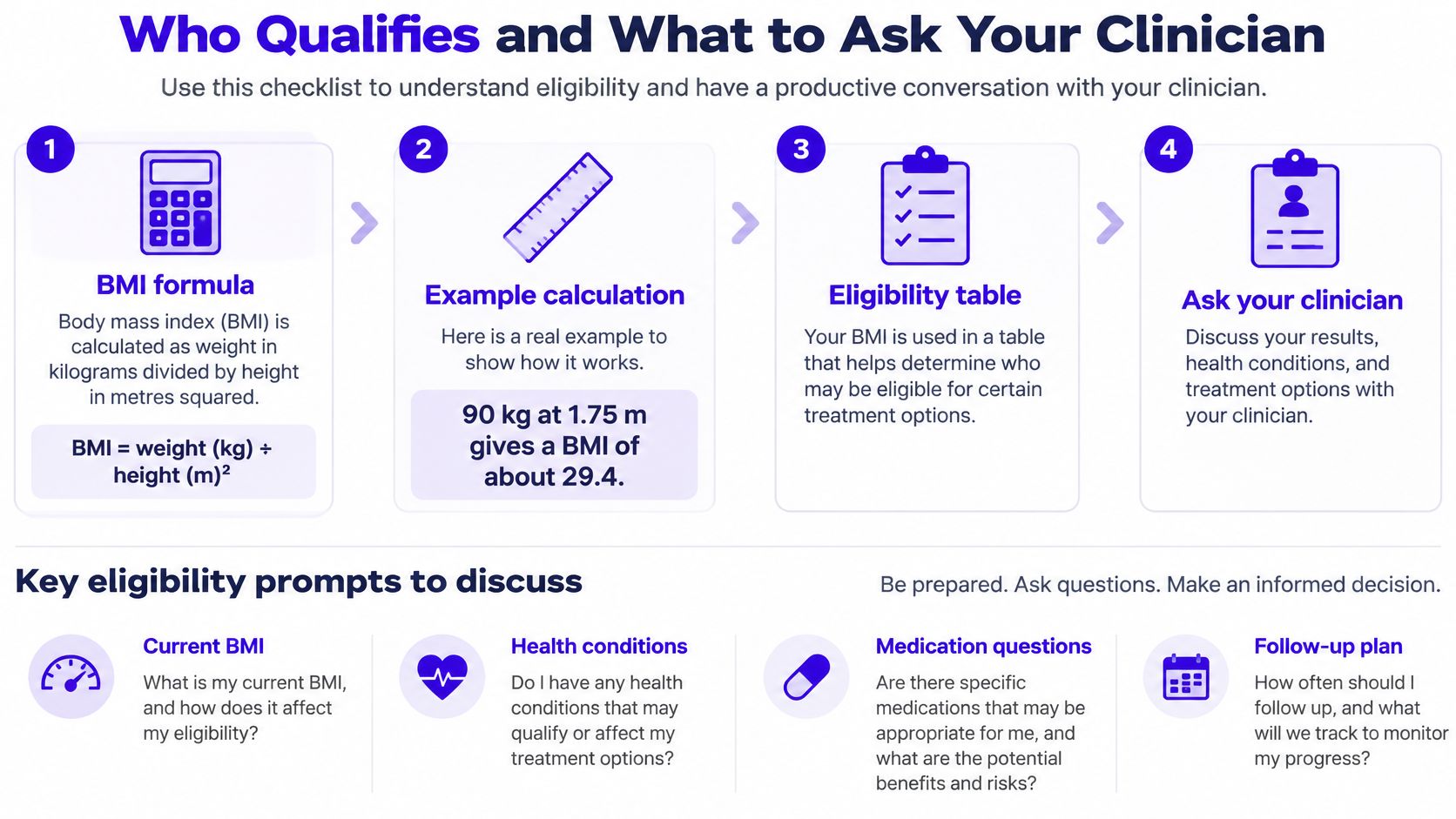
Body-mass index, or BMI, is weight in kilograms divided by height in metres squared. As a hypothetical worked example, 90 kg ÷ (1.75 m × 1.75 m) gives a BMI of about 29.4.
BMI helps identify a treatment threshold, but it doesn't establish that a particular medicine is suitable. Medical history, treatment goals, contraindications, and current medications remain part of the decision.
Applying the eligibility threshold
The FDA's Zepbound approval announcement specifies adults with BMI at least 30 kg/m², or BMI at least 27 kg/m² with a weight-related condition, alongside a reduced-calorie diet and increased physical activity. The following hypothetical profiles apply those criteria.
Zepbound weight-management eligibility examples
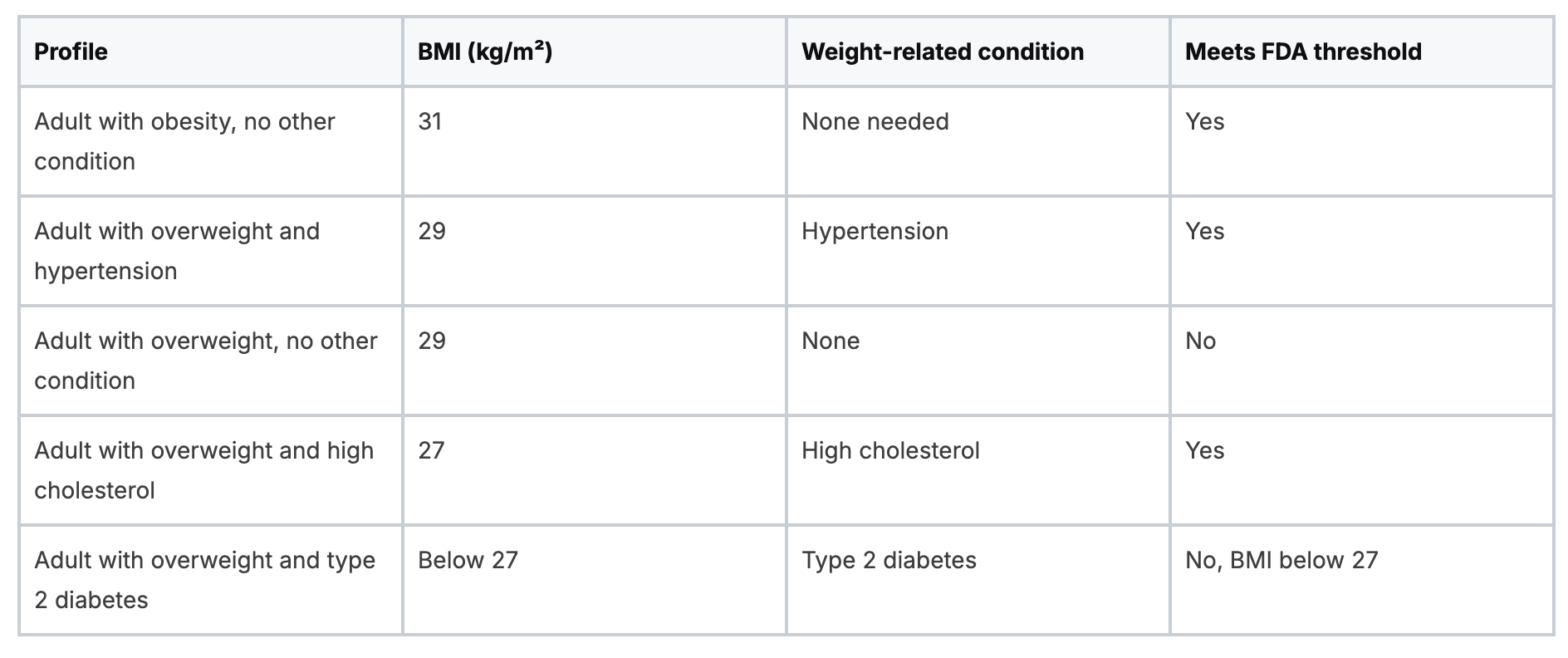
Meeting the threshold isn't a prescription or a coverage guarantee. Insurers apply their own requirements, while diabetes treatment decisions also consider diagnosis, glucose control, and HbA1c.
The checklist below pairs the calculation with appointment preparation.
Preparing for shared decision-making
A useful appointment includes a written medication and supplement list, recent weight information, and relevant medical history. Particular discussion points include:
- Other medicines: Insulin, sulfonylureas, and oral medicines whose absorption may be affected.
- Personal and family history: The specific thyroid cancer type, pancreatitis, gallbladder disease, and eating disorders.
- Pregnancy plans: Some products require discontinuation well before conception according to their labeling.
- Kidney or liver conditions: These can affect treatment selection, monitoring, and nutrition advice.
For an older adult, clinical considerations for GLP-1 medications for seniors offers additional professional-learning context.
The patient's question list can stay direct: What is the goal, and how will success be measured? What is the plan if treatment stops? How will side effects be managed? What will treatment cost after coverage?
For example, a patient arriving with the medicine list and these written questions gives the prescriber a clearer starting point than a request for a particular brand alone.
Your Next Step Before Starting or Changing Treatment
Before a first prescription, a brand switch, or a restart after a pause, the practical move is the same: a scheduled medication review with the prescribing team. The visit itself stays short. What makes it productive is the preparation, and the review is also where the treatment goal gets named, since glucose control, weight management, and cardiovascular risk reduction each point the monitoring in a different direction. Once the medical history, medicine list, and question list are assembled, three arrangements matter most:
- Confirm follow-up ownership. Record who handles symptom calls, when progress is reviewed, and how to reach the team between visits.
- Write down the interruption plan. Ask what happens if a dose is missed or a supply runs out, and who to contact before restarting. Knowing this in advance turns a pause in treatment into a decision made with the team rather than a guess.
- Check the complete cost. Confirm pharmacy charges, insurance authorization, and ongoing out-of-pocket costs before the first fill.
The warning signs that need urgent or emergency care are spelled out in the side effects and safety section; the rule that carries into this step is that none of them waits for a routine visit. A patient who cannot keep fluids down calls the prescribing service that day rather than waiting for the next injection appointment, because the team needs to know that eating, hydration, or normal functioning has changed.
Starting, dosing, changing, or stopping a GLP-1 medicine requires a qualified healthcare professional, and this review is where those decisions belong.
Premiere Education offers online continuing education for healthcare professionals, educators, and school teams, alongside tools for assigning training and documenting completion. For professional learning related to this topic, explore Expanding the GLP-1 Landscape: Emerging Evidence and Clinical Considerations, or visit Premiere Education for other training resources.
Latest Posts





25% off Sitewide→
Use Code: PCECYBERSALE2025→