
.avif)
Cystic Fibrosis Nursing Care Plan

A 19-year-old arrives for admission with a pulmonary exacerbation. IV antibiotics are running, a spouse is at the bedside, and the outgoing nurse says the patient's baseline FEV1 is “somewhere in the chart.” The oncoming nurse has minutes to decide whether this is routine treatment continuation or a meaningful change from baseline. In cystic fibrosis, that distinction shapes airway-clearance timing, oxygen monitoring, nutritional support, infection precautions, education, and escalation.
A useful cystic fibrosis nursing care plan must therefore do more than list chest physiotherapy and pancreatic enzymes. Cystic fibrosis is a progressive, life-limiting genetic disease affecting multiple systems, particularly the lungs and pancreas. Contemporary care has shifted from mostly supportive hospitalization toward structured, multidisciplinary chronic disease management, with standards emphasizing airway clearance, nutrition, infection prevention, transition planning, adherence, shared care, and complication surveillance. The 2025 UK nursing standards for cystic fibrosis reflect that broader role.
Starting With a Focused CF Assessment
The first assessment should be structured enough to prevent important omissions, but brief enough to work during a busy admission or clinic visit. A 10-to-15-minute focused assessment gives the next nurse a reliable baseline and makes later outcomes measurable. It should cover four domains on every encounter.

Respiratory status
Document work of breathing, respiratory rate, breath sounds, cough quality, sputum color and viscosity, oxygen requirement, and the patient's usual airway-clearance routine. Record the most recent FEV1 and, when it's unavailable, state that clearly rather than allowing “baseline unknown” to disappear in a copied handoff.
A new oxygen requirement, increasing accessory-muscle use, inability to speak comfortably, hemoptysis, markedly thicker sputum, or a clear decline from usual function should change the plan immediately. The nurse should notify the CF or medical team, review prescribed respiratory therapies, and increase observation according to local protocol.
Nutritional status
Review the weight trend, BMI or BMI-for-age percentile, appetite, feeding route, stool frequency and quality, abdominal symptoms, and pancreatic enzyme timing. A patient who reports oily stools and declining weight needs a nutrition and PERT review, not merely an added supplement.
Greasy stools, persistent bloating, poor weight gain, vomiting, abdominal distension, or signs of dehydration should prompt reassessment of malabsorption and possible gastrointestinal complications. The European Cystic Fibrosis Society standards of care place lung health and nutritional progress among the core areas requiring repeated monitoring.
Infection exposure
Check recent respiratory cultures, known colonization, contact with other people with CF, recent clinic exposure, and cleaning of nebulizers, airway-clearance devices, and reusable equipment. Ask whether the patient has shared equipment or attended a setting where another person with CF was present.
A new sputum change, fever, unexplained decline in lung function, or exposure to a high-risk pathogen should trigger culture review and infection-control escalation. Equipment dedication and cleaning need to appear in the plan, because “use standard precautions” doesn't tell the next nurse what to do.
Psychosocial context
Ask how long treatment takes, which therapies are being missed, whether the patient feels overwhelmed, and who helps at home. Include mental health, family or partner support, financial strain, work or school disruption, and readiness for transition to adult services.
A patient may understand every medication and still be unable to sustain the regimen because of fatigue, anxiety, cost, transportation, or competing responsibilities. For nurses coordinating broader chronic disease support, Life Primary Care chronic disease offers useful context for organizing longitudinal care beyond the acute admission.
Practical rule: Document what is different from the patient's own baseline, not only what falls outside a generic normal range.
Selecting the Right Nursing Diagnoses
A CF care plan becomes less useful when it carries every possible diagnosis forward. The working list should contain the six or seven statements that drive decisions, each supported by a cue cluster that another nurse can verify.
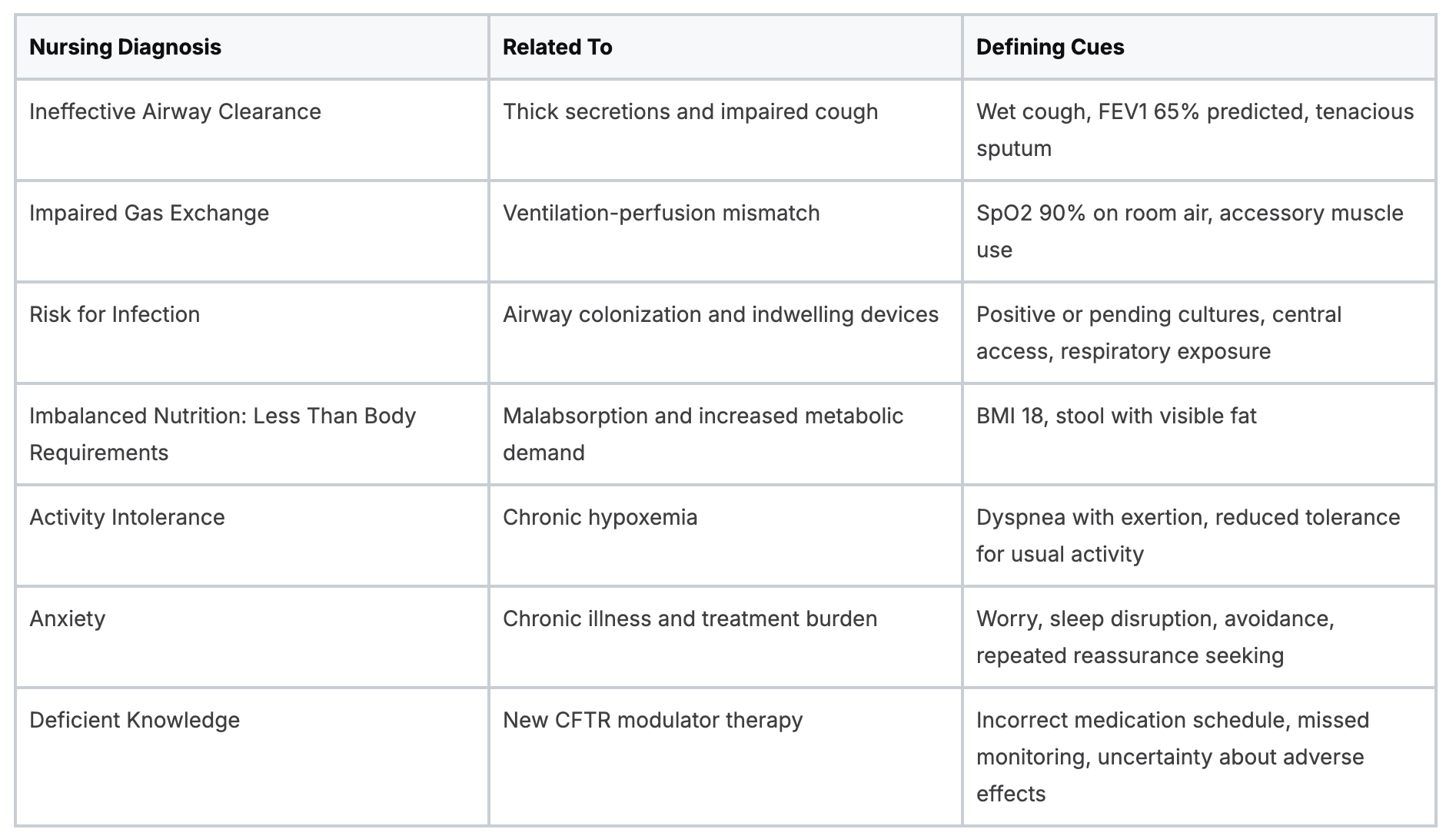
The first two diagnoses are actual problems when the defining findings are present. Risk for Infection is different because it describes vulnerability rather than a confirmed infection, so the plan should emphasize cultures, precautions, device care, and early changes in sputum or respiratory status.
Cue phrasing must remain disciplined. “Ineffective Airway Clearance related to thick secretions and impaired cough as evidenced by wet cough, FEV1 65% predicted, and tenacious sputum” is stronger than “airway issues due to CF” because it connects the diagnosis to observable findings and a measurable pulmonary marker.
A practical admission might lead with Ineffective Airway Clearance, Impaired Gas Exchange, and Imbalanced Nutrition. Anxiety, knowledge deficit, infection risk, and activity intolerance can remain active, but two or three priorities should lead the shift. Seven simultaneous priorities make it difficult to identify what the nurse must reassess first.
Building Airway Clearance Interventions That Work
A patient with increased work of breathing, tenacious sputum, and fatigue needs more than an order to “perform CPT.” Link the technique to respiratory effort, cognition, preference, tolerance, and measurable response. The CF Foundation airway-clearance guideline supports individualized selection, regular reassessment, and changing the method when clearance remains poor. Exercise may assist secretion mobilization, but it does not replace prescribed airway-clearance therapy.
Match the method to the patient
A stable patient with adequate cognition may manage a high-frequency chest wall oscillation vest or oscillatory PEP device such as Acapella or Aerobika. A fatigued or acutely unwell patient may need handheld PEP, manual chest physiotherapy, percussion, or postural drainage with respiratory-therapy support.
Adherence belongs in the clinical decision. A method that works in testing but is refused, poorly tolerated, or impossible to fit around work and school will not produce reliable clearance. Routine high-frequency chest wall oscillation should not be automatic. With severe lung disease and inadequate clearance, discuss non-invasive ventilation support with the specialist team.
Set a schedule and sequence
At baseline, plans commonly use two to three sessions daily, increasing to three to four sessions during exacerbations. Sessions often last 20 to 30 minutes. Reconcile these targets with specialist orders, current symptoms, and the patient's tolerance rather than applying them without review.
Give inhaled therapies in the prescribed sequence, commonly bronchodilator, hypertonic saline, then dornase alfa. Bronchodilation may improve airway access, while mucus-directed therapy can make secretions easier to mobilize. Verify the patient-specific order because the sequence is not interchangeable for every patient.
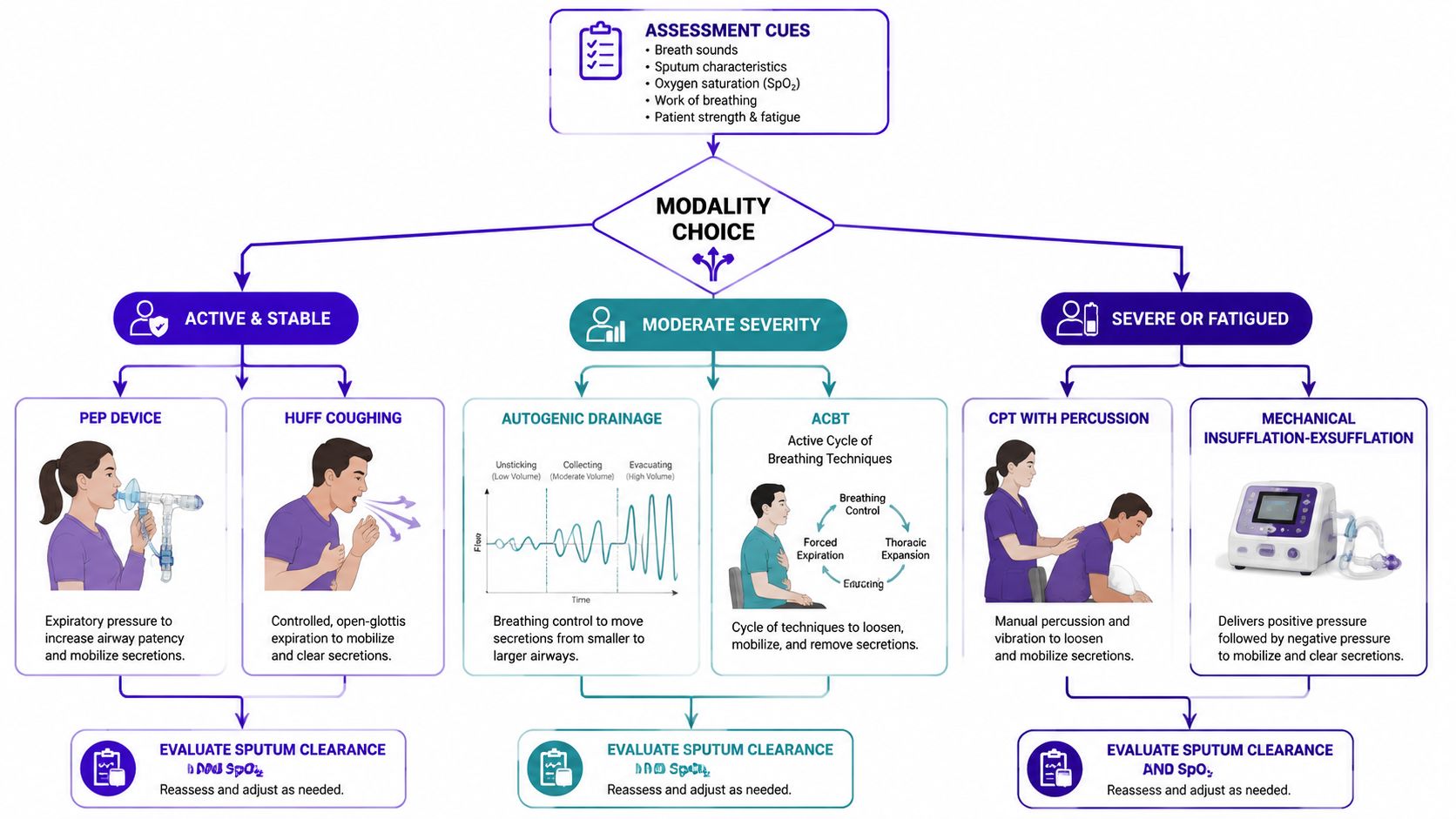
After treatment, document sputum volume, color, viscosity, ease of expectoration, oxygen saturation before and after, work of breathing, and reported dyspnea. A sustained saturation drop, new sputum discoloration, increasing fatigue, weaker cough, or greater respiratory effort calls for escalation and reassessment, not an automatic repeat session.
The asthma nursing interventions resource may support general respiratory assessment skills, while CF care still requires CF-specific technique selection and infection-control practice. Use hand hygiene and single-use or dedicated equipment according to facility policy.
Planning Nutrition and PERT Monitoring
Pancreatic enzyme replacement therapy, or PERT, should be managed as an active dosing-and-monitoring process. The nurse needs to know not only whether enzymes were ordered, but whether the dose matches the meal, whether capsules were taken at the right point in the meal, and whether stool and weight trends show adequate absorption.
Start with a nutrition huddle that reviews weight trajectory over the previous 90 days, BMI-for-age percentile when relevant, appetite changes, stool frequency and quality using a Bristol-style scale, and abdominal symptoms after meals. Enzymes should be linked to the fat, protein, and complex carbohydrate content of meals, supplements, and enteral feeds, rather than treated as a fixed response to the number of meals. The ESPEN, ESPGHAN, and ECFS nutrition guideline recommends PERT for patients with exocrine pancreatic insufficiency and emphasizes administration with relevant meals and feeds.
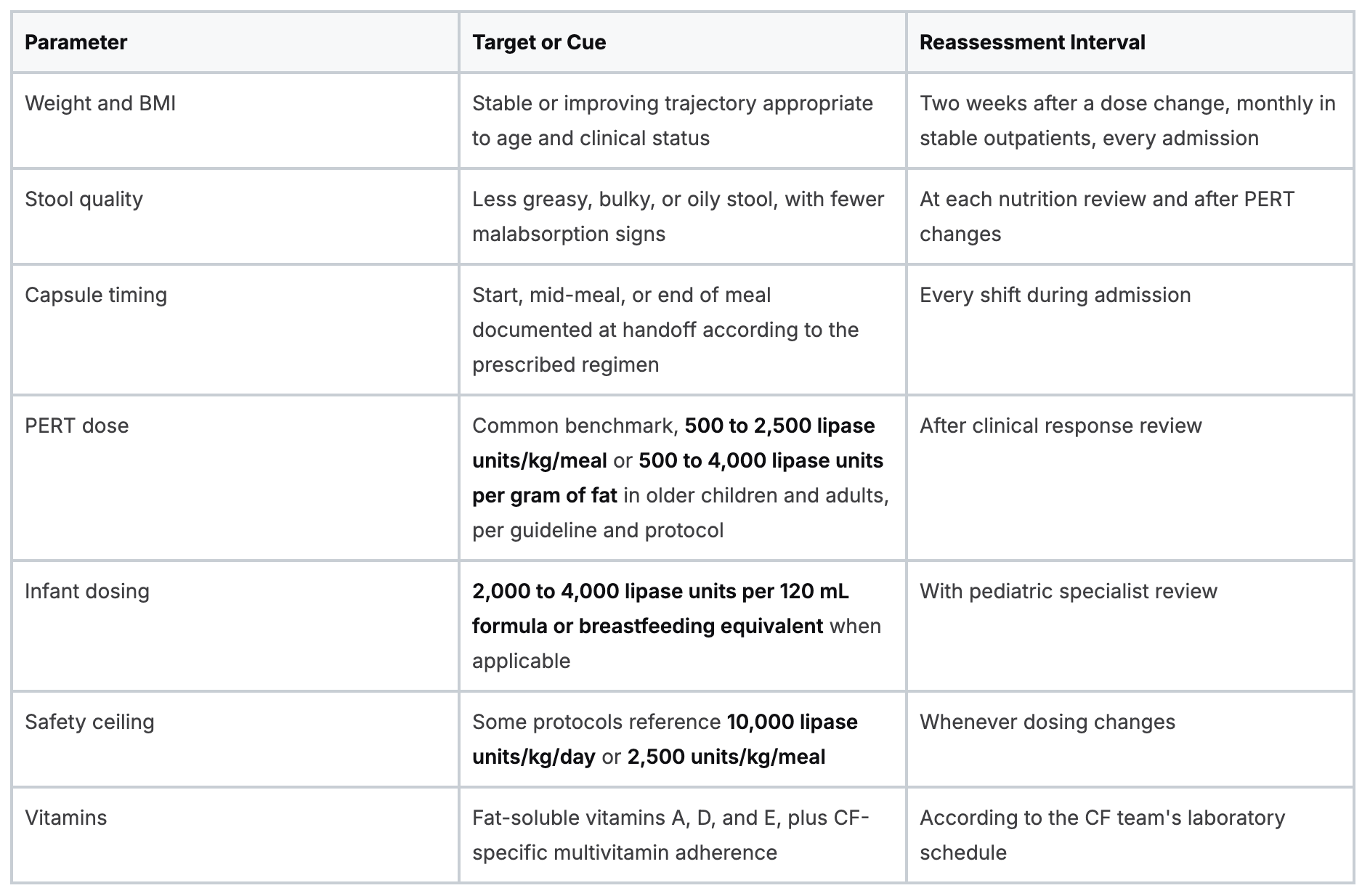
Greasy stools, bloating, poor weight gain, and visible fat suggest under-dosing, incorrect timing, or another gastrointestinal problem. Cramping and perianal irritation can signal excessive dosing or intolerance. High-calorie supplements should support, not replace, optimization of enzymes. Enteral feeds require a separate administration plan, including what happens when the patient is asleep or cannot take enzymes orally.
Putting Infection Control Into Daily Practice
Infection control needs to tell staff exactly how to room, move, examine, and clean equipment. People with CF can transmit respiratory pathogens to one another, so spacing and dedicated equipment are clinical interventions, not administrative details.
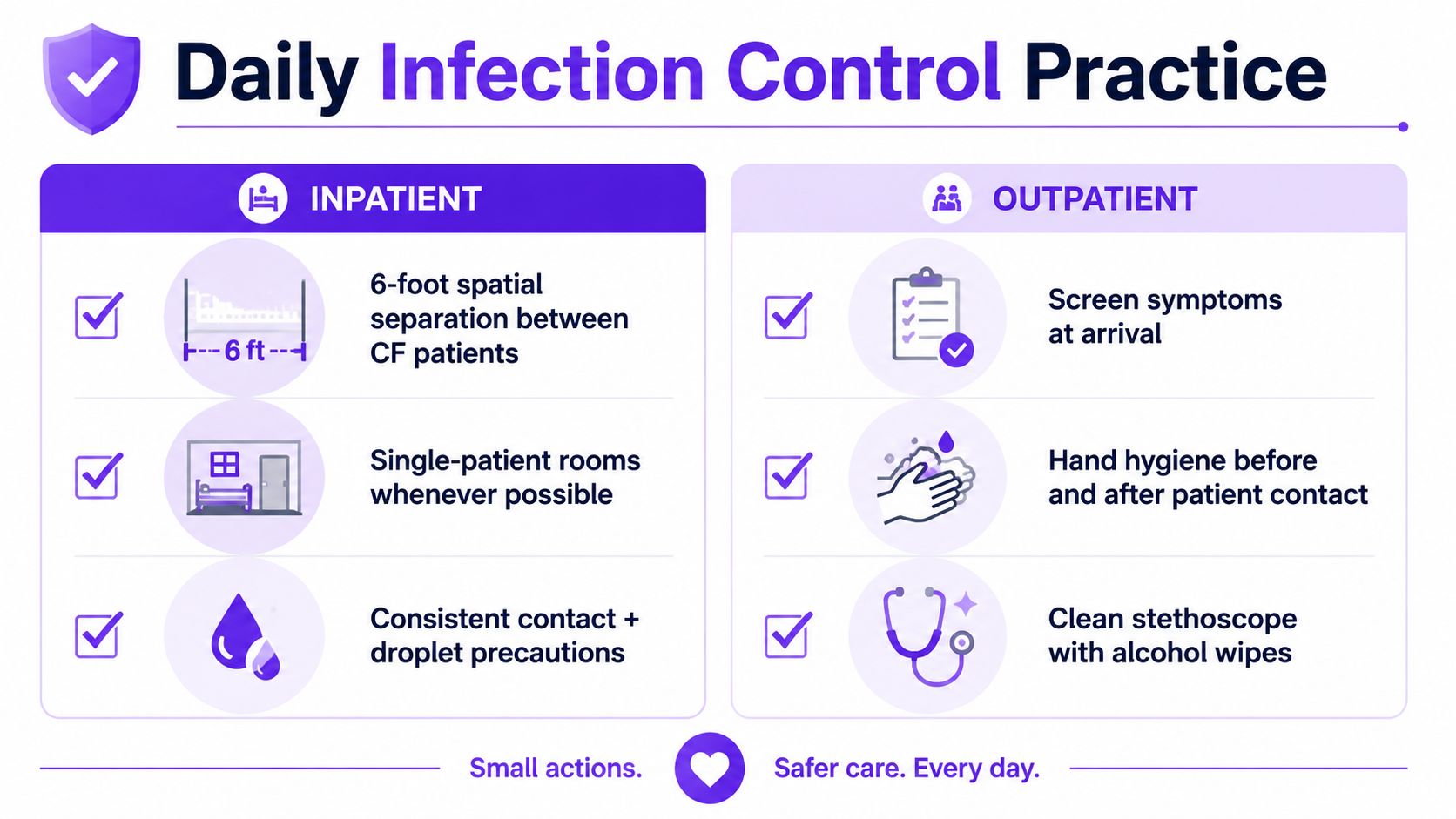
Inpatient precautions
Use a single-patient room whenever possible and maintain at least 6 feet of separation between CF patients in shared settings, as reflected in published CF infection-control guidance. Apply consistent contact and droplet precautions for patients with productive cough or known pathogens according to local policy.
The plan should name dedicated stethoscopes, pulse oximeters, spirometers, and other respiratory equipment. It should also state who cleans reusable devices, when cleaning occurs, and where contaminated equipment is stored. A generic “maintain isolation” entry leaves too much room for variation between shifts.
Outpatient workflow
Clinic scheduling should account for culture status rather than convenience. Patients with non-tuberculous mycobacteria or Burkholderia cepacia complex may require separate clinic days, strict cohorting, and terminal cleaning of examination rooms. Screen symptoms at arrival, perform hand hygiene before and after contact, and clean shared equipment between patients.
Microbiological surveillance should be built into routine care. The supplied CF nursing framework identifies quarterly sputum or cough-swab cultures, annual NTM screening, and immediate cultures when sputum color or volume changes or FEV1 falls by 10 percent or more. These are not substitutes for clinical judgment, especially when the patient reports a change before formal spirometry is available.
Infection-control reality: A policy is only useful when the care plan identifies the room, the equipment, the PPE, and the person responsible for cleaning.
Track hand-hygiene audits and mask use with measurable compliance targets selected by the service. Staff education can be reinforced through infection-control continuing education for New York State, while bedside documentation should remain specific to the patient's organism status and current setting.
Adjusting the Plan for Modulators and Psychosocial Needs
CFTR modulators, including elexacaftor-tezacaftor-ivacaftor and similar therapies, have changed the trajectory for many patients, but they haven't removed the need for nursing surveillance. Response remains heterogeneous, some patients continue to progress, and reduced sputum production can make microbiological surveillance more difficult. The review of modern CF nursing standards in this PubMed-indexed article describes a broader nursing role that includes adherence, pregnancy and menopause care, lifestyle, transplant, non-invasive ventilation, safeguarding, prescribing, research, and shared care.
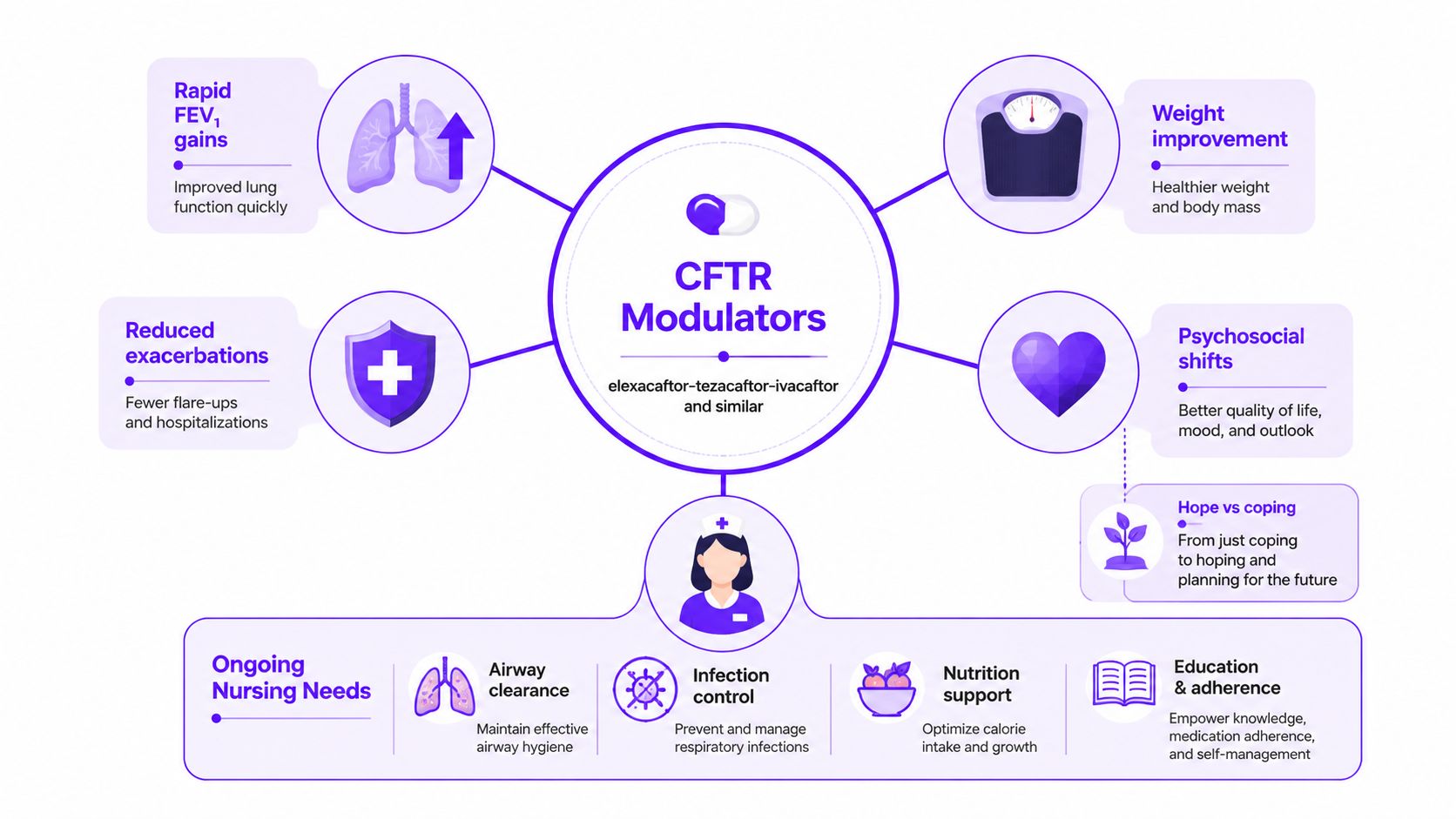
A patient may show improved spirometry and weight while still needing airway clearance, PERT, infection precautions, and regular review. Another patient may have little measurable response because of genotype, age, baseline lung disease, access barriers, or intolerance. The plan should therefore compare current findings with the patient's own response, not with an assumed modulator trajectory.
Monitor liver enzymes, rash, neuropsychiatric symptoms, and drug interactions. Azole antifungals and certain antibiotics can be especially important during medication reconciliation. Any proposal to reduce an established therapy should be shared with the specialist team because the long-term safety of de-escalating treatment remains uncertain.
Make psychosocial outcomes clinical outcomes
Treatment burden is heavy when a patient combines a triple-combination regimen with airway clearance, inhaled therapy, PERT, exercise, appointments, and work or school responsibilities. Ask which part of the plan is failing in real life. A missed dose may reflect depression, treatment fatigue, cost, pharmacy access, misunderstanding, or a deliberate decision that needs discussion rather than blame.
Screen routinely for depression and anxiety, and document comfort, sleep, pain, relationships, reproductive goals, employment, education, and financial strain. The published nursing literature on outpatient CF care highlights adherence, family involvement, comfort, pain, and quality of life as areas that require more attention.
Transition planning should become a standing goal by mid-adolescence. The nurse can start with medication teach-back, then ask the adolescent to schedule therapy, describe infection precautions, request refills, and identify when to contact the CF team. Shared-decision checkpoints should record what the patient values, whether that is endurance, fertility planning, work, school attendance, fewer hospital stays, or less treatment time.
Measuring Outcomes and Knowing When to Escalate
A care plan earns its place in the chart when the next nurse can score it without guessing. Each outcome should identify the measure, the time frame, the patient's baseline, and the action required when the result worsens.
Use five outcome domains
- Pulmonary: Trend FEV1 percent predicted, sputum volume and character, oxygen saturation, work of breathing, and response to each airway-clearance session.
- Nutritional: Record BMI percentile or weight-for-age z-score, weight trend, Bristol stool pattern, appetite, and PERT adjustments.
- Infection: Track culture collection and turnaround, time to negative results when relevant, temperature, clinical response, and PPE-adherence audits.
- Psychosocial: Use PHQ-9 and GAD-7 when appropriate, document modulator adherence, identify treatment fatigue, and record the patient's stated priorities.
- Functional: Measure school or work attendance, activity tolerance, and exercise distance in meters when that measure is appropriate to the patient.
Reassess airway-clearance response daily for inpatients, nutrition and PERT weekly, and FEV1 and psychosocial screening quarterly when clinically appropriate. The schedule should become more frequent when the patient is acutely unwell, changes therapy, loses weight, reports worsening symptoms, or has a new culture result.
Define escalation triggers before deterioration
The following triggers should be written into the plan and matched to local policy and provider notification procedures:
- SpO2 falls by more than 4 percent during therapy.
- Weight loss exceeds 1 kilogram in a week.
- Surveillance identifies Pseudomonas.
- PHQ-9 is above 10.
- The patient misses modulator doses for three consecutive days.
These thresholds don't replace assessment. A patient with rapidly increasing work of breathing may need escalation before a scheduled measurement confirms decline, while a patient with a single abnormal result may need repeat assessment and context. The nurse should also review the urgent deterioration principles in sepsis early recognition and initial management education, especially when infection and respiratory compromise overlap.
Documentation should include the time of assessment, intervention code or treatment delivered, objective response, patient-reported response, education provided, and clinician notified. A clear entry might state: “Airway clearance completed at 10:00 for 25 minutes. SpO2 93% before and 95% after. Patient expectorated thick yellow sputum, reported dyspnea improved from moderate to mild, and demonstrated huff cough with coaching.”
The final handoff tool can fit on one page and be clipped to the kardex: current respiratory baseline, airway-clearance method and timing, oxygen needs, culture status, PERT schedule, weight trend, infection precautions, psychosocial concern, escalation triggers, and the next reassessment time.
Premiere Education offers accredited, self-paced continuing education and clinical courses that help nurses connect bedside assessment with documented interventions, including respiratory, infection-control, and emergency-care topics. Visit Premiere Education to review courses, track completion, and maintain audit-ready professional records.
Latest Posts





25% off Sitewide→
Use Code: PCECYBERSALE2025→