
.avif)
Wound Care Training for Nurses
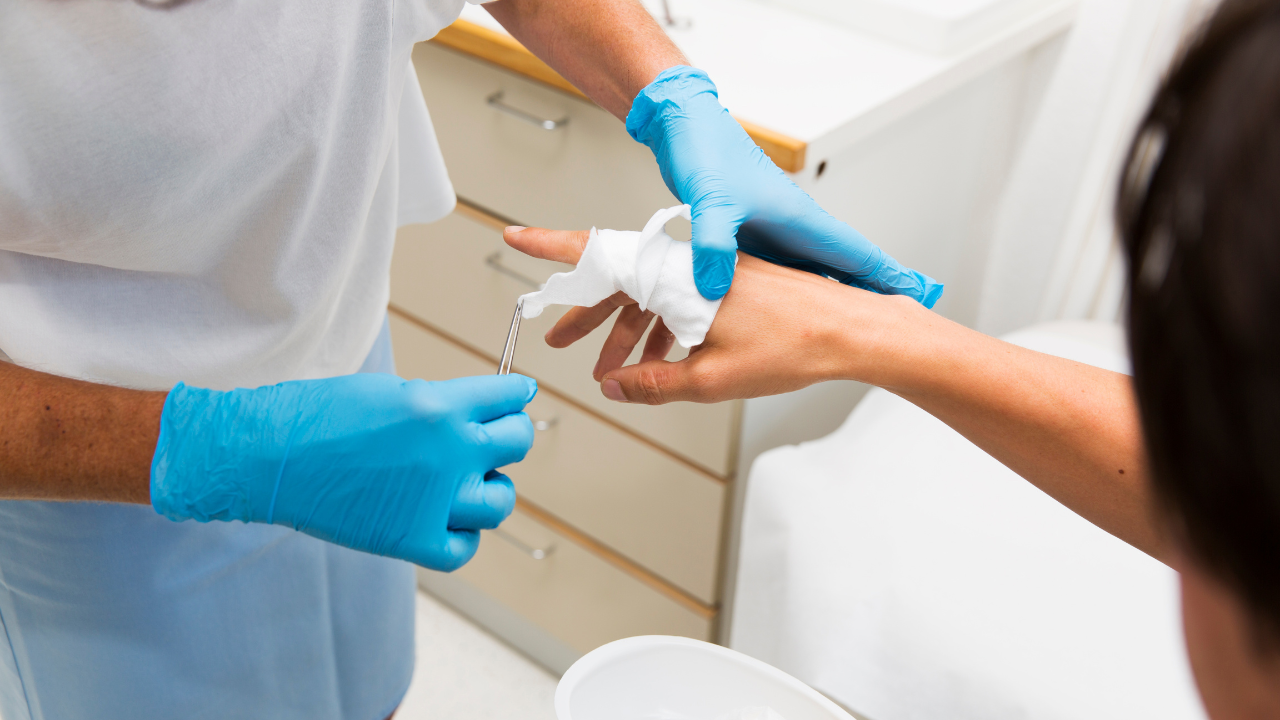
Chronic wounds affect about 8.2 million Medicare beneficiaries in the United States, about 3% of Americans older than 65 years have open wounds, and roughly 2% of the total U.S. population is affected by chronic wounds. For wound care training nurses, that means the skill set is core nursing work, not a specialty add-on.
A med-surg nurse meets that reality fast. A postoperative patient develops a stage 3 pressure injury, the dressing choices are unclear, the surrounding skin looks fragile, and the chart only has a few generic notes. That's the moment when basic pre-licensure exposure stops being enough and structured wound education starts to matter.
Why Wound Care Training Matters More Than Ever for Nurses
A nurse can know the basics and still freeze when a wound doesn't fit the neat categories from school. A postoperative patient may have drainage, slough, fragile periwound skin, and a family asking why it looks worse today. That's not a rare scenario, it's everyday practice in hospitals, long-term care, home health, and community settings.
The clinical burden is already large. A 2020 compendium estimated that chronic, nonhealing wounds affect about 8.2 million Medicare beneficiaries in the United States, about 3% of Americans older than 65 years have open wounds, and roughly 2% of the total U.S. population is affected by chronic wounds, while foot-ulcer incidence globally is between 9.1 and 26.1 million annually (PMC8024242). That scale explains why wound care training for nurses sits inside routine care, not at the edge of it.
.png)
What the bedside actually looks like
On the floor, the problem is rarely one dramatic wound. It's a stream of small decisions. Is this tissue viable, is the drainage expected, is the dressing holding moisture where it should, and does this patient need a specialist before the next shift ends?
Practical rule: if a wound is taking time, staff should spend time on structured assessment instead of guessing with the dressing cart.
That is where training changes outcomes. Education that sharpens assessment, dressing selection, infection prevention, and escalation pathways can improve how nurses respond before a wound worsens. It also helps teams avoid the expensive pattern of reacting late, documenting loosely, and calling for help only after the wound has already progressed.
The strongest programs don't just teach wound terms. They teach nurses how to decide what matters first, what can wait, and when to escalate. That shift from uncertainty to disciplined bedside judgment is what makes wound care training a real competency, not a checkbox.
Core Wound Care Competencies Every Nurse Should Master
Wound care training for nurses has to move past labels and into decisions. A nurse doesn't just need to know a pressure injury from a venous ulcer, the nurse needs to know what to document, what to measure, what to watch overnight, and what to report before the next dressing change.
Assessment and the TIME framework
Assessment starts with the basics, wound type, size, depth, tissue appearance, drainage, odor, and the condition of the skin around the wound. Good training also teaches standardized language, because a chart that says “looks bad” doesn't help the next clinician decide anything.
The TIME framework keeps that assessment organized. Tissue, Infection/Inflammation, Moisture, Edge gives nurses a repeatable way to work through a wound instead of bouncing from one observation to another. A venous leg ulcer with heavy exudate needs a different read than a pressure injury with undermining, and the TIME structure helps keep that difference clear.
A practical example matters here. A community nurse seeing a diabetic foot ulcer may notice edge maceration and increasing warmth around the site. That's the point to slow down, document carefully, and ask whether the wound belongs in routine follow-up or needs referral.
Dressing choice, moisture, and infection control
Dressing selection should follow the wound, not habit. A wound with light moisture and a stable bed may fit one dressing approach, while a wetter wound calls for something that manages exudate more actively. For nurses who want a focused refresher on moisture-handling products, the hydrogel wound dressing guide is a useful practical reference to compare with local protocols.
A similar logic applies to infection. Training should help nurses separate colonization from early local infection, because not every change in smell or drainage means the same thing. That distinction matters when deciding whether to reinforce routine care or push for review.
For a deeper course structure on dressings, Wound Care Dressings 101 fits naturally into a nurse's skill-building path.
Useful habit: the chart should let another nurse recreate the clinical picture without needing a hallway handoff to fill in gaps.
That's where structured documentation training pays off. When nurses practice wound measurement, periwound description, and escalation language in a consistent format, they stop relying on memory and start building records that support continuity of care.
When referral should happen
A nurse can manage many wounds independently, but not every wound belongs in routine bedside care. Generalist nurses need clear support for recognizing wound type, red flags, compression or offloading thresholds, and referral timing, including specialist input within seven days for chronic wound pathways.
That escalation rule matters more than pride or convenience. A clean referral at the right time can keep a chronic wound from becoming a long, difficult problem.
Certification Pathways and Eligibility Requirements for Nurses
Certification should validate bedside judgment, not sit above it as paperwork. The strongest routes are the ones that line up with real clinical work, documented practice, and current education, because wound care lives at the point where hands-on skill and formal standards meet.
WTA-C and how nurses build eligibility
The Wound Treatment Associate Certified, WTA-C pathway is built for nurses who want a practical entry into wound specialization. Applicants need a current LPN, LVN, or RN license, and they can qualify either through approved wound-care education, such as the WOCN Society's WTA Program or the WEB WOC Skin and Wound Care Associate course within the past five years, or through experience plus 24 wound-specific CE/CME credits in the past 12 months and 160 hours of clinical preceptorship in the past 12 months (WOCNCB WTA-C).
That route makes sense for a nurse working three 12-hour shifts a week. Routine dressing changes, skin checks, and precepted wound rounds can become documented eligibility hours when the unit tracks them properly. The issue is usually not lack of exposure, it's lack of organized proof.
CWCN and the higher-level track
The CWCN pathway asks for a current RN license and a bachelor's degree or higher, plus either graduation from an accredited WOC nursing education program within the last five years or an experiential route based on 1,500 direct patient care hours and 50 continuing-education hours in the previous five years (CWCN). One reported renewal route also requires 80 PGP points including 10 CE hours in the clinical specialty.
A wound clinic RN who logs direct patient care and keeps up with wound seminars fits that model well. So does a long-term care nurse who pairs bedside practice with regular preceptorship and documentation review.
For nurses mapping the specialty more broadly, Becoming a Wound Care Nurse helps place certification inside the larger career path.
The practical difference between the two tracks is simple, one is a faster bridge into wound competence, the other is a deeper credential for nurses already building advanced expertise.
A useful planning habit is to match the credential to the role. A bedside nurse who needs stronger day-to-day wound judgment may start with WTA-C. A nurse aiming for broader specialty leadership, clinic work, or advanced wound practice may plan toward CWCN.
How to Choose Quality Wound Care Training Programs
A long list of courses doesn't mean a strong training plan. Nurses need programs that match certification goals, patient mix, and actual shift-life, because the wrong course can leave someone with nice terminology and weak bedside judgment.
What separates a useful course from a generic one
Accreditation is the first filter. Programs aligned with WOCN Society standards or accredited by bodies such as ANCC carry more weight for certification preparation and employer recognition. If the course doesn't connect to a real credential or recognized competency framework, it may be interesting but still not useful.
Clinical relevance matters just as much. Case-based learning beats lecture-only content because wound care decisions happen in context. Nurses remember a pressure injury on a frail post-op patient, or a moist diabetic foot wound with fragile edges, better than they remember a slide deck full of definitions.
That's where structured education shows its value. In one study, nurses' mean wound-care knowledge increased from 113.70 ± 14.75 before training to 129.7 ± 19.6 12 months after training, while practice scores rose from 63.21 ± 19.99 to 132.07 ± 4.31 over the same period, with improvements at p < 0.001 (SCIRP). Quality training should be built to create that kind of durable improvement, not just short-term recall.
Features nurses should look for
A practical course evaluation usually comes down to a few things:
- Interactive structure: Self-paced access, pause-and-resume functionality, and mobile compatibility matter when nurses are moving between shifts and don't have uninterrupted study blocks.
- Case-based learning: Real scenarios, decision-point questions, and multimedia narration help connect evidence to the bedside.
- Tracking tools: Group portals, completion dashboards, and audit-ready records matter for managers and educators who need proof of training.
- Clear competency focus: Good programs show how assessment, documentation, infection control, and dressing choice fit together instead of treating them as separate trivia topics.
Premiere Education fits here as one option for nurses and managers who need accredited CE, assignment workflows, and completion tracking in the same platform. The value is practical, it combines learner access with documentation support for organizations that need records they can use.
Rule of thumb: if a course cannot show how it helps a nurse assess, document, and escalate a wound, it probably isn't built for real clinical use.
The best fit is usually the course that mirrors the nurse's patient population. A med-surg nurse needs different examples than a long-term care nurse, and a community nurse needs faster decision trees than a classroom can offer. Training quality shows up when the content feels like tomorrow's shift, not last year's lecture.
Applying Wound Care Training in Clinical Practice
Training only matters when it changes the chart, the dressing choice, and the escalation call. That gap between what nurses know and what they do is still one of the most persistent problems in wound care education.
Turning knowledge into a repeatable workflow
Reviews continue to show that nurses still report insufficient wound-care knowledge, weak links between evidence and bedside practice, and ongoing use of ritualistic or historic routines instead of guideline-based care (PMC). That's not a character flaw, it's a workflow problem. Nurses need training that translates evidence into the steps they repeat under pressure.
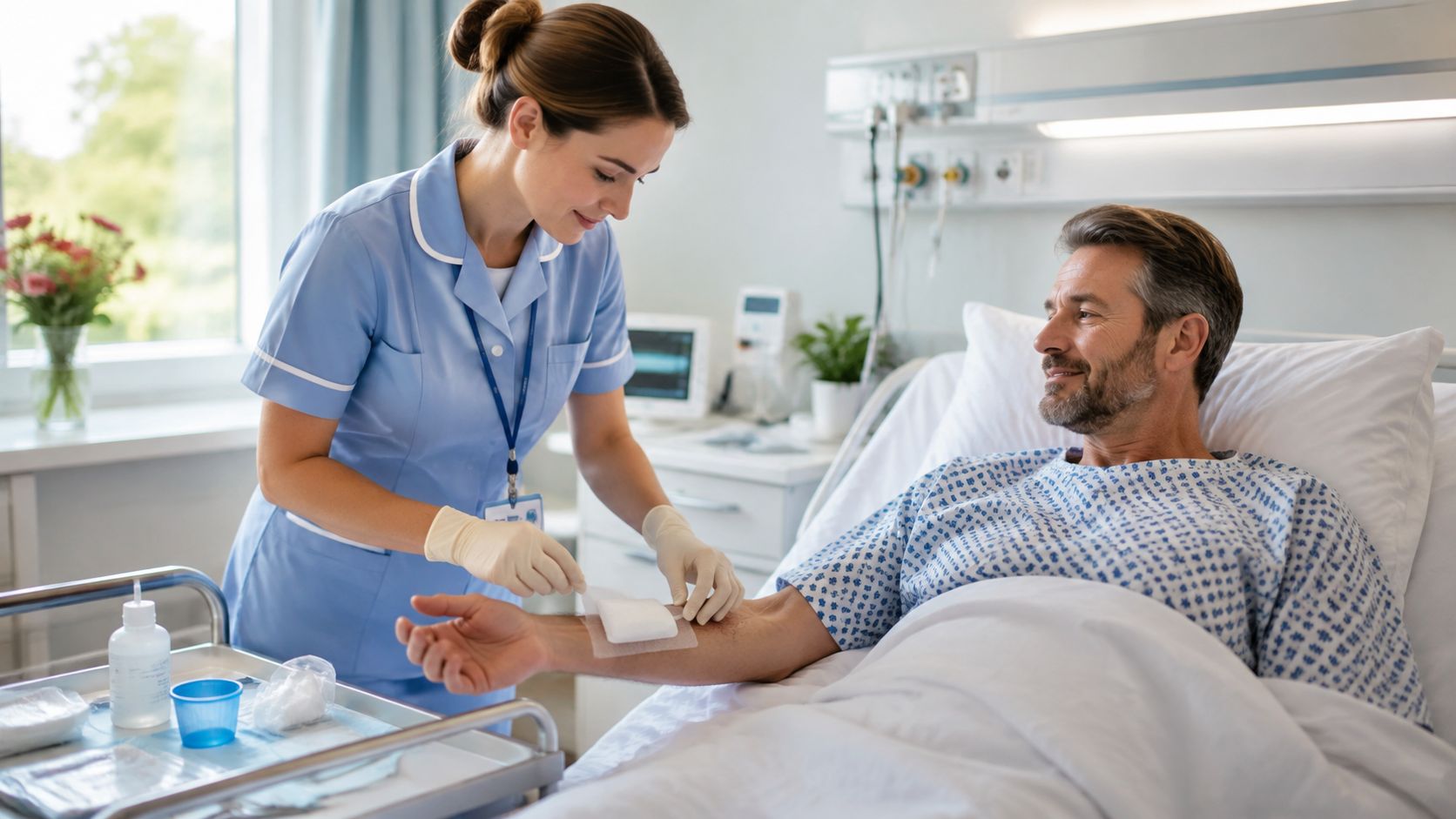
The best bedside pattern is simple. During the wound check, the nurse works through Tissue, Infection, Moisture, Edge, writes down what is seen, and compares it with the last assessment. A wound that looked clean yesterday but now has increased drainage and friable tissue should trigger a different response, not the same dressing order by default.
Documentation is where training becomes visible
Structured workshop training has shown how quickly documentation can improve. TIME adherence rose from 53.3% to 95%, a 41.7% improvement, and correct documentation of infection signs and moisture balance increased from 33% to 50% before training to 83% to 100% after training, while tissue assessment, infection documentation, and overall TIME use reached 100% adherence post-training (Walden).
The weak spots were clear, incomplete infection recognition and moisture documentation before training. That points to the highest-yield fix, repeated simulation plus audit-and-feedback on those exact fields. Nurses learn faster when they see their own charting against a standard and then correct it the next day.
An evidence-based course like Why Won't This Wound Heal? Evidence-Based Management of Non-Healing Wounds fits that workflow approach because persistent wounds demand more than dressing familiarity. They need pattern recognition, review of response over time, and clear decisions about escalation.
A useful unit habit is to embed wound care in handoff language. If the nurse knows the wound's tissue type, moisture status, edge changes, and infection concerns, the next shift doesn't start blind. That continuity is what turns training into safer care.
Next Steps for Nurses Pursuing Wound Care Expertise
The next move starts with a hard self-check. Nurses should review how confident they feel with wound assessment, dressing choice, documentation, and escalation, then compare that against the competencies and eligibility routes already laid out.
A nurse who spots weak documentation in infection recognition and moisture balance doesn't need a generic refresher. That nurse needs a case-based course with simulation, audit feedback, and enough repetition to make the language automatic. The same is true for a long-term care nurse building precepted hours or a clinic nurse preparing for a certification path.
A practical action plan
- Match the credential to the role. WTA-C can fit nurses who need a practical bridge into wound care. CWCN fits nurses with a broader specialty trajectory and the education background to support it.
- Choose training that mirrors real patients. Look for case-based scenarios, interactive questions, and documentation practice tied to pressure injuries, diabetic foot wounds, venous ulcers, and surgical wounds.
- Build proof as you learn. Document precepted hours, keep CE records current, and use team tracking tools when available.
- Practice the weakest domain on purpose. The training data showed that evaluation remained the weakest area at 28.3% while implementation reached 71.3% in one competency program, which means assessment and evaluation still need deliberate drill work (ThaiJSurg study).
Wound care competence grows in layers. Nurses get better when they keep using the same framework on real wounds, not when they collect certificates and move on.
That's why wound care training works best as an ongoing habit, not a one-time event. Nurses who keep learning, documenting, and escalating at the right moment build skills that hold up long after the course ends.
Premiere Education gives nurses a place to find accredited continuing education, certification-focused courses, and tracking tools that fit real clinical schedules. If wound care is part of your daily practice or your next career step, visit Premiere Education to explore training options that support both competency and documentation.
Latest Posts





25% off Sitewide→
Use Code: PCECYBERSALE2025→