
.avif)
PALS Certification for Nurses: What to Know
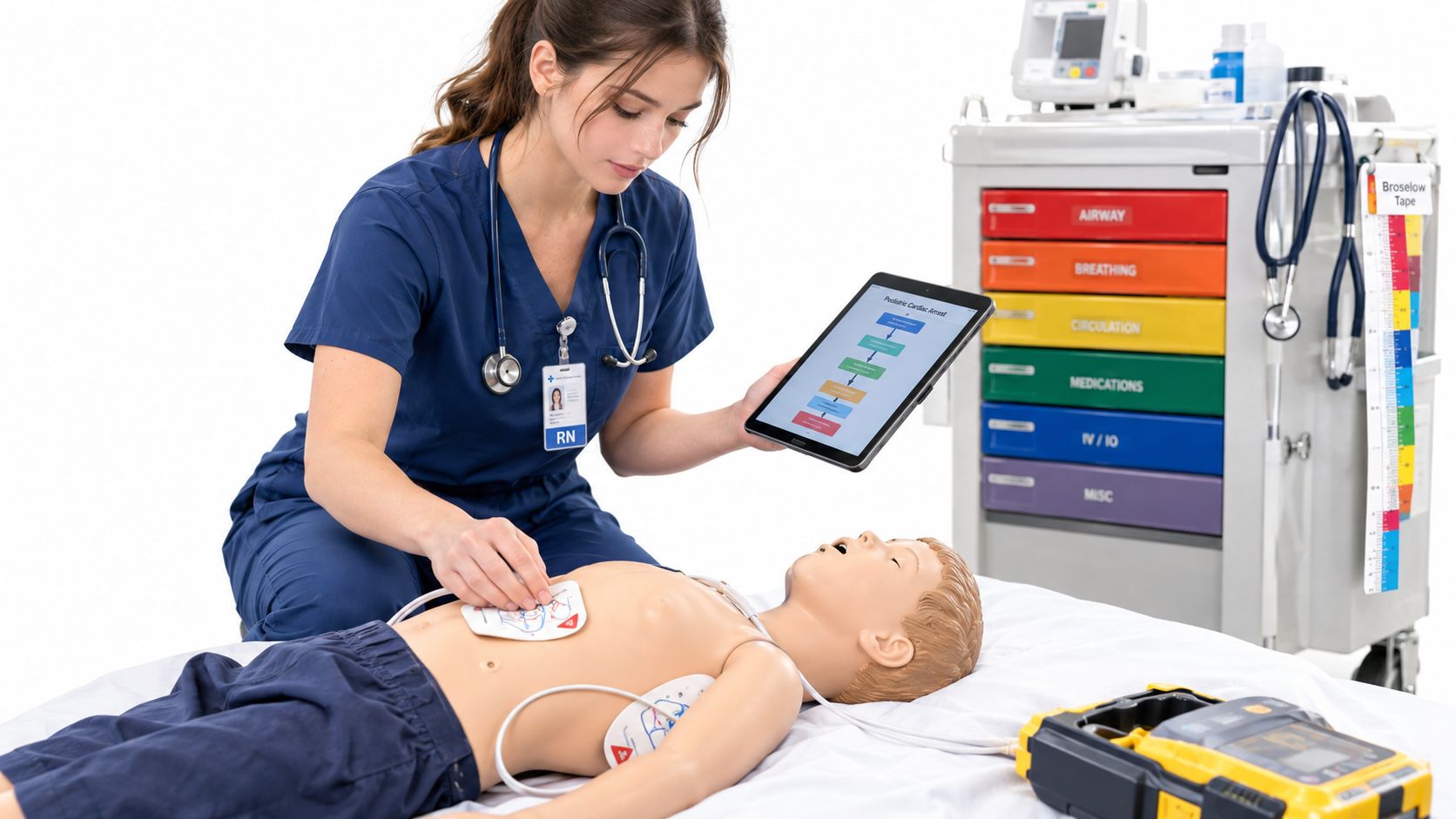
A nurse can complete PALS, file the eCard, and still feel uncertain months later when a child suddenly deteriorates. That discomfort is understandable. Pediatric emergencies may be uncommon in many units, and the nurse who rarely calculates weight-based medication doses or manages an infant airway can lose speed and confidence between formal courses.
PALS certification for nurses is therefore more than a credential to place in an employee file. It provides a structured approach to pediatric assessment, respiratory failure, shock, arrhythmias, cardiac arrest, and recovery after resuscitation. The harder clinical question is what happens after the course, when the card remains valid but practical readiness may begin to fade.
Why Pediatric Readiness Matters at the Bedside
A 4-year-old arrives in the emergency department with respiratory distress. The triage nurse is reassessing the child when the color changes, the pulse oximeter reading falls from 92 to 78, and central pulses become weak. The child's heart rate slows. Within moments, the team must recognize that the situation has moved beyond a primary respiratory assessment and activate the pediatric code response while preparing to begin CPR.
An unprepared responder may freeze over competing questions. Is this primarily respiratory failure, shock, or cardiac arrest? Which equipment fits the child? What dose is appropriate? Who should lead the airway, medication, compressions, and documentation?
A PALS-trained nurse brings a different sequence to the room. The nurse calls for the pediatric code team, assigns someone to obtain the Broselow tape, confirms airway and breathing status, evaluates circulation, and helps the team distinguish a respiratory cause from a circulatory cause. The nurse doesn't need to memorize every decision in isolation. The algorithm organizes the decisions under pressure.
The first moments require structure
Pediatric deterioration can begin with breathing problems and progress rapidly to bradycardia or arrest. That progression makes early recognition especially important. A nurse who sees falling oxygen saturation, worsening work of breathing, altered responsiveness, and poor perfusion can escalate before the child reaches complete arrest.
PALS training rehearses that escalation. The learner practices moving from assessment to intervention, then reassessing the child rather than treating each finding as an unrelated problem. The same approach helps the team avoid a common error, continuing a narrow respiratory intervention after circulation has become the immediate concern.
Practical rule: Rare events still require frequent mental rehearsal. A sequence that feels familiar in a classroom can feel very different beside a deteriorating child.
Rehearsal protects the child and the nurse
Pediatric arrests are uncommon on many adult-leaning units, which makes spontaneous recall unreliable. A nurse may know the correct intervention but lose time locating equipment, estimating weight, or deciding when bradycardia requires CPR escalation.
PALS turns those decisions into practiced actions. It doesn't eliminate stress, but it gives the nurse a shared language and a repeatable playbook. The result is not theatrical confidence. It is the calmer, safer behavior that allows a team to identify the problem, call for help, deliver appropriate care, and communicate clearly when every second matters.
What PALS Certification Is
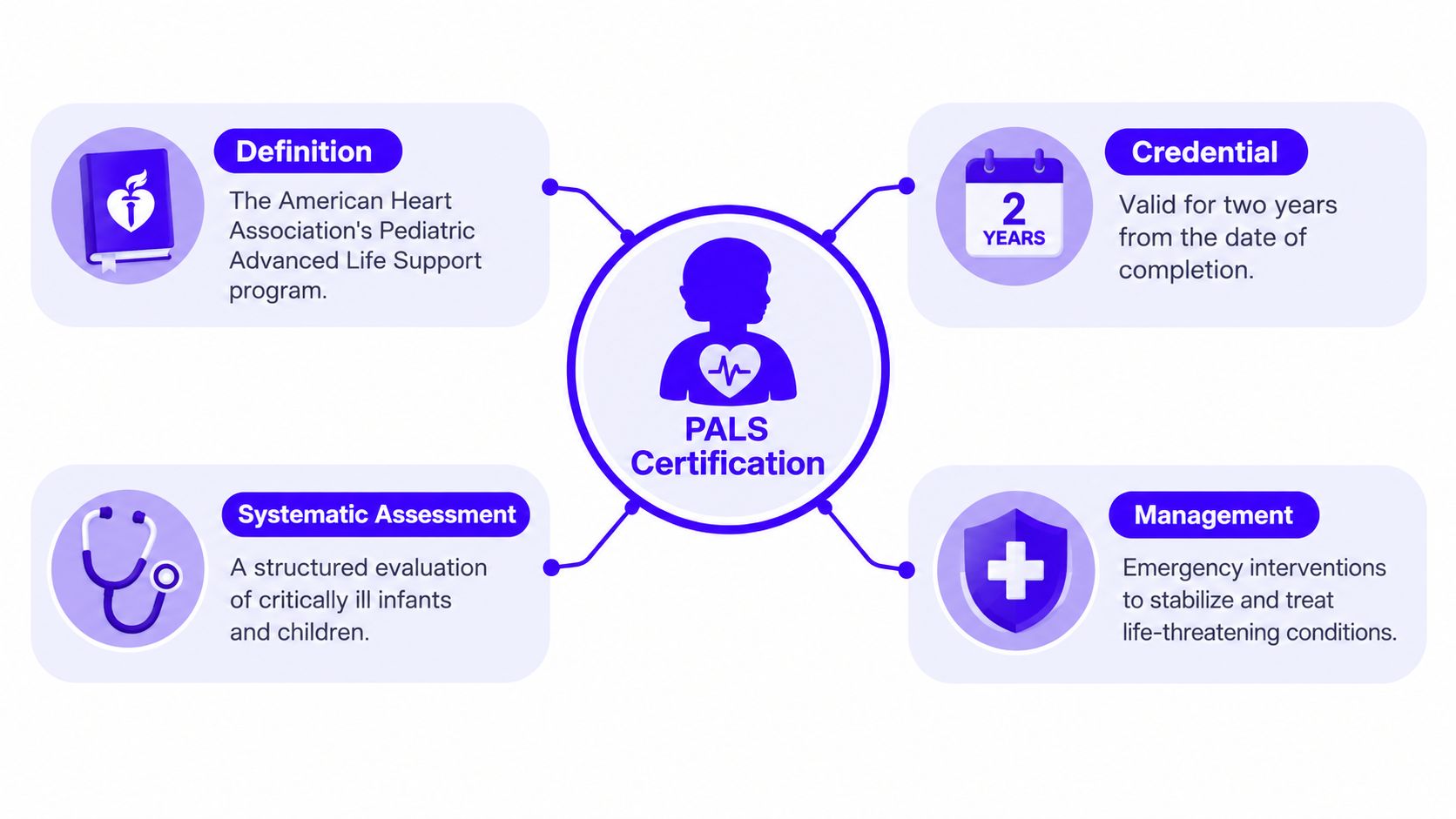
A child's condition can change while a nurse is still deciding which finding matters most. Pediatric Advanced Life Support, or PALS, gives healthcare professionals a structured way to assess and manage emergencies involving infants and children. The American Heart Association course addresses early recognition, high-quality CPR, airway and breathing support, circulation, medication decisions, team dynamics, and care after cardiac arrest.
PALS is a credential, but passing the course once does not keep every skill sharp until renewal. Weight-based dosing, rhythm recognition, and pediatric algorithms can fade when emergencies are rare. Treat the course as a framework to rehearse between renewal windows, not as a substitute for practice.
The relationship among common resuscitation credentials is easier to follow in layers. BLS is the foundation, covering CPR, AED use, and basic airway support. ACLS builds on that foundation for adult cardiac emergencies, with adult-focused rhythm management, pharmacology, and post-cardiac arrest care. PALS adds pediatric physiology, weight-based dosing, age-specific assessment, and pediatric resuscitation algorithms.
The systematic approach
PALS teaches nurses to assess, categorize, intervene, and reassess. For example, increased work of breathing points toward a respiratory problem, while poor perfusion and altered mental status may indicate shock. The sequence helps the team identify the physiologic problem before choosing a procedure or medication.
Course cases commonly include:
- Respiratory distress and failure: Recognizing when breathing effort, oxygenation, or ventilation is inadequate.
- Shock: Identifying poor tissue perfusion and responding to the likely cause.
- Bradycardia: Connecting a slow rate with perfusion and the child's overall condition.
- Tachycardia: Separating an abnormal rhythm from compensatory sinus tachycardia.
- Cardiac arrest: Coordinating CPR, ventilation, rhythm assessment, defibrillation, and medications.
- Post-cardiac arrest care: Supporting the child after circulation returns and limiting secondary injury.
The American Heart Association's PALS course options outline classroom and blended routes that lead to the same course completion eCard. The eCard remains valid for 2 years after successful completion. An initial course commonly takes about 14 hours, while renewal is often condensed to roughly 6 to 8 hours.
Choosing a credentialing path
Nurses may see an PALS Provider course, an equivalent American Red Cross program, or a private-vendor course. Before enrolling, confirm who issues the card, whether the employer accepts it, whether hands-on skills testing is required, and whether the credential can be verified. Employer policy, rather than the course label alone, determines whether the card meets workplace requirements.
PALS is commonly expected in pediatric, emergency, critical care, transport, and other roles where infants and children may need urgent intervention. A nurse should also ask how the organization handles renewal. Some employers schedule certification by expiration date, while others tie it to unit assignment or annual competency checks. That distinction helps nurses maintain readiness instead of waiting for the next renewal deadline.
Who Needs PALS and How to Qualify
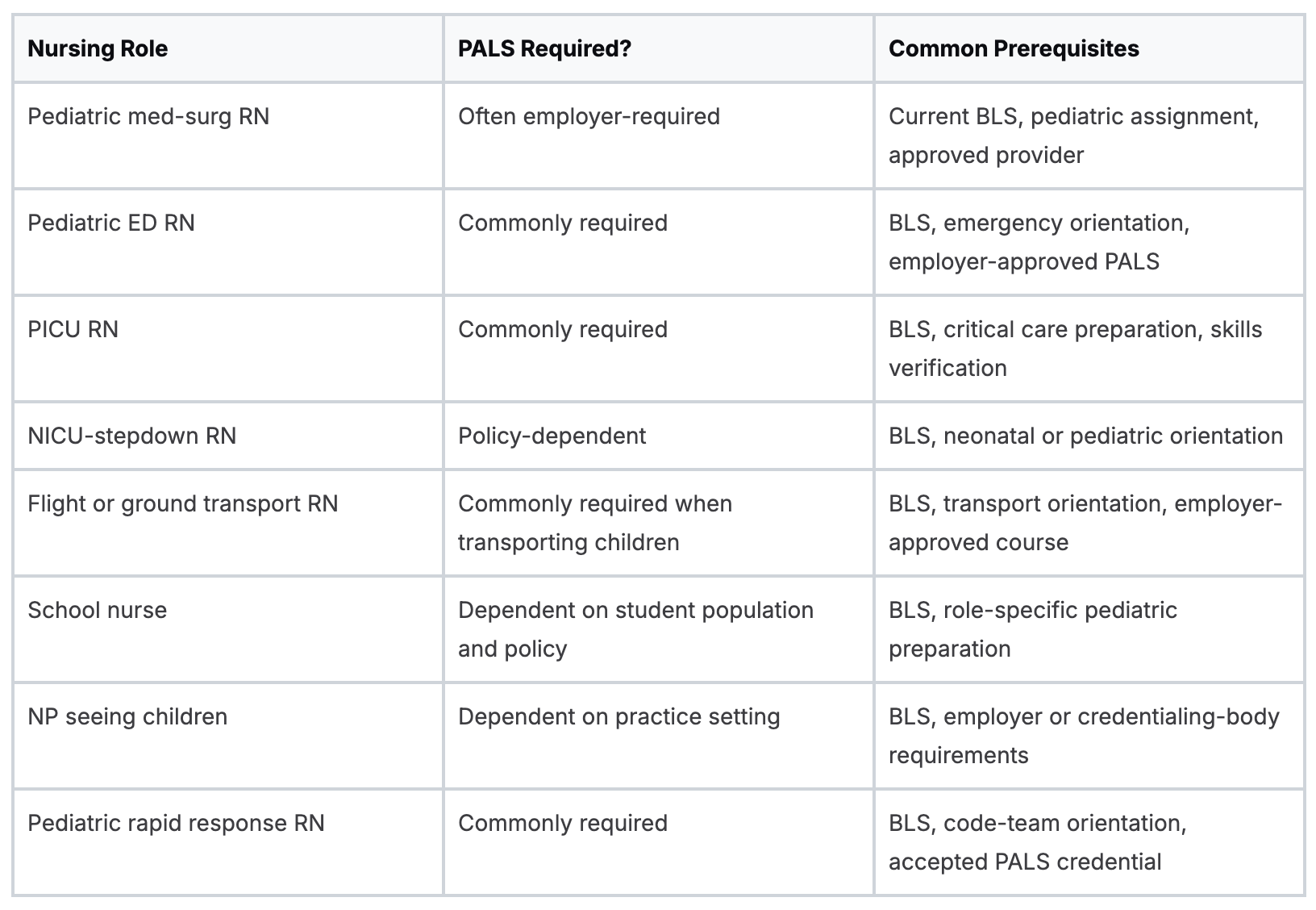
PALS is most clearly relevant when a nurse's assignment includes critically ill children or a response team may be called to a pediatric emergency. Pediatric med-surg nurses, pediatric emergency nurses, PICU nurses, transport clinicians, and nurses assigned to pediatric code teams commonly encounter employer requirements.
Other roles require closer review. A school nurse supporting medically complex students, an NP seeing children in acute or primary care, or an RN working in a mixed adult and pediatric department may need PALS because of local policy rather than because the nursing license itself mandates it. NICU-stepdown assignments and rapid response teams also deserve direct confirmation from the hiring organization.
Employer requirement versus professional development
A hospital may require PALS before a nurse starts independent practice in a pediatric unit. Another employer may allow completion after orientation. A nurse may also pursue PALS voluntarily to prepare for a transfer, strengthen pediatric assessment skills, or remain competitive for transport or emergency roles.
Before enrollment, the nurse should confirm:
- BLS status: A current BLS for Healthcare Providers card is typically expected.
- Age-range responsibilities: Nurses crossing adult and pediatric populations may also need ACLS, depending on the employer.
- Clinical preparation: Familiarity with pediatric vital sign interpretation, ECG concepts, pharmacology, and weight-based equipment sizing makes the course easier to apply.
- Organization recognition: The employer should identify whether it accepts AHA, American Red Cross, or private-vendor credentials.
- State education rules: The state Board of Nursing should be checked for acceptance of the course's continuing education credits.
- Unit-specific conditions: Some departments may require a clinical reference, a precourse self-assessment, or a minimum self-assessment score of 70%.
PALS Eligibility Snapshot for Nursing Roles
Course Content and Skills Testing in Practice
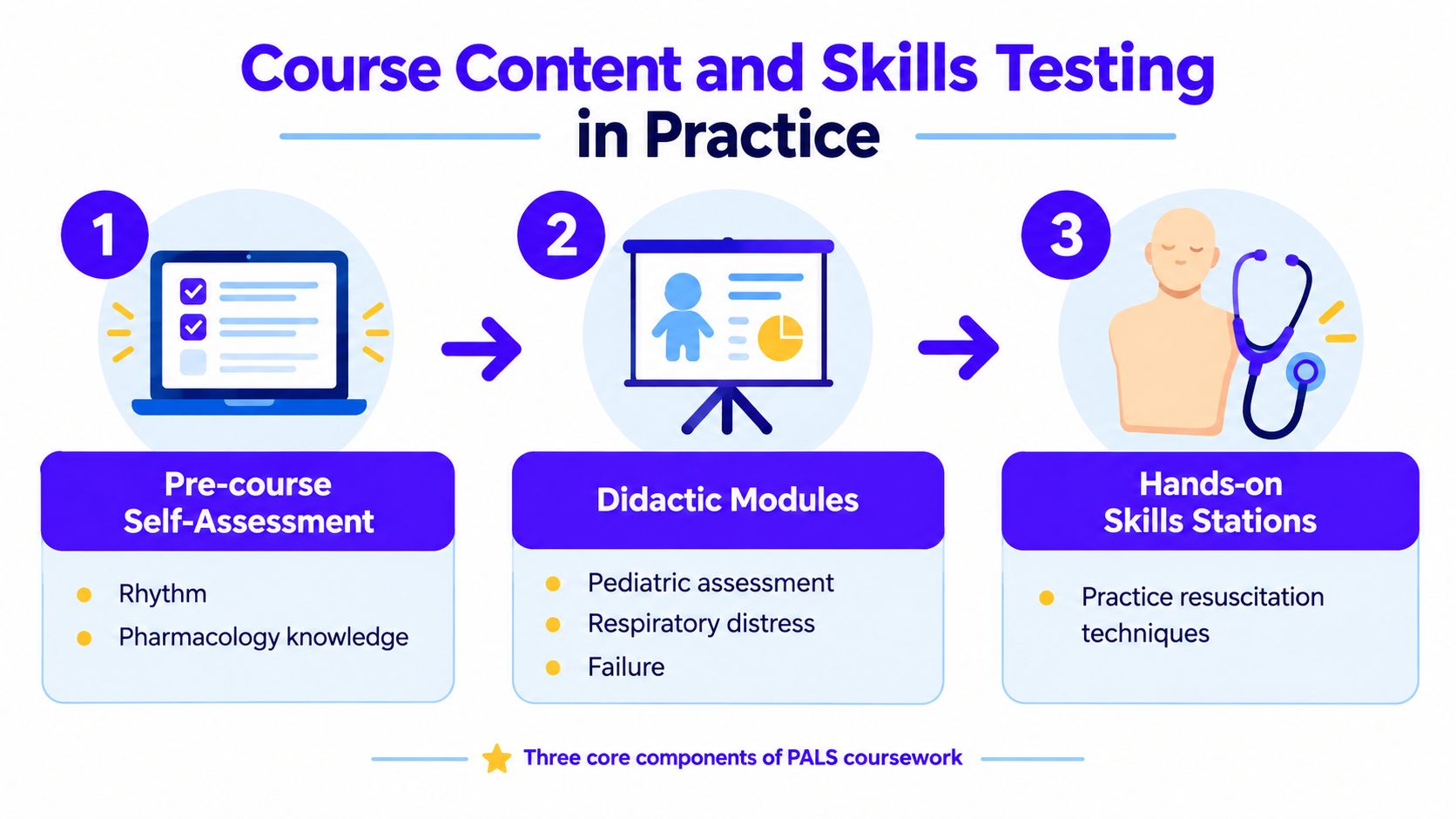
A child's condition can change before the team has finished gathering information. PALS training prepares nurses to recognize that change, connect assessment findings to an algorithm, and act as a coordinated team. The course has three linked parts: a pre-course self-assessment, didactic learning, and hands-on practice. The self-assessment commonly reviews rhythm recognition and pharmacology. Didactic modules cover pediatric assessment, respiratory distress and failure, shock, arrhythmias, cardiac arrest, team communication, and post-cardiac arrest care. Skills stations then turn those concepts into actions with equipment, a manikin, and a team.
Blended learning separates the cognitive work from the in-person skills session. A nurse working rotating shifts can complete online modules between assignments, then reserve one scheduled block for practice and testing. A classroom course keeps explanation, discussion, and practice together, which may suit learners who want immediate coaching. The choice changes how a nurse organizes time to finish the course, while both formats require the learner to meet the provider's completion standards.
A worked bradycardia scenario
An 18-month-old becomes lethargic after worsening respiratory distress. The monitor shows bradycardia, and perfusion is poor. The team must support oxygenation and ventilation while looking for reversible causes, often organized through the H's and T's. In practice, the nurse helps estimate weight, selects child-sized equipment, prepares medication, and states the next reassessment point aloud.
The current algorithm lists epinephrine at 0.01 milligrams per kilogram IV or IO, using the 0.1 milligram per milliliter concentration, with a maximum dose of 1 milligram, repeated every 3 to 5 minutes during CPR. For a 20-kilogram child, the calculation is 0.2 milligrams per dose. Nurses should verify these figures in current course materials and local medication policy rather than rely on an old note.
The bradycardia algorithm sets another decision point. CPR should begin when the heart rate is less than 60 per minute in the relevant clinical setting, particularly when poor perfusion continues despite support. The AHA pediatric bradycardia algorithm also lists epinephrine at 0.01 milligrams per kilogram IV or IO, with a maximum of 1 milligram.
How testing feels
Assessment combines cognitive knowledge with psychomotor performance. Providers commonly use a written multiple-choice examination and a megacode-style skills evaluation based on validated checklists. During the station, a nurse may need to ventilate effectively, communicate findings, identify rhythm changes, prepare treatment, and reassess the child in sequence. Missing a knowledge area or a required action generally leads to remediation and another opportunity to demonstrate competence, according to the provider's process.
New learners can review what to expect from pediatric advanced life support certification before attending, especially when the course format or skills station is unfamiliar. The goal is not to memorize isolated steps. It is to recognize the child's pattern, use the algorithm accurately, and keep the team moving when the situation changes.
Maintaining Readiness Between Renewals
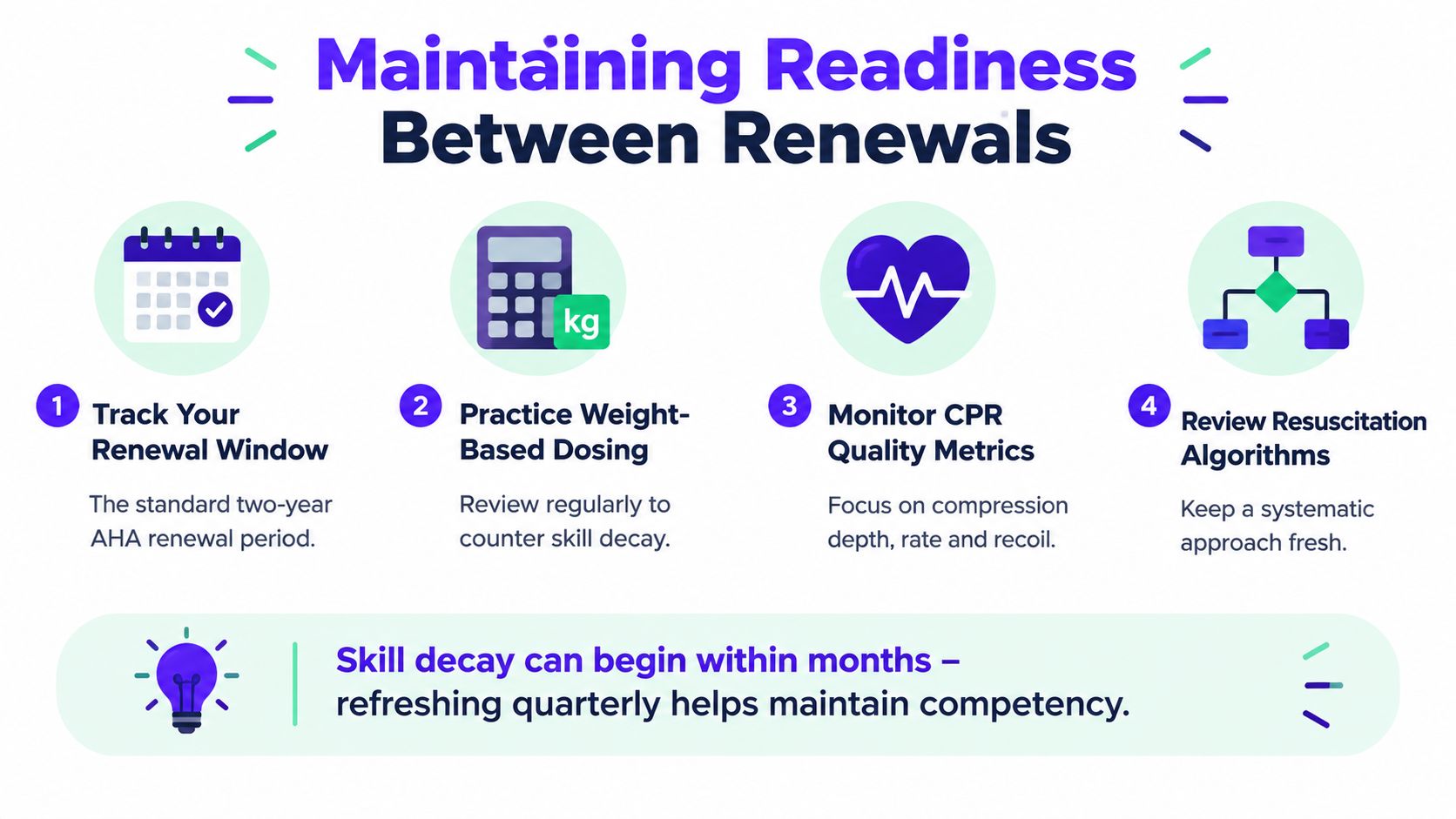
A nurse can hold a valid PALS card and still hesitate during a child's sudden deterioration. Course completion confirms that the required learning and skills assessment were completed. It does not show that every pediatric skill stays sharp throughout the renewal period. Historical follow-up research found a significant knowledge decline one year after PALS training. Another study reported declines in theory and some skills by four months, along with worsening chest-compression retention.
The renewal system follows a fixed 2-year cadence, while bedside readiness may need a shorter practice rhythm. The American Heart Association eCard remains valid for two years after completion. Its expiration date should mark an administrative deadline, not the first time a nurse returns to pediatric review.
A low-burden maintenance plan
A unit does not need to repeat a full certification course every time staff practice. Short exercises can target the emergencies nurses are most likely to face:
- Quarterly simulation: Run a brief pediatric deterioration scenario involving assessment, ventilation, circulation support, and team communication.
- Monthly case review: Discuss one deterioration or near miss, focusing on recognition, escalation, and handoff language.
- Weight-based calculation practice: Review medication calculations with realistic weights and current reference materials.
- Cognitive aids: Keep approved PALS reference cards and algorithms accessible under local policy.
- Preceptor pairing: Pair less-experienced nurses with a PALS-trained preceptor during high-risk events and mock responses.
A mock code should observe behavior, not merely ask whether staff remember a formula. Review compression quality, ventilation technique, role clarity, closed-loop communication, equipment selection, and reassessment timing. A scenario involving a child who becomes more lethargic after respiratory distress can show whether the team recognizes deterioration, assigns roles, and changes treatment without waiting for a crisis.
Certification opens the door to readiness. Repeated practice keeps the door from closing.
Online refreshers and micro-simulation apps can strengthen recognition and recall. They do not replace hands-on team practice. A nurse may select the correct response on a screen and still struggle to ventilate a child while communicating with the medication nurse and team leader. Unit-based simulation addresses that gap by using the equipment, layout, staffing model, and escalation pathways present at the bedside.
For nurses seeking formal coursework, Pediatric Advanced Life Support (PALS) Certification Training is described as training for healthcare professionals focused on patient care.
The 12-month self-audit
At the midpoint of the credential cycle, ask:
- Can I identify respiratory failure before arrest?
- Can I locate the current pediatric algorithms?
- Can I perform weight-based dose calculations without relying on memory alone?
- Have I practiced infant and child CPR recently?
- Does my unit have a clear pediatric escalation pathway?
- Have I participated in a scenario involving bradycardia, shock, or arrest?
A “no” answer identifies a practice need. It does not mean the nurse has failed PALS. It means the card's administrative validity and the nurse's current fluency must be managed as separate issues. This distinction helps nurses and employers plan practice before a renewal deadline becomes an urgent reminder.
Employer Acceptance and the 2026 Guideline Shift
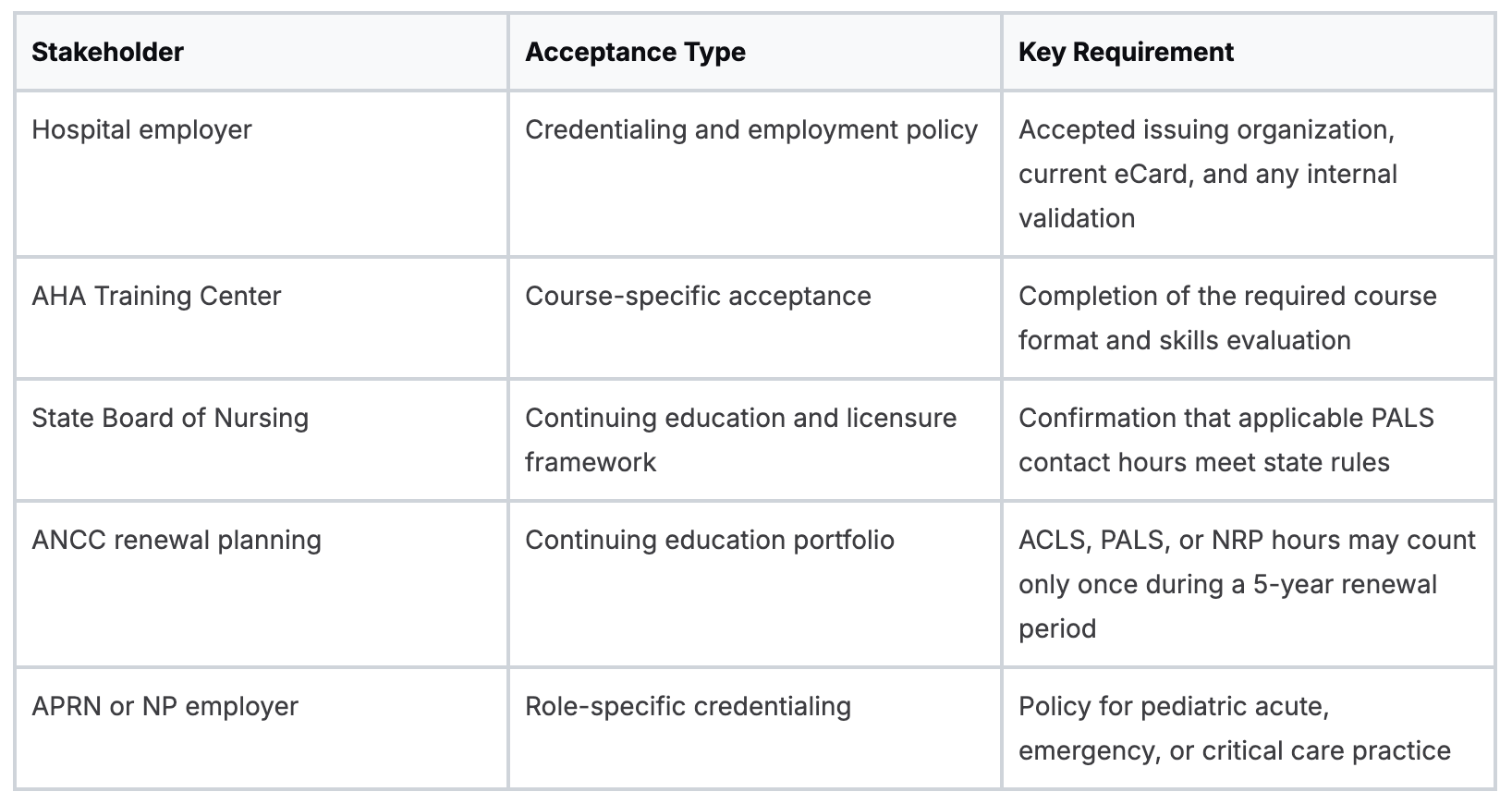
Nurses often confuse two different deadlines. Certification-driven renewal is tied to the expiration date on the course completion eCard. Employer-driven renewal is determined by hospital policy, which may require a nurse to renew earlier, complete an internal skills validation, or use a specific training organization.
Most hospitals treat course completion card as the credential of record, but an institution may still impose additional requirements. An equivalent program may be acceptable in one department and rejected in another. Nurses should obtain the policy in writing before paying for a course, particularly when a job posting uses broad language such as “PALS certified” without naming the issuing organization.
The American Nurses Credentialing Center creates a separate continuing education planning issue. ACLS, PALS, or NRP contact hours can count only once during a 5-year renewal period, so nurses who hold several credentials need to track how each course applies to their broader renewal portfolio. PALS contact hours support continuing education planning, but they don't replace RN licensure or other state requirements.
The guideline transition
A current 2026 guide reports that updated PALS materials were released on October 22, 2025 and became mandatory at AHA Training Centers starting March 1, 2026. Nurses can review that transition guidance in the 2025-2026 PALS update discussion, then confirm the exact course version with the training center.
The content areas expected to receive attention include post-cardiac arrest care, resuscitation science, and opioid considerations. Nurses holding cards from the 2020 cycle should not assume that every course provider handles the transition identically. The practical approach is to compare the card's expiration date with the employer's renewal deadline, ask which guideline materials the course uses, and avoid waiting until the card has lapsed.
APRNs and NPs need the same policy check. A pediatric acute care, emergency, or critical care practice may require PALS as part of institutional credentialing, while the state license and specialty certification create separate obligations.
Employer and State Acceptance of PALS Certification
Nurses who are unsure whether a remote course satisfies local expectations can compare the factors discussed in whether online PALS certification is valid.
Practical Next Steps for Your First PALS Course
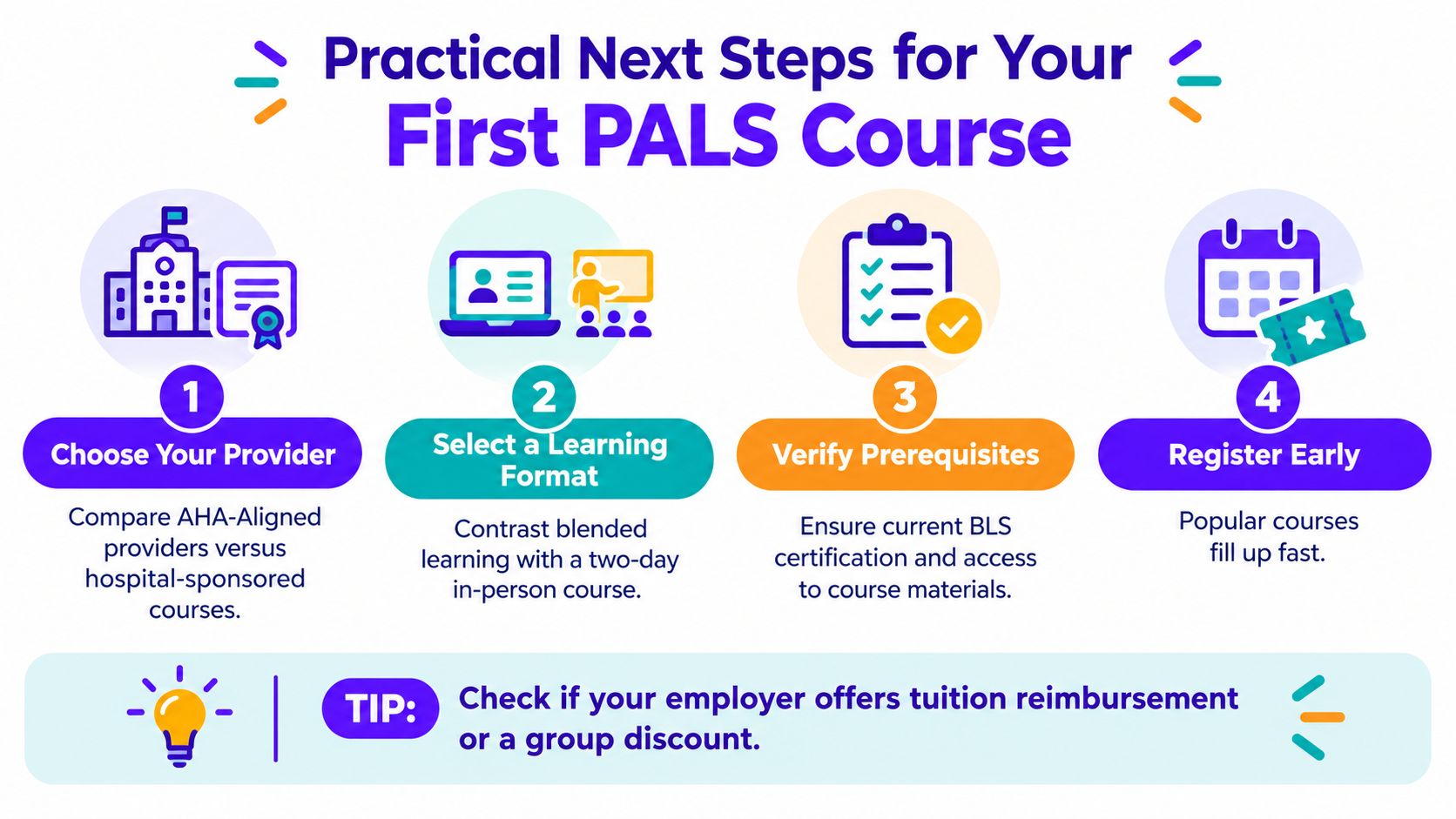
A nurse may start their first PALS course knowing the algorithms but still feel unsure about which provider, format, or renewal path fits the job. Start with the employer's policy. A hospital-sponsored class may match local equipment and code procedures, while an AHA-aligned provider may offer a blended format. Confirm the issuing organization, required skills evaluation, and completion eCard before registering.
Before registration
Use this checklist to remove administrative surprises:
- Ask the employer first: Confirm whether the department requires AHA PALS or accepts an equivalent program.
- Choose the learning format: Blended learning pairs online study with hands-on practice. A classroom course keeps instruction together and may suit nurses who want live coaching.
- Verify BLS: Check that the BLS for Healthcare Providers card is current. Ask whether ACLS is also required for mixed-age practice.
- Review course materials: Study the PALS student manual if the provider assigns it, complete the precourse self-assessment, and record the course coordinator's contact information.
- Confirm the skills station: Ask which manikins, airway equipment, monitors, and documentation will be used.
Also check whether the state Board of Nursing accepts the associated continuing education credits. Employers may request a certificate, an eCard, or both. A course catalog such as Pediatric Advanced Life Support (PALS) Certification Training can help a nurse compare the training format and documentation before enrollment.
Passing the course is the beginning of readiness, not the end. Skills can fade between renewal windows when pediatric emergencies are infrequent, so connect the new knowledge to the unit's actual workflow.
The first 90 days after completion
Place the eCard in the credentialing file immediately. During the first month, schedule a mock megacode with the charge nurse and locate the unit's pediatric equipment. Practice describing respiratory effort, perfusion, mental status, oxygen response, and escalation needs in the same order used during handoffs.
In the following weeks, ask for feedback during simulation or case review. A short rehearsal can expose delays in finding equipment, choosing an intervention, or communicating a change in the child's condition before a real event reveals them.
Set a reminder 60 days before expiration. Use it to compare the renewal options accepted by the employer, check whether the guideline version has changed during the 2025-2026 transition, and reserve training before the card lapses. Employer-driven renewal may follow a different schedule from the certification cycle, so track both.
Renewal habit: Treat the expiration date as the final boundary, not the planning date.
Waiting until expiration can leave the preferred course full or reveal that the employer requires another provider. Early verification protects time for clinical practice and keeps the credential record current. Brief unit drills, equipment checks, and case reviews help bridge the gap between passing PALS once and staying prepared throughout the two-year renewal window.
Premiere Education offers online continuing education and certification courses, including PALS training, with tools for course completion and documentation. Nurses preparing for initial certification or renewal can visit Premiere Education to review available options and organize credentialing records for their role.
Latest Posts





25% off Sitewide→
Use Code: PCECYBERSALE2025→