
.avif)
How Nurses Are Reducing Disparities in Healthcare Today
Key Takeaways
Racial disparities in healthcare are a serious risk to overall health and wellness in our society. By providing culturally responsive care, nurses are in a position to make an immediate impact on the experience marginalized populations have with healthcare institutions.
Recommended Courses: Racial Disparities in Healthcare: From Awareness to Equitable Action, Implicit Bias Training For Healthcare Providers, Introduction to Pharmacogenomics, When Medicine Fails Women, Necessary Components of Care Cultural Competence and Humility
The COVID-19 pandemic put the impact of racial and social disparities on stark display for the healthcare industry in America. During the crisis, the life expectancy of minority and marginalized populations in America fell at over twice the rate of whites from 2019-2020.
These sobering statistics reaffirmed that, despite major initiatives to reduce implicit bias and promote health equity, there is still much work to be done.
Nurses play a critical role as front-line caregivers, advocates, and health liaisons, and continuing education courses like Racial Disparities in Healthcare: From Awareness to Equitable Action equip them with skills and knowledge they can put directly into practice.
How can you become an ally for breaking down structural racism with culturally responsive care? Here’s an in-depth look at where you can start making a difference.
Where Do Racial Disparities Emerge?
Racial disparities in healthcare are preventable differences in health outcomes, healthcare access, treatment, and quality of care experienced by racial and ethnic groups.
They are not explained by genetic and biological variations alone, and stem from systemic care issues, like systemic barriers, historical inequities, economic challenges, and unconscious bias within healthcare systems.
Cancer screening is a powerful example of how racial disparities play out in healthcare spaces. In a recent meta-study spanning two decades, black patients were consistently 2-9% less likely to have colorectal cancer screening than their white counterparts.
Crucially, the trend was directly attributable to disparities in education, income, and health insurance—and was a key factor contributing to a 30% higher mortality rate.
While the findings of these studies have a narrow focus, they reflect broad trends and systemic biases that affect nearly every health outcome for marginalized populations. That’s why reducing racial disparities in healthcare centers around awareness, policy, continuing education, and big-picture institutional change.
The Nurse's Role in Health Equity
Nurses serve as educators, care coordinators, advocates, and trusted members of interdisciplinary healthcare teams. Their consistent presence throughout the continuum of care places them in an ideal position for reducing racial disparities in healthcare.
Key nursing responsibilities include:
- Identifying barriers to care
- Building trusting therapeutic relationships
- Promoting culturally responsive communication
- Educating patients using health literacy principles
- Connecting patients with community resources
- Advocating for equitable treatment plans
These actions help improve patient engagement, adherence to treatment, and overall health outcomes.
Delivering Culturally Responsive Care
While medical science strives for objective solutions, institutions with a one-dimensional approach to culture and ethnicity risk alienating patient segments.
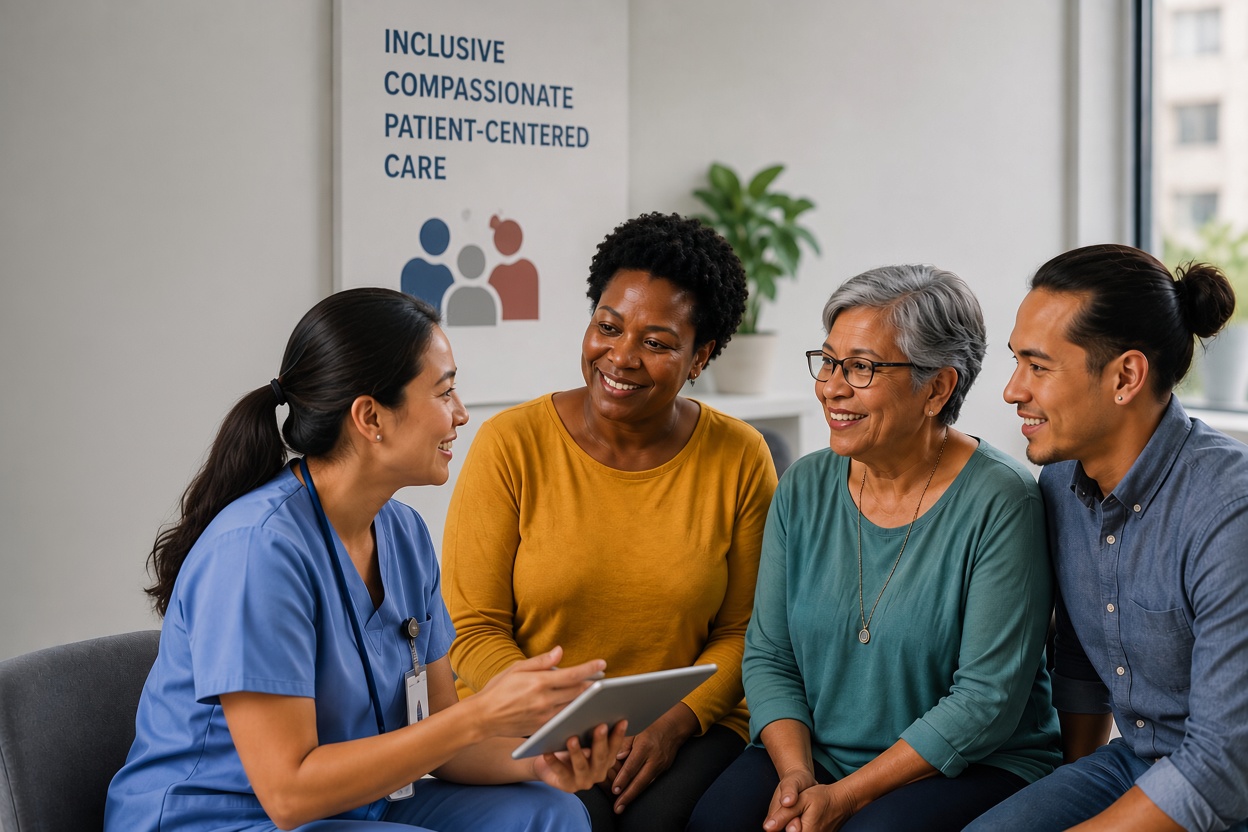
Culturally responsive care seeks to account for a patient's cultural values, traditions, beliefs, language preferences, and healthcare expectations when providing services—and nurses are often a first point of contact for diverse patients.
Rather than making assumptions based on race or ethnicity, nurses often seek to understand each patient's individual perspective. Asking open-ended questions, involving family members when appropriate, and respecting cultural health practices foster stronger partnerships between patients and providers.
Culturally responsive care also includes the appropriate use of qualified medical interpreters. Nurses should also avoid medical jargon when explaining diagnoses, medications, and treatment recommendations.
Recognizing and Addressing Implicit Bias
Implicit bias refers to unconscious attitudes or stereotypes that may influence decision-making without conscious awareness.
Healthcare professionals, like all individuals, may possess implicit biases despite their commitment to providing equitable care. Continuing education helps nurses recognize these unconscious influences through self-reflection and evidence-based training.
Practical strategies to reduce the effects of implicit bias include:
- Pausing before making clinical assumptions
- Using standardized clinical assessment tools
- Following evidence-based practice guidelines
- Seeking diverse perspectives during interdisciplinary discussions
- Reflecting on patient interactions to identify opportunities for improvement
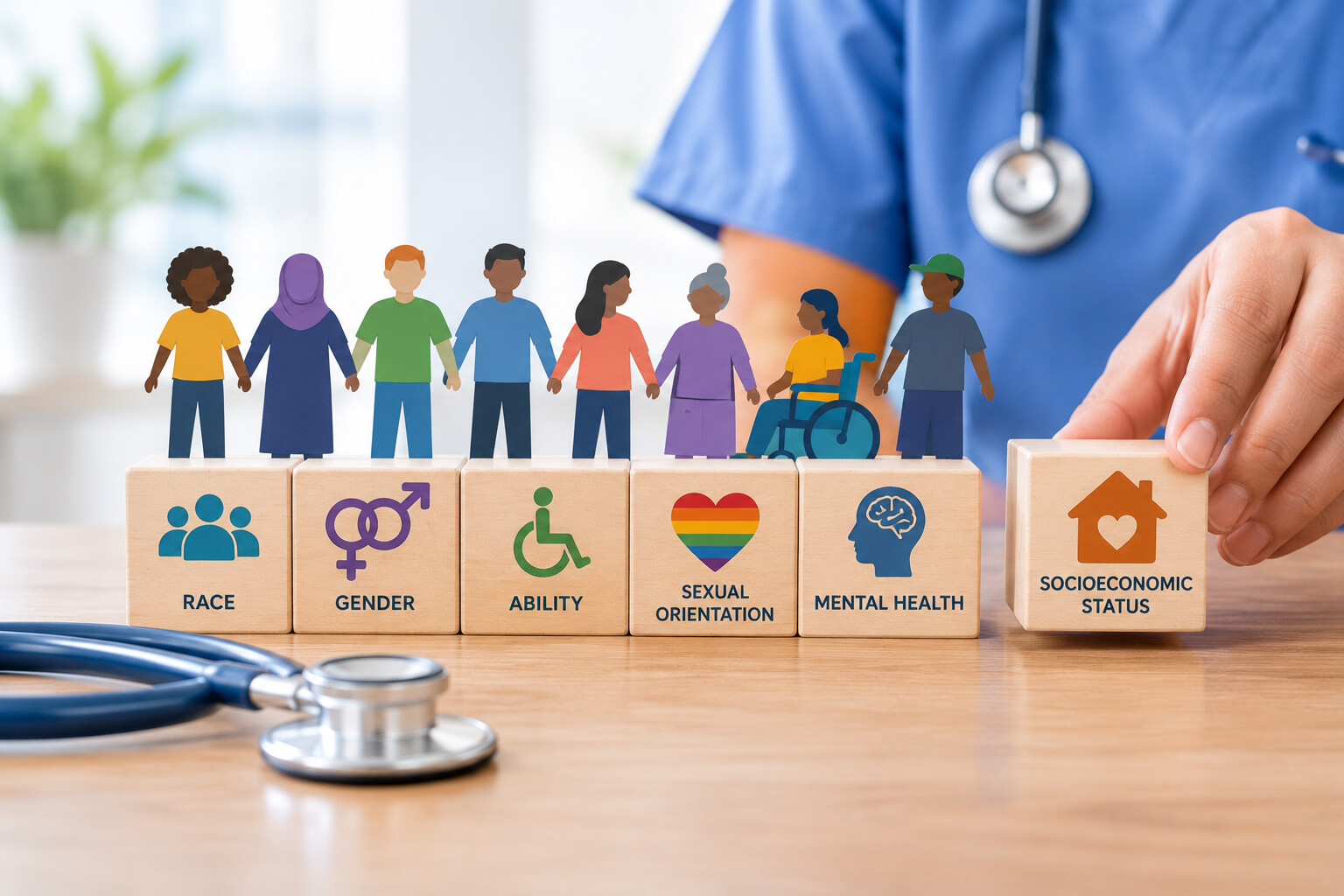
Implicit bias can also further deepen racial disparities by disproportionately impacting women, LGBTQIA+, and other marginalized populations.
Addressing Social Determinants of Health
Health outcomes extend far beyond the walls of hospitals and clinics. Social determinants of health, including housing stability, food security, transportation, education, employment, and neighborhood safety, have profound effects on patient wellness. Nurses frequently identify these challenges during patient assessments and screening.
A patient may struggle to manage diabetes not because they are unwilling to follow recommendations, but because they lack reliable transportation to appointments or cannot afford healthy food.
Screening for social needs allows nurses to connect patients with:
- Community health programs
- Transportation assistance
- Nutrition services
- Financial support resources
- Medication assistance programs
- Preventive care services
Addressing these underlying factors helps improve health outcomes while advancing efforts toward reducing racial disparities in healthcare.
Building Trust Through Effective Communication
Historical injustices and negative healthcare experiences have contributed to distrust among some communities. Nurses can help rebuild trust through compassionate, respectful communication.
Trust begins with active listening. Patients should feel comfortable asking questions, expressing concerns, and participating in shared decision-making. Nurses who acknowledge patient experiences without judgment often establish stronger therapeutic relationships.
Effective communication also includes:
- Using person-centered language
- Confirming patient understanding through teach-back techniques
- Encouraging questions throughout care
- Respecting patient preferences
- Providing clear, consistent education
Using Data to Improve Equity
Healthcare organizations increasingly use quality improvement initiatives to identify disparities and measure progress toward health equity goals. Nurses contribute by accurately documenting patient information, participating in quality improvement projects, reviewing outcome data, and identifying trends that may indicate inequitable care.
Examples include monitoring readmission rates, preventive screening participation, vaccination rates, pain management practices, chronic disease control, and maternal and infant outcomes. Analyzing data by race and ethnicity helps organizations identify opportunities for targeted interventions and evaluate whether improvement efforts are successfully reducing racial disparities in healthcare.
Continuing Education Supports Lasting Change
Professional development plays a central role in preparing nurses to address health inequities effectively.
Continuing education courses often include topics such as:
- Cultural humility
- Health equity
- Social determinants of health
- Trauma-informed care
- Implicit bias recognition
- Inclusive communication
- Community health partnerships
These educational opportunities strengthen clinical judgment while providing practical strategies that nurses can immediately implement in diverse care settings. Healthcare continues to evolve, and lifelong learning ensures nurses remain prepared to meet the needs of increasingly diverse patient populations.
Reducing Racial Disparities in Healthcare—Looking Forward
The healthcare landscape is constantly evolving, and nurses will need to be prepared for managing increasingly diverse populations in their daily practice. Does it add complexity to busy work routines? Absolutely, but the principles in play can drastically improve the care you deliver to all your patients.
Premiere is committed to ensuring nurses have access to continuing education that broadens their skillset for reducing racial disparities in healthcare. Courses like Racial Disparities in Healthcare: From Awareness to Equitable Action provide concrete strategies that open doors and connect everyone in your community with better care.
All of Premiere’s award-winning courses are designed by industry experts and make it easy to meet your professional obligations and develop your career.
FAQs
What are the main factors contributing to health care disparities?
Health disparities can evolve from assumptions and biases by healthcare professionals, a lack of cultural awareness or knowledge, socioeconomic disadvantages, and educational gaps between institutions and the populations they serve.
What are some examples of disparities in healthcare?
Lessened participation in screening, access to care, reduced adherence to care plans, and disengagement from institutional care are all examples of health disparities that lead to worse health outcomes.
What causes racial disparities in healthcare?
While there are many contributing factors, racial disparities emerge when populations are marginalized from healthcare through a lack of culturally responsive care or socioeconomic barriers. Also, when patients experience implicit bias or perceive they are unwelcome, they may avoid contact with the healthcare industry.
What does it mean to be culturally sensitive in healthcare?
Culturally sensitive healthcare seeks to account for a patient's cultural values, traditions, beliefs, language preferences, and healthcare expectations. Nurses are often a first point of contact for marginalized populations, and continuing education is essential for bridging health gaps.
How does racism impact healthcare?
Cultural differences, socioeconomic realities, and implicit biases all contribute to members of minority populations receiving inadequate care and avoiding healthcare institutions.
Latest Posts




25% off Sitewide→
Use Code: PCECYBERSALE2025→