

Benefits of AI in Healthcare: 8 Ways It Helps

A radiologist's worklist moves a suspected stroke toward the top. An ambient scribe drafts a visit note before the patient leaves. On the inpatient unit, a predictive alert prompts a nurse to reassess a patient whose condition may be deteriorating before conventional warning criteria trigger. These are different applications of AI, but each creates the same operational question: who checks the output, and what happens next?
For clinicians, administrators, and educators, the useful benefits of AI in healthcare aren't about replacing professional judgment. They're about finding relevant information sooner, reducing repetitive work, and helping teams respond consistently. Those benefits disappear when staff must correct unreliable notes, chase excessive alerts, or work around software that doesn't fit the clinical setting.
Administrative applications, including handling patient calls beyond office hours, require the same discipline as clinical tools: approved information, clear escalation routes, and a person accountable for exceptions.
A faster workflow is valuable only when the team can show that it remains accurate, safe, and usable.
The strongest implementations start with a specific problem, not a general ambition to adopt AI. A radiology department may need faster review of urgent scans; a school health team may need more reliable documentation and training records. Each application below pairs its potential benefit with a practical deployment approach and the failure modes that deserve attention.
1. AI-Assisted Diagnostic Imaging and Early Detection
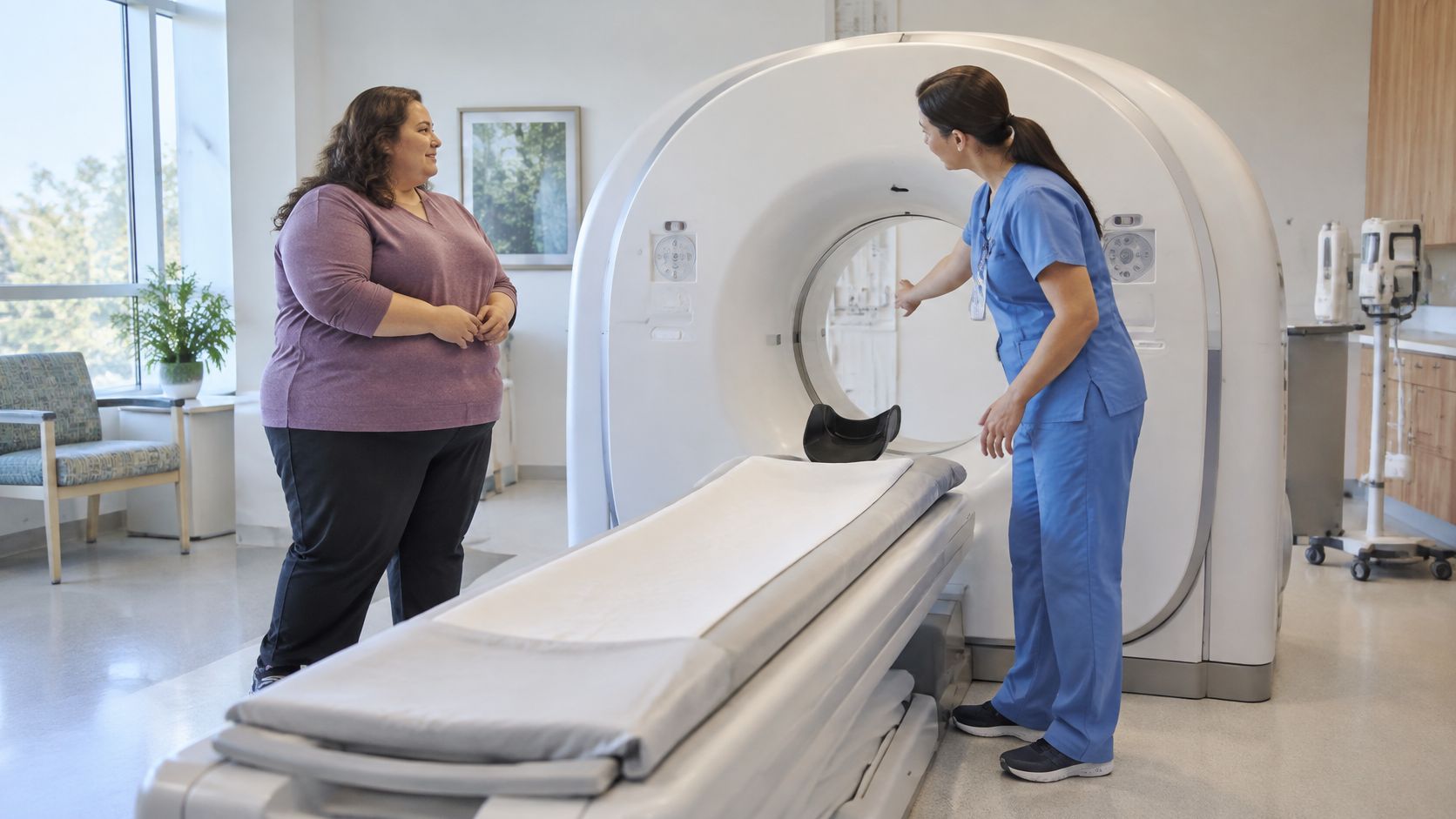
AI-assisted imaging can help specialists identify suspicious findings and prioritize urgent examinations. Models analyze images such as X-rays, CT scans, retinal photographs, and pathology slides, then flag patterns within their intended use. The operational benefit is a more focused review process, not permission to stop checking unflagged examinations.
The distinction between a highlighted finding and a confirmed diagnosis matters.

Named examples include IDx-DR for diabetic retinopathy screening and Viz.ai for stroke-related imaging workflows. They illustrate different deployment models: a narrowly defined autonomous screening pathway requires different oversight from software that alerts a specialist to a suspected finding. Teams shouldn't apply one product's intended-use rules to another.
A WHO-linked regional assessment reported that 64% of Member States surveyed, 32 of 50 countries, used AI-assisted diagnostics, especially in medical imaging. That establishes adoption, not a guarantee that a particular clinic will achieve better outcomes.
Make the referral pathway part of deployment
Consider a primary care practice introducing retinal screening. Staff must know how to acquire acceptable images, handle an unreadable result, communicate findings, and arrange follow-up rather than just print an AI report.
- Validate locally: Review performance in patients and equipment configurations resembling the practice's own.
- Assign ownership: Identify who reviews flags and documents disagreements.
- Audit misses: Examine false negatives as well as false positives, including cases discovered through later care.
For broader workflow context, practical strategies for using AI in healthcare can support implementation planning. An alert isn't a completed referral, and a negative output must never override concerning symptoms.
2. Ambient Clinical Documentation and Administrative Burden Reduction
The clinician finishes a complex consultation, but the note still needs a medication history, assessment, and follow-up plan. Ambient documentation tools turn the encounter conversation into a draft, allowing the clinician to spend less of the visit typing and more time attending to the patient.
Microsoft's Nuance DAX Copilot and Abridge are named examples of ambient documentation systems. Their practical value depends on whether clinicians can review and correct the draft more efficiently than they could produce an accurate note themselves.
Documentation support should preserve attention during the consultation.

In Elsevier's 2025 survey of 2,206 clinicians across 109 countries, 70% identified time savings as an expected benefit of AI. That expectation makes documentation a sensible pilot target, but it isn't evidence that every ambient scribe saves time.
Review meaning, not just spelling
A plausible note can still misattribute a family member's condition to the patient, omit a negation, or describe a treatment option as an agreed plan. The reviewer should compare the draft against what happened, especially medication changes, examination findings, and follow-up instructions.
For a pilot, the practice should establish a patient consent script, an approved recording and retention policy, and a clinician sign-off requirement. Patients who decline recording need a workable alternative.
Measure total documentation effort, including corrections, rather than counting generated notes. The pros and cons of AI in healthcare are particularly relevant here: reduced typing helps only if reviewing the draft doesn't create a different burden. An unsigned draft must remain distinguishable from the final clinical record.
3. Predictive Analytics and Early Warning Systems
An early warning is useful only when someone can act on it. Predictive systems combine signals such as vital signs, laboratory results, medications, and clinical history to estimate deterioration risk. Nurses and physicians can then reassess a patient before an obvious crisis develops.
TREWS, developed by Johns Hopkins researchers led by Suchi Saria, is a named sepsis-detection example. The Epic Sepsis Model is another recognizable system, but neither name should substitute for a local evaluation of alert quality, clinical response, and patient outcomes.
The bedside assessment remains the decisive step.

Consider an alert for a patient with rising respiratory rate and changing laboratory results. A useful workflow sends it to a designated nurse, prompts reassessment, and defines when to contact the treating clinician. A poor workflow sends the same warning to several inboxes without identifying who owns the response.
Operational rule: No predictive alert should go live without a named recipient, a response pathway, and a downtime alternative.
Test the response, not just the prediction
Before go-live, run the model without influencing care and compare its alerts with clinical review. Examine missing data, timing, and whether the model identifies patients early enough for an available intervention.
After deployment, review alert volume, overrides, response time, missed deterioration, and unnecessary escalation. An alert accepted by staff isn't automatically a correct alert, and an overridden alert isn't automatically an error.
Thresholds should reflect staffing capacity and clinical consequences. Lowering a threshold may identify more at-risk patients, but it can also generate interruptions that cause staff to disengage. The goal is an actionable warning system, not the largest possible alert count.
4. Accelerated Drug Discovery and Research
Drug discovery benefits from AI when researchers can narrow a large field of possibilities into testable hypotheses. Protein-structure prediction, candidate-molecule generation, and computational screening can help laboratories decide which experiments deserve attention.
AlphaFold, developed by John Jumper, Demis Hassabis, and their collaborators, is a prominent example of protein-structure prediction. Insilico Medicine's work on a candidate for idiopathic pulmonary fibrosis illustrates a different application: using AI within target identification and molecule design.
The distinction between a computational model and an experimental result must remain visible.

Neither example means that a predicted structure proves biological function or that a promising molecule will become a safe treatment. Laboratory validation and clinical evaluation remain necessary. Faster candidate selection shouldn't be described as an established patient benefit before that evidence exists.
Keep an auditable experimental chain
Consider a research team ranking compounds against a proposed target. The team should preserve the input dataset, model version, selection criteria, and experimental results, including failed candidates.
- Separate prediction from observation: Label computational outputs clearly in research records.
- Confirm experimentally: Test the relevant biological effect rather than relying on a favorable model score.
- Protect reproducibility: Record preprocessing decisions and changes to the screening workflow.
- Retain negative findings: Failed experiments help prevent repeated pursuit of misleading candidates.
The practical benefit is better allocation of research effort. The caveat is that AI can generate convincing suggestions faster than a laboratory can validate them.
Clinical and administrative leaders reviewing research proposals should therefore ask what bottleneck the tool addresses. A faster computational stage offers limited value if the project lacks experimental capacity, appropriate data access, or a credible route to clinical testing.
5. Clinical Decision Support and Personalized Treatment Planning
Clinical decision support should make relevant options easier to evaluate, not make the decision invisible. AI-enabled tools can organize patient information, surface possible diagnoses, or suggest treatment considerations. Personalization may incorporate comorbidities, medication history, and genetic information.
CPIC-guided pharmacogenomic alerts provide a useful comparison, although guideline-based decision support isn't automatically AI. A system can connect a genetic result to a medication recommendation through explicit rules; organizations should distinguish that from a model generating a probabilistic recommendation.
Evidence maturity matters. The Stanford 2026 AI Index medicine chapter reported that only 2.4% of devices with clinical studies were supported by randomized-trial data. Regulatory authorization and analytical performance shouldn't be mistaken for demonstrated clinical utility.
Make the recommendation inspectable
Consider a diabetes-management tool suggesting an insulin adjustment from continuous glucose monitoring data. The clinician needs to assess sensor reliability, recent illness, meals, activity, hypoglycemia, and the patient's ability to follow the proposed plan.
A safe interface should expose the relevant inputs, identify missing information, and distinguish a suggestion from an active order. For clinician-facing advisory tools, the recommendation must not automatically become a prescription.
- Tune interruptions: Reserve interruptive alerts for situations that justify disrupting care.
- Record decisions: Document clinically important acceptance or override reasons.
- Maintain sources: Assign responsibility for checking guideline currency and model changes.
Teams can use ethical considerations for AI in healthcare to address accountability and explore CDS implementation strategies with Documind when mapping workflows. Neither replaces a local safety review.
Personalization also requires restraint. A detailed recommendation based on incomplete records may be less appropriate than a simpler plan developed through direct conversation with the patient.
6. AI-Driven Health Education, Simulation, and Adaptive Learning
A nurse completing a deterioration scenario may recognize abnormal observations but hesitate when choosing an escalation pathway. Adaptive learning can target that gap, offering another case and feedback rather than requiring repetition of material already understood.
Virtual patient platforms can support assessment and decision-making practice before clinical placement. AI-generated scenarios can also help educators vary presentations, although a subject-matter expert must check the clinical content, answer logic, and feedback.
Match the training to the role
A clinician needs practice recognizing an unreliable recommendation. A school administrator needs practice reviewing an AI-drafted family message without disclosing confidential information. An educator needs assignment rules that distinguish permissible assistance from work students must complete independently.
The course Artificial Intelligence in MedicineInnovations Shaping Healthcare Today addresses AI's role in diagnosis, treatment, and healthcare delivery alongside ethical and regulatory considerations.
Simulation can reveal a learning need. It can't, by itself, establish competence in a hands-on clinical skill.
For ACLS, BLS, or PALS learning, digital case practice should complement appropriate skills assessment rather than replace it. Learning analytics should guide refresher support, not automatically label a learner unsafe.
A key consideration is content reliability. A fluent explanation can contain an incorrect dose, an invented policy, or inappropriate feedback. Educators should approve scenarios before use and provide a clear way for learners to challenge an answer.
7. School Health Support and Staff Compliance Administration
School health teams often combine direct care, family communication, recordkeeping, and staff education. AI can assist with organizing information and drafting routine communications, but licensed professionals must retain responsibility for clinical judgments.
A practical scenario is a school nurse reviewing repeated attendance concerns alongside documented health contacts. An approved tool might organize the records for review; it shouldn't diagnose a student, infer a protected characteristic, or independently determine a safeguarding response.
For administrative communication, Arizona's statewide AI guidance describes drafting and organizational uses while preserving leaders' responsibility for context and final decisions. A principal can apply that approach to a family announcement by checking accuracy and removing confidential information before approval.
Separate assistance from compliance decisions
Training dashboards don't need AI to be useful. A district can track DASA and child abuse identification and reporting training through assignment records, completion evidence, and exception reports, with applicability checked for each staff role.
- Assign an owner: Give a named administrator responsibility for overdue and disputed records.
- Verify completion: Retain the certificate or accepted completion evidence, not merely an enrollment status.
- Protect student information: Keep identifiable health and safeguarding records out of unapproved tools.
- Preserve escalation: Route urgent concerns directly to qualified staff.
Mississippi Department of Education guidance calls for assignment-specific explanations of acceptable AI use, permitted tools, and citation expectations. Those are concrete staff-development topics, alongside the resources for Mississippi school staff and administration.
The failure mode is treating administrative convenience as authority. A dashboard can identify a missing record; it can't determine that a staff member is legally compliant without the underlying requirements and evidence.
8. Workforce Scheduling, Credential Tracking, and Operational Efficiency
Operational AI can help managers anticipate demand and identify administrative exceptions. Potential applications include forecasting patient volume, proposing staff schedules, sorting authorization work, and flagging credentials that need attention.
A charge nurse planning coverage needs more than a census forecast. The schedule must account for patient acuity, staff competencies, orientation needs, leave, and available support, including requirements that may not be captured reliably in historical data.
A longitudinal analysis of FDA authorizations recorded 1,430 AI/ML-enabled medical devices between September 1995 and December 2025. That expanding clinical technology footprint also creates operational work: staff need training, approved access, support contacts, and documented procedures for the tools they use.
Keep authoritative records separate from predictions
For credential tracking, the authoritative record should contain the verified credential, issuing body, expiration information, and any required supporting evidence. AI may help identify incomplete entries, but it shouldn't infer an expiration date or treat course enrollment as certification.
Consider an HR team arranging renewal learning. A group portal can assign courses and monitor completion, while the credentialing owner confirms whether the resulting documentation meets the employee's role requirements.
- Use a single record: Reconcile duplicates and identify who can approve changes.
- Compare forecasts with reality: Review predicted demand against actual census, acuity, and staffing.
- Measure rework: Include corrections and exception handling when evaluating efficiency.
- Keep exports usable: Preserve records that remain accessible during audits or system changes.
The trade-off is optimization versus resilience. A schedule that minimizes unused capacity may leave no margin for unexpected deterioration or absence. Managers should retain staffing buffers appropriate to the service rather than accepting the cheapest model-generated schedule.
For prior authorization, the equivalent safeguard is human review of clinical statements. A quickly assembled submission has little value if staff must repair inaccurate information or appeal an avoidable denial.
8 Benefits of AI in Healthcare at a Glance

Adopting AI Safely and Planning Next Steps
Safe adoption begins with a measurable workflow problem. A clinic should establish its current documentation effort before testing a scribe; a hospital should understand its existing deterioration response before adding predictive alerts. Without a baseline, teams can mistake increased software activity for improvement.
The distinction between efficiency and patient benefit must remain explicit. Faster notes, shorter queues, and fewer administrative touches may justify a deployment, but they don't automatically demonstrate fewer complications or better quality of life.
Equity belongs in the evaluation from the beginning. WHO guidance on ethical health AI emphasizes equitable access across protected characteristics and attention to environmental consequences. Teams should examine performance for patients with missing data, different languages, disabilities, and limited digital access rather than relying solely on an overall average.
An adoption checklist for accountable teams
- Validate locally: Test the model against the organization's population, equipment, data quality, and intended workflow.
- Define review ownership: Identify who checks outputs, handles disagreements, and documents consequential overrides.
- Pilot before scaling: Limit the initial scope and establish success criteria, stopping rules, and a fallback process.
- Keep clinicians accountable: Make final clinical decisions traceable to qualified professionals.
- Monitor benefits and harms: Assess time saved alongside errors, missed cases, adverse events, workload, and subgroup performance.
- Control changes: Review model updates, revised inputs, and new use cases before extending deployment.
- Train for exceptions: Include missing data, downtime, conflicting outputs, and patient refusal in staff preparation.
A governance lead can also use a cognitive AI checklist for clinics to prompt discussion, while adapting decisions to the actual product and setting. A checklist supports judgment; it doesn't transfer accountability to its author.
Safe adoption depends on a workforce that understands both the tool and its limits. Premiere Education's nursing CE is ANCC-accredited, and its physician education includes ACCME-accredited offerings; its award-winning continuing education platform serves more than 300K professionals. Accreditation supports education quality, but staff still need workflow-specific practice and demonstrated competence before using a tool independently.
The next action should be concrete: select a single workflow, run a 60–90 day pilot with defined metrics, and pair it with staff training before expanding. Assign clinical, operational, and technical owners, review results together, and expand only when the benefit survives correction time, safety review, and frontline feedback.
Premiere Education offers continuing education across healthcare and education, along with tools for assigning training and documenting completion. Visit Premiere Education to identify relevant AI learning and role-specific courses, then connect that training to a defined pilot, an accountable reviewer, and measurable safety goals.
Latest Posts




25% off Sitewide→
Use Code: PCECYBERSALE2025→