
.avif)
Acute Renal Failure Nursing Diagnosis and Intervention Guide
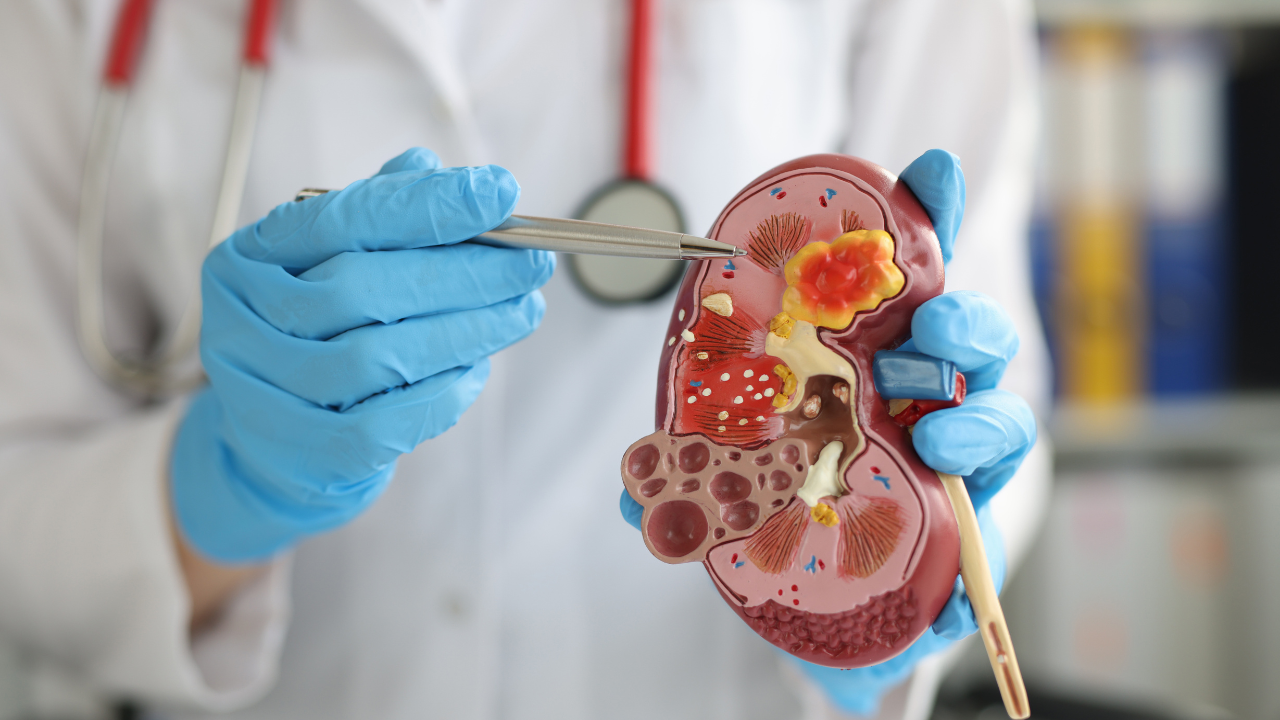
Acute kidney injury is not a rare sidebar problem on a medical unit. In U.S. hospital data, acute renal failure appeared in 10.5% of all hospitalizations when all listed diagnoses were counted, and principal-diagnosis stays accounted for 1.4% of all hospitalizations in 2014 (Nurseslabs). That burden is exactly why the acute renal failure nursing diagnosis has to be more than a label, it has to drive fast, prioritized assessment of urine output, creatinine trends, fluid balance, and hemodynamic stability.
The terminology has changed from acute renal failure to acute kidney injury, but the bedside reality has stayed sharp. Nurses still catch the first signs through falling urine output, rising creatinine, edema, electrolyte shifts, and unstable blood pressure, then decide which diagnosis gets attention first.
Introduction to Acute Renal Failure Nursing Diagnosis
AKI can change a patient's status in a single shift. Urine output may fall first, then edema, hyperkalemia, rising creatinine, and worsening azotemia follow before the care team has time to adjust. That pace is why the nursing diagnosis has to focus on measurable trends and immediate action, not on a vague label.
The burden is not theoretical. Acute renal failure accounted for 1.4% of hospitalizations as a principal diagnosis and 10.5% when all listed diagnoses were counted, according to a major U.S. hospital dataset. In practice, that pattern is what nurses see on the unit, where AKI usually appears alongside surgery, sepsis, dehydration, heart failure, or nephrotoxic exposure, not as a single isolated problem.
The shift from acute renal failure to acute kidney injury also changed how nurses organize priorities. The RIFLE classification helped standardize severity grading and renal replacement timing, so staging now guides how quickly the team responds to declining function (PubMed). When the kidney is underperfused, Ineffective Renal Tissue Perfusion rises to the top. When fluid is accumulating because the kidneys cannot clear it, Excess Fluid Volume deserves immediate attention. Those choices are driven by the stage of injury and the lab trend, not by the diagnosis name alone.
A rising creatinine with falling urine output and new edema changes the care plan fast. Trend the patient, not the label.
Categorizing Nursing Diagnoses by Priority
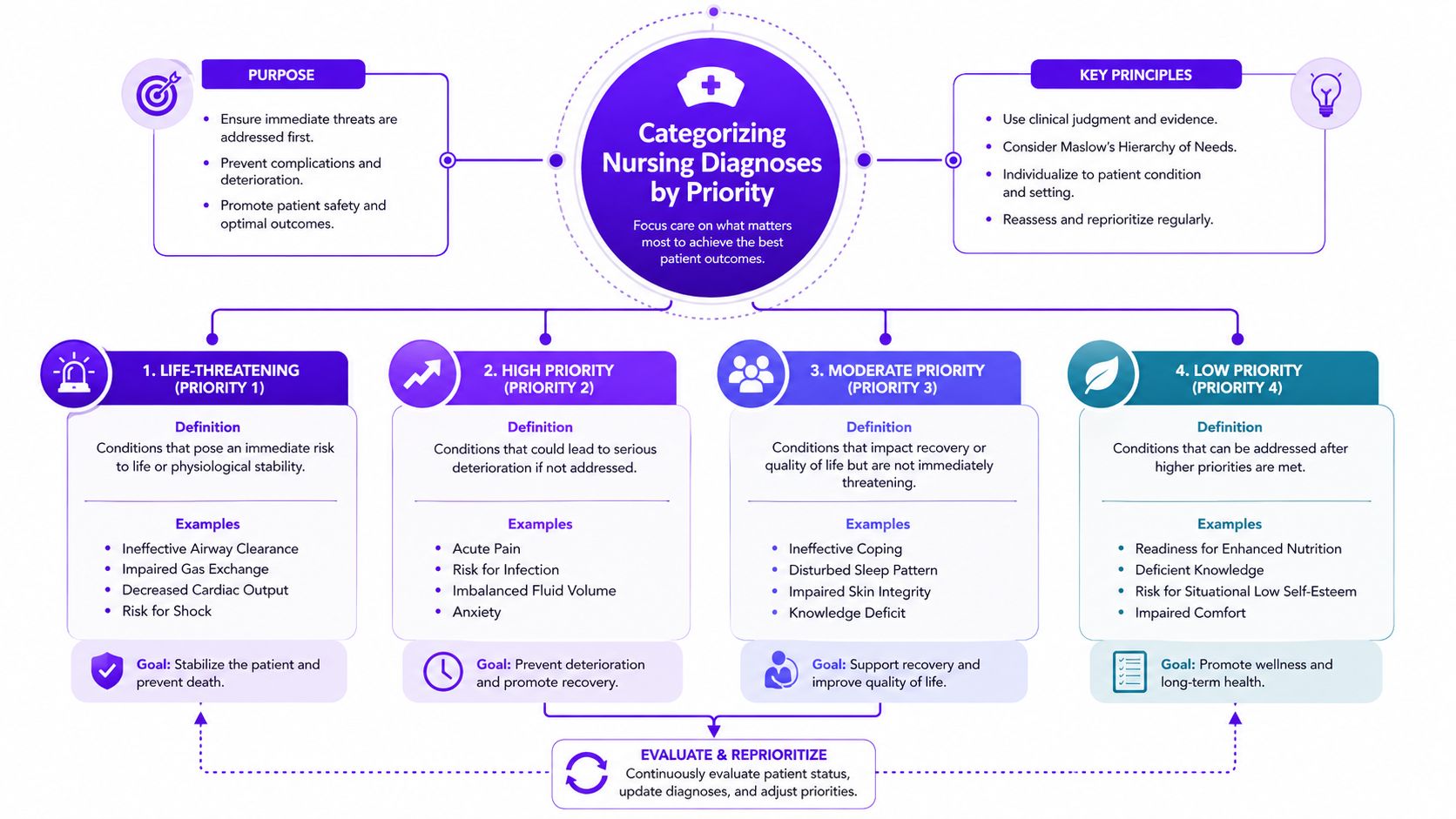
A patient with AKI can move from stable to unstable quickly, so priority sorting has to follow physiology, not habit. High priority diagnoses cover life-threatening problems such as fluid overload with respiratory strain, severe underperfusion, or falling urine output that suggests the kidneys are failing to keep up. Medium priority diagnoses matter because they can push the patient toward deterioration if they are not addressed, especially perfusion changes and electrolyte shifts. Low priority diagnoses still belong in the plan, but they wait until breathing, circulation, and renal stabilization are under control.
The stage of injury helps make that order clearer at the bedside. A nurse who tracks urine output, creatinine trend, and signs of fluid retention can decide whether the patient needs escalation now, closer serial monitoring, or teaching once the acute problem is safer to manage. In practice, the diagnosis list should mirror the lab trend and the exam, not a generic template.
A useful filter is simple.
- High priority: any diagnosis tied to oxygenation, circulation, or rapid fluid accumulation.
- Medium priority: diagnoses linked to worsening renal perfusion or early electrolyte imbalance without immediate instability.
- Low priority: psychosocial or educational diagnoses that affect recovery but do not outrank physiologic threats.
A post-op patient with crackles, edema, and a steady drop in urine output belongs in the high-priority lane. A stable patient who is confused about diet and fluid limits still needs teaching, but that work comes after the immediate renal and cardiovascular risks are controlled.
High Priority Nursing Diagnoses and Indicators
In AKI, the highest-priority nursing diagnosis is Excess Fluid Volume because it can move from a lab concern to respiratory failure quickly. The bedside pattern is familiar, the patient gains weight, edema worsens, lung sounds become wet, blood pressure may climb, mental status shifts, and potassium can rise as urine output falls. That combination requires immediate attention because fluid overload and hyperkalemia can lead to hypoxia or dysrhythmia before the chart looks dramatic (NCBI Bookshelf).
What the nurse should watch first
The first signs are usually small but consistent. Abrupt oliguria, crackles, dependent edema, rising blood pressure, and restlessness often appear before frank respiratory distress. When those findings line up with rising BUN and creatinine, the priority is no longer routine observation. It becomes urgent communication, serial reassessment, and tight intake and output measurement.
A Foley catheter may be needed when accurate urine measurement is the only reliable way to track the decline. That decision has trade-offs. It improves measurement, but it also adds catheter-associated risk, so the indication has to be clear and documented.
A common real-world case is the post-op patient who returns from recovery with mild confusion and a urine bag that barely fills. The lungs sound wetter over time, the ankles become pitting, and the scale trend moves in the wrong direction. That pattern supports a high-priority AKI fluid diagnosis before the patient reaches frank pulmonary edema.
The mistake is waiting for dramatic symptoms. AKI often shows up as a trend, not a single event, and the nurse has to read the trend early.
A second high-priority concern is risk of rapid cardiopulmonary decline from fluid imbalance, even before the chart shows obvious distress. A patient can look only slightly uncomfortable while the renal reserve is dropping quickly. In practice, that means serial assessment, prompt escalation, and a clear record of what changed, when it changed, and how fast it changed.
For background on how management frameworks can stay practical and structured, Chronic PainTherapies, Treatment, and Management Options is an example of how clinical education can organize complex symptom management without losing focus on bedside decisions.
Medium Priority Nursing Diagnoses and Indicators
Ineffective Renal Tissue Perfusion belongs in the medium-priority category because it explains why kidney function is slipping before the patient becomes overtly unstable. The diagnosis fits when renal blood flow drops from hypovolemia, hypotension, or cardiac dysfunction, and the nurse sees underperfusion rather than primary structural injury. In practice, the pattern often appears in a post-op or critically ill patient with a soft blood pressure, falling urine output, and a creatinine that starts moving away from baseline.
How to recognize underperfusion early
The most useful triggers are serum creatinine ≥1.5 times baseline within 7 days or urine output <0.5 mL/kg/hour for 6 hours. Those thresholds matter because they turn vague concern into a clear nursing picture. If the kidney is underfilled, the response is to restore perfusion and watch the trend closely, not to treat the lab value in isolation.
A common scenario is the hypotensive patient after surgery. The nurse sees output falling, the blood pressure staying low, and creatinine no longer looking “borderline” but clearly off baseline. That patient needs prompt communication and reassessment, because waiting for a more dramatic change wastes time the kidney does not have.
Risk for Electrolyte Imbalance also sits in the medium tier because potassium and other values can shift before the patient looks very ill. The nurse is not guessing here. The diagnosis is tied to the same urine-output and creatinine trends that show renal underperformance, and those trends should guide how often labs are checked and how closely telemetry is watched. A patient with rising creatinine and falling output can develop a potassium problem before obvious symptoms appear.
A practical way to separate this group from the high-priority diagnoses is to ask whether the patient is already unstable. If not, the focus stays on renal perfusion, lab trending, and preventing the next decline.
Low Priority Nursing Diagnoses and Indicators
Low-priority diagnoses still shape recovery, but they don't outrank physiologic threats. Anxiety, Knowledge Deficit, and Disturbed Body Image often appear once the immediate renal crisis is controlled or when the patient starts asking what the numbers mean. A patient with AKI may worry about fluid limits, dialysis, temporary catheter access, or whether the kidneys will recover, and those concerns deserve attention.
Practical indicators at the bedside
Anxiety shows up as repeated questions, restlessness, fear about prognosis, or trouble focusing on teaching. Knowledge deficit is usually clearer, since the patient may not understand why fluids are restricted, why labs are drawn so often, or why urine output matters so much. Disturbed body image tends to surface when visible access, swelling, or a temporary line changes how the patient feels about their body.
A useful example is the stable patient who keeps asking whether drinking “a little extra water” is harmless. That question doesn't outrank hyperkalemia or oliguria, but it does signal a teaching need before discharge. Another example is the patient who avoids looking at dialysis access because it feels intrusive or embarrassing. The nurse can address that after stabilization, not instead of stabilization.
Education works best when the patient is physically stable enough to absorb it. Teaching too early, while symptoms are escalating, usually leads to poor retention.
These diagnoses also help prevent readmission. A patient who understands fluid limits, symptom reporting, and when to call for help is less likely to drift home with unanswered questions. The key is sequencing, not ignoring the low-priority items.
Suggested Nursing Interventions with Examples
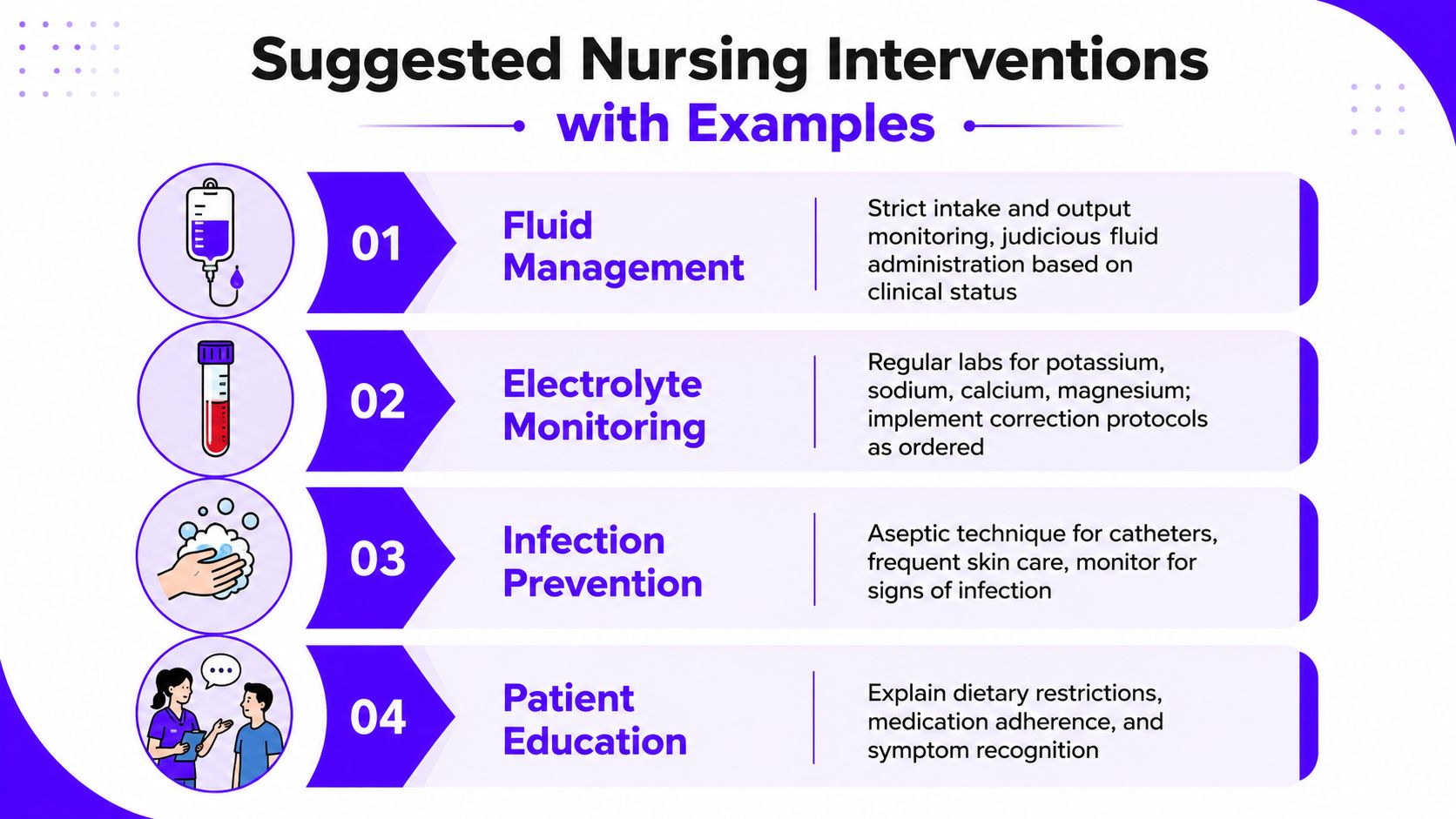
AKI care gets more effective when each intervention matches the diagnosis and the current trend, not just the diagnosis name in the chart. A patient with Excess Fluid Volume needs strict intake and output tracking, daily weights, lung assessment for crackles, edema checks, and ordered lab surveillance for BUN, creatinine, and potassium. A patient with Ineffective Renal Tissue Perfusion needs repeated blood pressure checks, urine output review, and mentation assessment, with prompt escalation if perfusion worsens.
The practical point is that the same renal injury can call for different nursing actions depending on what is driving it. A patient who is overloaded and short of breath needs a different immediate response than a patient who is hypotensive and barely making urine. That difference shapes whether the nurse focuses first on fluid balance, perfusion support, or safety monitoring.
Interventions that hold up at the bedside
- Fluid management: follow the ordered restriction or replacement plan, then tighten surveillance based on serial weights and output trends. A patient with new pulmonary edema needs closer monitoring, not a reflexive instruction to drink more.
- Electrolyte monitoring: watch potassium and other renal labs closely, then carry out correction protocols as ordered. Hyperkalemia needs fast escalation because the risk is cardiac, not just a lab abnormality.
- Infection prevention: use aseptic technique with catheters, provide skin care, and assess for infection sources that can worsen renal stress.
- Patient education: explain fluid limits, medication adherence, and which symptoms should trigger immediate reporting. Teaching works better after the patient is stable enough to absorb it, especially when discharge planning also includes other chronic conditions such as diabetes, as outlined in nursing interventions for diabetes.
A real bedside trade-off shows up with diuretics. They can reduce congestion in a patient with pulmonary fluid overload, but they do not replace assessment, and they only help when the order matches the patient's blood pressure and perfusion status. Documentation should capture the trend, not only the medication given.
Cross References to Lab Values and Vital Signs
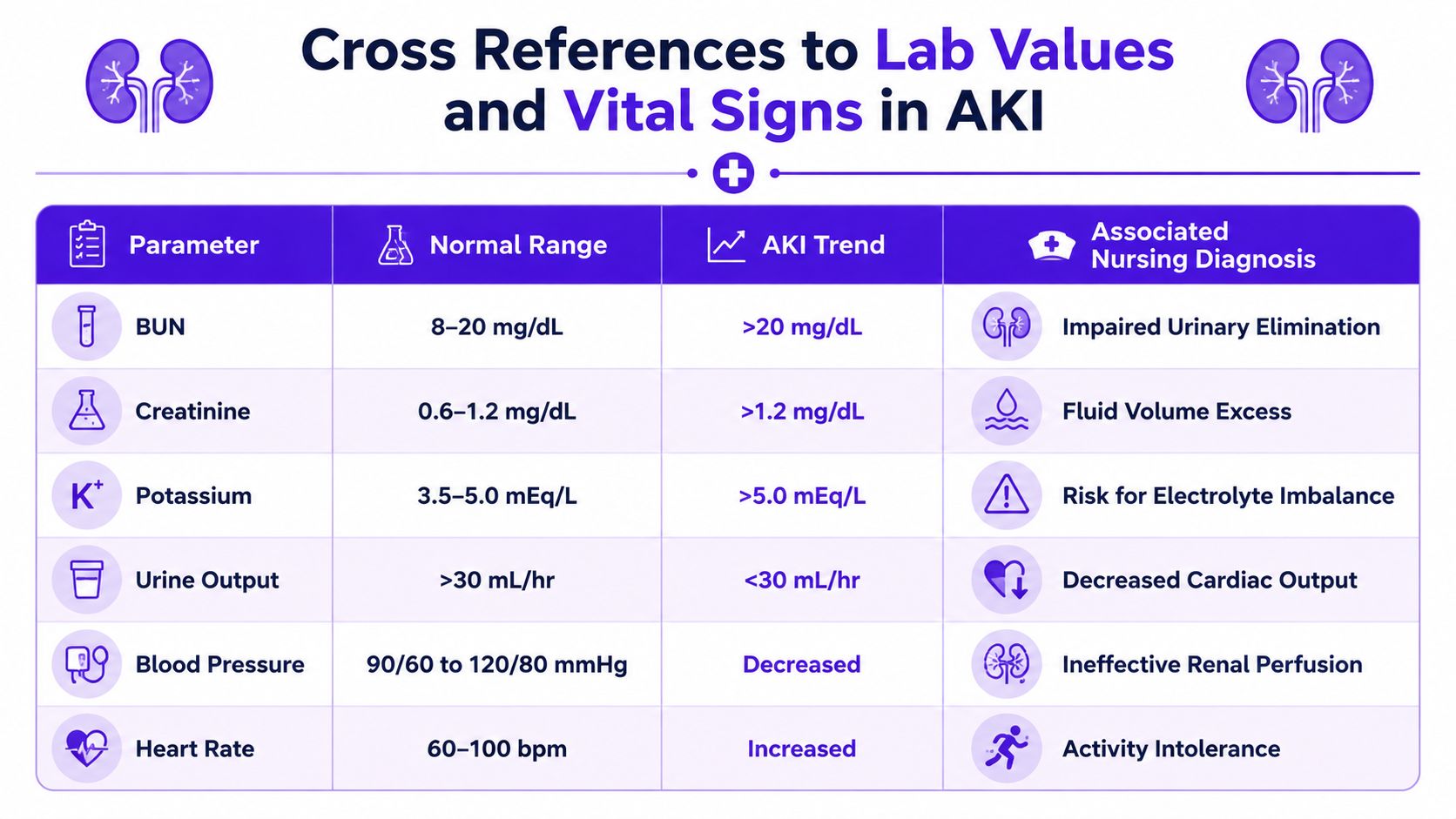
A shift in BUN, creatinine, urine output, or blood pressure only becomes useful when it changes the nursing diagnosis attached to it. Rising BUN and creatinine show worsening filtration, but the priority diagnosis depends on whether the patient is fluid overloaded, poorly perfused, or becoming unsafe because of an electrolyte problem. Urine output and blood pressure often change before the chemistry panel catches up, so they deserve the same weight as the lab report.
The most practical reading is pattern-based. A falling urine output with dropping blood pressure supports Ineffective Renal Perfusion more strongly than a single abnormal value. A patient with rising potassium and decreasing output needs Risk for Electrolyte Imbalance handled as an active problem, because the cardiac risk is already building even if the chart still looks partly stable.
Clinical shortcut: when numbers worsen together, the nursing diagnosis should move up in priority, not stay fixed in the note.
The infographic data used in this section highlights common pairings, such as rising BUN with impaired urinary elimination, increased creatinine with fluid volume excess, and rising potassium with electrolyte imbalance. These pairings work because they force the nurse to connect the lab to the patient's actual status, not to a generic abnormal flag. A patient with increasing creatinine, edema, and crackles needs a different plan than a patient with the same creatinine rise but low pressure, cool skin, and scant urine.
Vital signs add another layer of triage. A drop in blood pressure with low urine output points toward renal underperfusion, while a rising heart rate can reflect physiologic stress and reduced tolerance for activity. When those trends shift, the diagnosis should shift with them.
Quick Reference Table for Diagnoses Indicators and Interventions
AKI Nursing Diagnosis Quick Reference
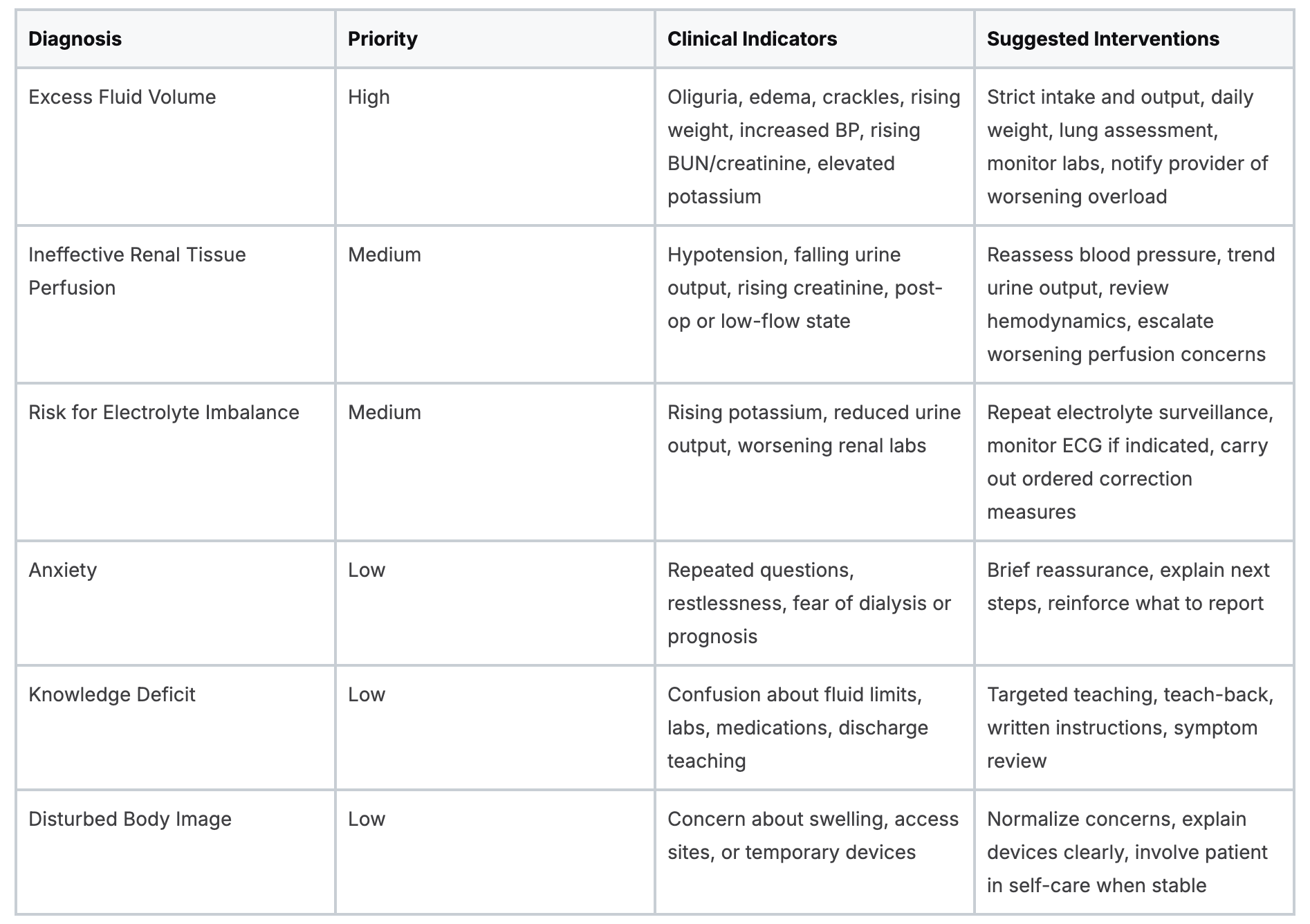
This table works best as a shift-to-shift lookup, not as a substitute for assessment. The diagnosis still has to match the current patient, and the priority can change if the labs or respiratory status worsen. Nurses who use the table as a quick guide and then recheck the patient stay ahead of drift.
Glossary of Key Terms
Oliguria means reduced urine output, and in AKI it often appears before severe lab changes. Azotemia refers to the buildup of nitrogen-containing waste products in the blood, commonly tracked through BUN and creatinine. RIFLE criteria are standardized severity categories that help clinicians stage kidney injury more consistently, so changes in urine output and renal labs can be tied to the right nursing priority.
Renal replacement therapy refers to treatments that take over part of the kidney's job when filtration fails. In nursing practice, the term changes the plan at the bedside, because it affects monitoring, access care, and fluid management. These words are not just textbook terms, they guide what gets assessed first and what gets escalated.
Related Resources and Continuing Education
Nurses who want stronger AKI practice often pair renal content with sepsis education, because perfusion failure and kidney injury frequently travel together. The course Sepsis Early Recognition, Pathophysiology, and Evidence-Based Initial Management fits that overlap, and Premiere Education also supports broader CE tracking, documentation, and course completion workflows. For teams that document complex bedside communication, the WhisperAI guide for healthcare transcription is a useful resource for understanding HIPAA-conscious transcription workflows.
Strong AKI care depends on sharp surveillance, clear documentation, and current CE that stays close to bedside realities. Premiere Education offers accredited learning, certificates, and organized tracking tools that help nurses keep renal, sepsis, and other clinical competencies in one place.
Premiere Education gives nurses a practical way to keep building AKI knowledge with accredited courses, certificates, and trackable learning records. If this guide sharpened your nursing diagnosis priorities for acute kidney injury, visit Premiere Education to explore continuing education that supports real bedside decision-making.
Latest Posts





25% off Sitewide→
Use Code: PCECYBERSALE2025→